Economist Says Industrial Ag Poses Risks To The Industry
By Rita Brhel
P&D Correspondent
Published: Friday, May 6, 2011 9:38 PM CDT
EDITOR’S NOTE: This is the first of two stories from the 2011 Nebraska Environmental Action Coalition meeting held in Lincoln, Neb., April 30.
———
LINCOLN, Neb. — Nuclear energy and industrial agriculture may not have much in common on the surface, but there is a point at which they are similar: both are dangerous if not carefully monitored.
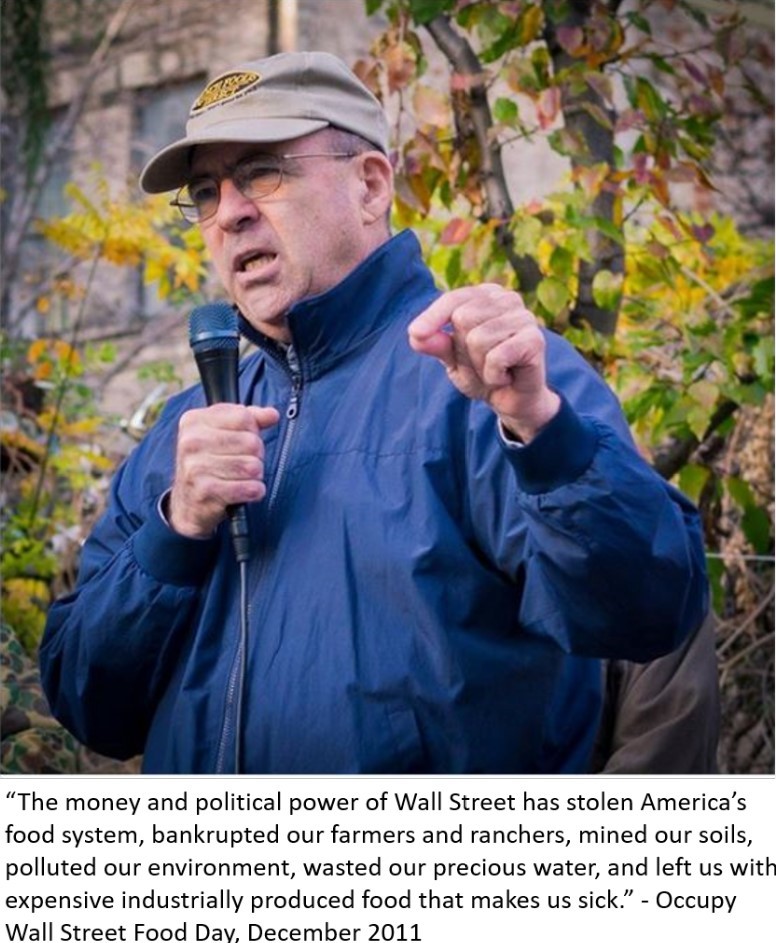
“There are two kinds of systems — systems that are inherently dangerous and systems that are inherently safe. And with a nuclear plant, which is inherently dangerous, if something goes wrong, you’ll have disaster after disaster after disaster,” said Bill Weida, an economist with the Socially Responsible Agricultural Project based in McCall, Idaho, and a speaker at the 2011 annual meeting of the Nebraska Environmental Action Coalition on April 30 in Lincoln.
The Socially Responsible Agricultural Project is a nonprofit organization that provides free assistance to communities working to protect themselves from concentrated animal feeding operations, and to those working to promote local foods. For more information, visit www.sraproject.org.
“This is a good dividing line between industrial agriculture and traditional agriculture,” said Weida, who uses “traditional agriculture” as a catch-all term to refer to infrastructure that includes sustainable production, small farming, and local foods. “If everything works correctly, that’s fine. But if something goes wrong with industrial agriculture, unlike its traditional counterpart, you have a problem.”
And that, he claimed, is exactly what has happened in the United States.
Two Types of Farming
Up until the middle of the 20th century, producers predominantly farmed in one of two ways: with low fixed costs and high variable costs, through which they could weather market ups and downs because their fixed costs were low.
And then, with the help of technology, came the introduction of industrial agriculture, in which producers operate in a system marked with high fixed costs and low variable costs. This means that, while there is more potential for higher profits, there is less flexibility in volatile markets. And this is the type of farming that land-grant colleges have been teaching agricultural students for the past several decades.
What best defines the difference between the two types of farming is the response to the change in market prices: When the price of hogs goes down, the traditional [should say”industrial” farmer] farmer increases the number of hogs produced to spread out the cost; the industrial [should have said “traditional”] farmer reduces the number of hogs produced to manage his costs. The problem with the latter is this is what leads to bankrupt operations and makes room in the market for factory farms, pushing the smaller farms out of the business, Weida explained. Through the years, the United States has lost 90 percent of its traditional hog producers, 80 percent of traditional dairy producers, and 40 percent of traditional beef producers.
It seems that this is simply the law of economics, but a few things don’t add up with the advent of industrial agriculture: increased food safety concerns; poorer food nutrition; increased air and water pollution; and rural communities that have been reduced to third-world economies. On the flip side, industrial agriculture is able to provide food underpriced at about 30 percent.
For the consumer, it has become a trade of quality food for cheap food.
Traditional agriculture has not been able to compete. In the current agricultural environment, in which the majority of producers practice high fixed-cost, low variable-cost farming, the traditional farming infrastructure has not been able to stay intact. And traditional agriculture cannot stand up to industrial agriculture without the whole of the infrastructure.
“Turns out, consumers are willing to pay more for better food — and it costs more for traditional agricultural products because it’s a closed system: farmers are doing all the production, processing, and marketing — but the only way consumers can know its better is to know where it came from. Traditional agriculture has to have traceability back to the grower in order to charge more, in order to cover the costs incurred,” Weida said. “Right now, the land and production skills for sustainable agriculture still exist, but what’s missing is the processing and marketing.”
Govt.-Backed Cheap Food System
Industrial agriculture likes to believe that it is a system that works, and will commonly refer to economies of scale — that the larger the operation, the more profitable it is. However, the research doesn’t back it up.
“The idea that industrial agriculture is making money is central to keeping it alive. They got to keep that fake idea alive,” Weida said.
For example, the economy of scale for a dairy is 800 animals. Beyond this point, the efficiency of a dairy operation declines and so does its profitability (income minus cost). But there are many dairies in the United States with 20,000 to 30,000 head.
“How does this work? Quite frankly, it doesn’t work,” Weida said.
Producers involved in industrial agriculture only stay in existence through the continued support of the government: domestic subsidies, the U.S. exporting excess production, and the U.S. buying excess production and redistributing it through the school food program. There are big bucks to be made in government subsidies, and the bigger the operation, the more government support it receives — no matter the detriment to the national food supply, environment, or small communities.
“Anymore, that’s what agriculture is — it’s all about the money,” Weida said.
On the other hand, traditional agriculture centers on the holistic contribution it makes to the community: safe, healthy foods that preserve the environment and fuel the local economy. When it comes down to economics, traditional agricultural producers won’t make the money that those in industrial agriculture do, because the government isn’t backing up their market prices. But, from what Weida has encountered, this doesn’t matter: “Sustainable farmers are irrationally wedded to their land,” he said. “I talked with one producer who is making just half a percent of profit on her farm, and I told her that economically, she would be better off to sell the land and put the money in a savings account, but she’d never do it because she’s in love with the land.”
The U.S. government is spending lots of taxpayers’ money on industrial agriculture, trying to keep it afloat, and it’s evident that this system doesn’t work, Weida said. But, “because the government either didn’t care or had no immediate answers for any of this, they did nothing.”
“Consider if the Centers for Disease Control and Prevention had said 50 years ago that the best treatment for breast cancer was bleeding and that recommendation stuck up to this current day — that’s exactly what the U.S. Department of Agriculture did,” he added. “The CDC changed as determined by the research; the USDA didn’t.”
How to Change the Course
America is at a crossroads — it can continue ignoring the risks of a cheap food system, or it can provide consumers a viable option by giving traditional agriculture a foothold.
“Either we’re going to continue the course we’re on, in which they’re won’t be anything to save in 10 to 15 years, or we change the way we do things,” Weida said.
“There will always be a group of people who want the cheapest food they can get,” he continued, but he believes that the majority of consumers do care about the quality of the food they eat. “The person who should make the decision is the consumer, and for the consumer to make the decision, it has to be apparent.”
As the national food system is organized now, it’s easy for industrial agriculture to muddy the truth.
Weida offers three solutions to the U.S. government:
• Formally realize that traditional agriculture is different enough from industrial agriculture that the two cannot be managed by the same entity (U.S. Department of Agriculture) — There must be separate government offices to oversee industrial versus traditional agriculture. Huge conglomerates are not the same as the small farmer, and so they shouldn’t have to follow the same regulations;
• Understand that all solutions must come on a regional basis, that it cannot be done with a one-size-fits-all national plan — There is no mechanism for the federal government to treat regions differently, but because regions are so different in their agricultural emphasis, agricultural government must be under local control. For example, West River may be predominantly grazing beef cattle but East River is predominantly row crops, and each region’s economy must develop on its own — West River’s communities cannot use the same game plan as East River;
• Acknowledge that the damage to the traditional agriculture infrastructure has been so great that there is not enough extra money to restore it — Instead, some of the money used to support industrial agriculture will need to be redirected for traditional agriculture. This includes funding for land-grant colleges. And to do this, the government will have to stress that it’s important to save traditional agriculture, whether it’s to improve the quality of the food supply or to improve the health of rural economies.
For consumers and producers interested in reforming the traditional agriculture infrastructure, Weida points to local support as key.
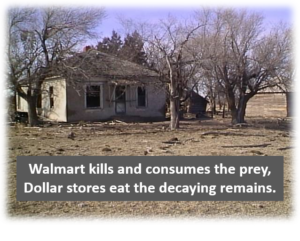
“Many rural regions are now food deserts,” Weida said, referring to that fact that there is not a grocery store for 50 to 100 miles of small communities. “As fuel prices rise, people aren’t going to be able to afford to go get food. That’s an opening — Wal-Mart is not going to move in there, but traditional agriculture infrastructure can.”
Industrial agriculture doesn’t care about the health of the local community, he said. Traditional agriculture can heal a community.
“We have to get back to a century ago,” Weida said. “The argument is that we won’t be feeding the world. That’s right, and so? There’s nothing that says that we have to.”
———
For complete Weida paper: Weida – Determining the Possible