“Changes will not simply happen…Changes will occur when consumers realize what they’ve been eating, get angry, and demand something different…It remains our responsibility, with every vote and every dollar spent on food, to start making it right.”
Following Email Notification sent to Student Body Staff and Families on 03/15/2012
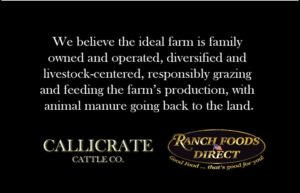
Poster featuring Callicrate Beef, distributed by Ranch Foods Direct, in D 11 School Cafeterias
A lot has been in the news lately about the quality of beef utilized in schools.
District 11 has taken huge strides during the last 4-5 years to improve the quality of all foods served in our D11 meal programs. District 11 “exclusively” utilizes beef from local company, Ranch Foods Direct.
Beef from Ranch Foods Direct is 100% beef from cattle raised on a diet of both grass and grain without growth hormones or antibiotics. This “all-natural,” high-quality local product is indicative of our commitment to high quality foods for the students and staff of Colorado Springs School District 11. Our D11 Good Food Project has high standards that are challenging to meet with the low price of school meals, however we believe that quality food is another key to quality education.
District 11 began partnering with Ranch Foods Direct in 2006. Since 2010, we have purchased ALL ground beef from this high quality, local company. This includes the outstanding beef patties used in hamburgers and cheeseburgers served in D11, while it also includes all ground beef used in dishes such as meatloaf, spaghetti, tacos, etc.
Additionally, District 11 purchases all-natural roasted chicken for the wonderful chicken dishes which are served in our meal programs.
In our journey to provide high quality foods at an affordable price, we continually “scrub” our budget to find new ways to make ends meet and manage the budget in a financially responsible manner.
No “Mystery Meat” or “Pink Slime” or “Ammonia Treated Meat” is ever utilized in District 11 meal programs.
Please contact us at (719) 520-2924 if you have further questions or concerns about food quality in the D11 meal programs. We want to hear from you.
Callicrate Beef is proudly served in:
Poster featuring Callicrate Beef, distributed by Ranch Foods Direct, in St. Mary’s High School Cafeterias
Aurora Public Schools
Boulder Valley School District
Colorado Springs Public Schools D-11
Denver Public Schools
Durango Public Schools
Falcon School D 49
Manitou Springs School District
St. Mary’s High School – Colorado Springs
Boulder Valley School District Proudly Serves Callicrate Beef
In the News: Real Meat, Callicrate Beef distributed by Ranch Foods Direct
Schools Can Choose ‘Pink Slime’ Or Not
The USDA is going to offer schools the option of serving beef patties with “pink slime” or without.
by AP, KKTV 11
Gerald Zirnstein grinds his own hamburger these days. Why? Because this former United States Department of Agriculture scientist and, now, whistleblower, knows that 70 percent of the ground beef we buy at the supermarket contains something he calls “pink slime.”
“Pink slime” is beef trimmings. Once only used in dog food and cooking oil, the trimmings are now sprayed with ammonia so they are safe to eat and added to most ground beef as a cheaper filler.
It was Zirnstein who, in an USDA memo, first coined the term “pink slime” and is now coming forward to say he won’t buy it.
“It’s economic fraud,” he told ABC News. “It’s not fresh ground beef. … It’s a cheap substitute being added in.”
Zirnstein and his fellow USDA scientist, Carl Custer, both warned against using what the industry calls “lean finely textured beef,” widely known now as “pink slime,” but their government bosses overruled them.
If you have questions about “pink slime,” email us at ABC.WorldNews@abc.com.
According to Custer, the product is not really beef, but “a salvage product … fat that had been heated at a low temperature and the excess fat spun out.”
The “pink slime” is made by gathering waste trimmings, simmering them at low heat so the fat separates easily from the muscle, and spinning the trimmings using a centrifuge to complete the separation. Next, the mixture is sent through pipes where it is sprayed with ammonia gas to kill bacteria. The process is completed by packaging the meat into bricks. Then, it is frozen and shipped to grocery stores and meat packers, where it is added to most ground beef.
The “pink slime” does not have to appear on the label because, over objections of its own scientists, USDA officials with links to the beef industry labeled it meat.
“The under secretary said, ‘it’s pink, therefore it’s meat,’” Custer told ABC News.
ABC News has learned the woman who made the decision to OK the mix is a former undersecretary of agriculture, Joann Smith. It was a call that led to hundred of millions of dollars for Beef Products Inc., the makers of pink slime.
When Smith stepped down from the USDA in 1993, BPI’s principal major supplier appointed her to its board of directors, where she made at least $1.2 million over 17 years.
Smith did not return ABC News’ calls for comment and BPI said it had nothing to do with her appointment. The USDA said while her appointment was legal at the time, under current ethics rules Smith could not have immediately joined the board.
– Jim Avila, ABC News
——————————————-
Joann Smith was formerly the president of NCA (NCBA) prior to her appointment to Undersecretary of Agriculture and then on to the board of IBP (USDA Inc.). She made Eldon Roth of BPI a very rich man. Roth was a major financing source for the USPB purchase of National Beef out of the Farmland bankruptcy. The recent sale of National Beef was highly profitable for the money men – cattle producers got sold out. – MC
Occupy Our Food Supply is bringing together the Occupy, sustainable farming, food justice, buy local, slow food, and environmental movements for a global day of action on February 27, 2012. Inspired by the theme of CREATE/RESIST, thousands will come together to creatively confront corporate control of our food supply and take action to build healthy, accessible food systems for all.
Industrial agribusiness corporations like Cargill, Monsanto, ADM and Dupont have gained runaway control of our food systems and to take them back, we’ll need all the collective power we can manifest around the world. There are few things more personal than the food we put into our bodies every day. Let’s ensure that we can stand by the food we eat from farm to fork. Sign up to take action on February 27 to Occupy Our Food Supply!
“People are fed by the Food Industry, which pays no attention to health, and are treated by the Health Industry which pays no attention to food.” Wendell Berry
Subscribe to information and news updates related to farming, food and health issues, click here!
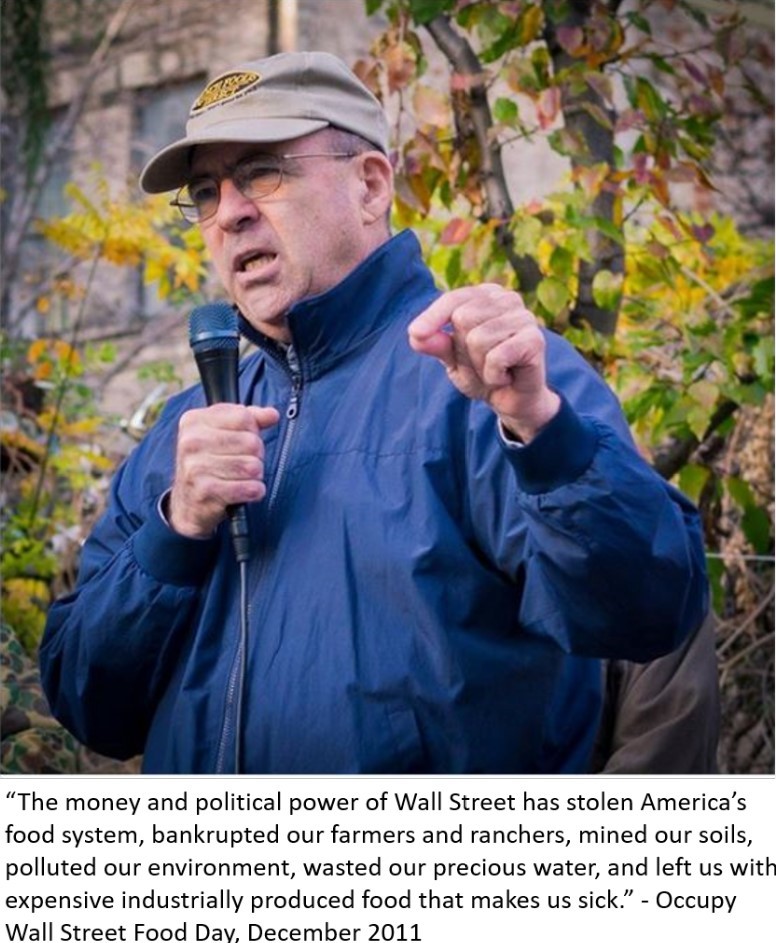
“The money and political power of Wall Street has stolen America’s food system, bankrupted our farmers and ranchers, mined our soils, polluted our environment, wasted our precious water, and left us with expensive industrially produced food that makes us sick.” – Occupy Wall Street Food Day, December 2011
How can an industrial livestock operation transition from feeding corporations to feeding people?
Industrial Agriculture and Urban Sprawl – A model of growth that’s made to fail.
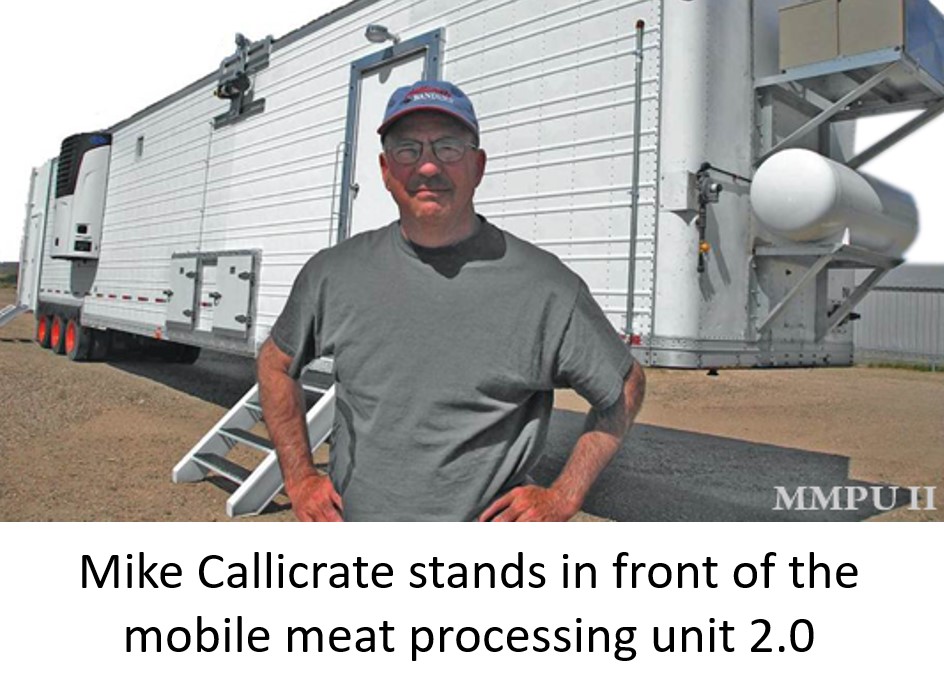
Ranching Reboot Episode 4, Mike Callicrate “It’s time for a third revolution against monopolies”
Above: Ranching Reboot – Episode 4 – Mike Callicrate, owner of Ranch Foods Direct, sat down with us to talk about all manner of things from cattle markets, to public food spaces, the Bander, his feedlot and the pathway he built to market.
He shares valuable lessons learned from fighting against the commodity production system and how he’s built his own pathway to the consumer.
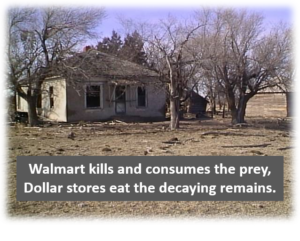
We talk about small community slaughter plants and public meat spaces and what that could look like going in to the future. We discuss environmental challenges, the food police and what it means when a Dollar General comes to town.
by John Munsell | Oct 11, 2011
Opinion Editor's Note: This is the first part in a series written by John Munsell of Miles City, MT, who explains how the small meat plant his family owned for 59 years ran afoul of USDA's meat inspection program. The events he writes about began a decade ago, but remain relevant today.
They say that confession is good for the soul. I've been involved in a series of ugly events since my plant in 2002 recalled 270 pounds of ground beef contaminated with E.coli O157:H7 and now want to admit the embarrassing truth for public review.
more