What We Can Learn from the Fight for COOL

What We Can Learn from the Fight for COOL  
By Gilles Stockton
 

The knock-down drag-out fight over implementation of Country of Origin Labeling (COOL) should cause us to reassess our assumptions about how politics operates in this country. Old allegiances, based on old political fracture lines, are rapidly becoming irrelevant. We can no longer assume that what we knew as right vs. left, conservative vs. liberal, Republican vs. Democrat has meaning in the politics at the beginning of the twenty-first century.

COOL should be a no-brainer. Ninety percent of livestock producers support labeling. Consumers, more and more concerned with the quality of food, think it is a good idea to have labels on packages of meat telling them the country of origin. Labeling doesn’t cost much (no matter what some say) and doesn’t interfere with how one does business. It simply gives people information, which they can choose to ignore.

Despite popular support, the Bush Administration, many in Congress, and the National Cattlemen’s Beef Association (NCBA) all remain adamantly opposed. This tells us a lot about the political forces now dominating America. The Bush Administration, on behalf of giant agribusiness, is taking Europe to the World Trade Organization (WTO) Tribunal because Europe, which requires country of origin labels for meat, will also require labels on any food containing genetically modified ingredients. President Bush and the corporations he is representing maintain that food labeling is a barrier to trade and logic dictates that we cannot allow labeling in our country while forcing European countries to abandon them.

Obviously the issue goes deeper and money is a factor. The beef packers and retailers are using imports to control the domestic market for livestock, which results in lower prices for livestock producers and more profits for processors and retailers. However, if consumers prefer beef born and raised in the USA, then beef prices could be increased, which would benefit the sellers of beef more than the producers of beef. So money cannot be the whole answer for the vehement opposition to COOL.

The meat packing cartel and the rapidly developing oligopoly in food retailing, are looking forward towards a seamless vertically integrated system of livestock production, processing, and retailing. Not satisfied with controlling just the meat market in the United States, the evidence is that these corporations are anticipating a world wide integrated system of control over food. This cartel cannot afford to let a rebellion over meat labeling get out of hand. Who knows what livestock producers and farmers might demand next – maybe the right to own their own land, make decisions without first consulting a corporate overseer, and sell what they produce in an open, competitive, public marketplace! Maintaining control and power over the cattle industry is an important reason for the strong opposition to COOL

This might read like conspiracy theory, but the facts are clear. There is a web of interlocking oligopolies bent on controlling the marketing of food. The corporations controlling meats and feed grains include Tyson, Cargill, Smithfield, ADM, and ConAgra and the dominant food retailers are Wal-Mart, Krogers, Safeway, and Albertsons. Some will argue that the formation of this cartel is the result of natural economic forces evolving towards the most efficient business model. However, the much more likely explanation is that this concentration of economic and market power has happened because the giant corporations have purchased the political system.

Many economists feel that an oligopoly cannot form under conditions of true market competition. Since today, many of our most important industries are dominated by very few corporations, it is clear that competition has been compromised. As we see in the case of the livestock industry, three corporations control 80% of the slaughter cattle. Furthermore since these oligopolies continue to amass power, we see that regulatory and antitrust enforcement is wanting. This is particularly true in the livestock industry. The US Department of Agriculture (USDA) refuses to enforce the law against the beef packers even though two separate economic studies commissioned by USDA proved that beef packers use their market power to control the prices they pay livestock producers.

Clearly the feeling in corporate boardrooms and the top levels of government is that the domination by a small number of corporations of any particular industry is to be encouraged. And we should understand that not everyone in a conspiracy has to be on the inside making decisions or pulling strings. Most participants just see themselves as doing their jobs and following their own self-interest. But will unchecked self-interest benefit society in general, or will it result in a system of economic servitude and diminished democratic participation?

This then is the new political division: those who favor a hierarchical system controlled by dominant corporations and those who favor retaining a liberal economic system (this is “liberal” in the original sense of the word) within a society run through broad democratic participation.

There are still two political parties but they should more properly be named the Corporate Power Party and the Democratic Republic Party. Few politicians would want to be branded as being a member of the Corporate Power Party. However, that is where the money is concentrated and, therefore, that is where the majority of politicians are gathered.

Money is driving the agenda of the Corporate Power Party and its hired hands in government. What honest American, after reflecting about a future under corporate domination, would actually vote to abandon the economic system and democratic institutions that has served us so well in the past? Yet, this is exactly what we are doing.

Anti-trust and other laws protecting market competition are ignored. International trade treaties have resulted in the net loss of over 3,000,000 American jobs – and counting. Monthly we post a trade deficit of forty billion dollars while industry after industry disappears from this country. Even the high-tech and service industries that were touted as the American future, are flowing overseas. Our food supply is becoming dependent on imports. While we import almost everything, our ability to inspect these imports or secure our national boundaries has been gutted. This is the direct result of a government that represents big corporations instead of the people of the United States.

The issues listed above are failures in policy and regulation, but the actions that tip the balance from democracy to corporate dictatorship arise out of obscure clauses buried in the international trade treaties. These clauses, such as Chapter 11 of the North American Free Trade Agreement (NAFTA), appear to be benign provision protecting corporations investing in other countries. The reality is these provisions grant corporations the right to overturn democratically conceived public policy, on any level of jurisdiction – local, state, or national – whenever they feel that public policy interferes with the companies right to make money.

The multinational corporations challenge laws and regulations through an international tribunal system where the hearings are secret and the rules are loaded in their favor. The trade treaties that the Clinton and Bush Administrations have railroaded through Congress have effectively nullified the Tenth Amendment to the Constitution, which gives the States the right to run their own affairs, on all matters not expressly reserved by the federal government. The states have, or had, jurisdiction over most things that touch our daily lives, including schools, police, courts, clean water, unpolluted air, fish, garbage collection, utilities, health care, insurance regulations, zoning, parks, and roads. Virtually anything that is decided through local democratic institutions can now be challenged and overruled by a far away tribunal, operating on behalf of a multi-national corporation.

The Corporate Power Party is not easily opposed but new alliances are forming. An example of such an alliance, of which those of us in the livestock business should be proud, is the Organization of Competitive Markets (OCM). This organization is a coalition of farmers, livestock producers, businessmen, economists, and legal experts, from the old right, left and center. These people have come together to defend the principle that democracy is best served with an economic system where private property prevails, markets are open and competitive, and most public policy is made on the local level. OCM is promoting the necessary conditions for a democratic republic.

Within the political divisions of the second half of the twentieth century, the argument was how to equitably divide the benefits of a free and democratic society operating under the principles of liberal economics. Although the debate was sometimes rancorous, both the right and the left firmly supported the same democratic principles and liberal economics base. These core principles have defined our country and society since its inception and they are under attack by the Corporate Power Party. As we see in the fight to implement COOL, the government is more responsive to the desires of multinational corporations than it is to the needs of citizens. This is why, we as citizens, cannot let old political habits blind us as to who is our friend and who is our enemy.

Gilles Stockton Grass Range, Montana (406) 428-2183 gilles@midrivers.com

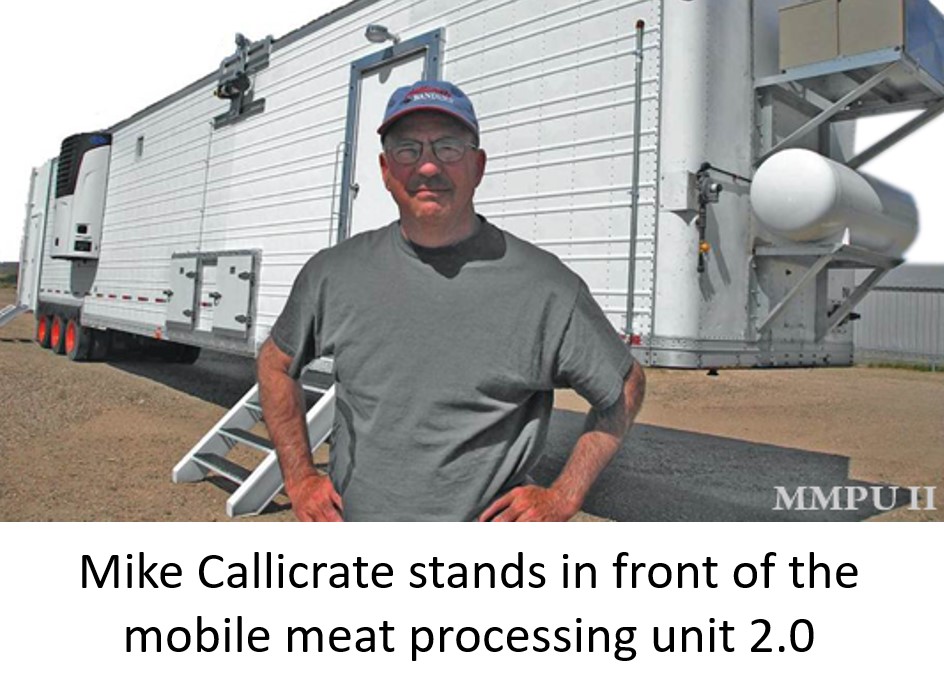
Mike Callicrate

Posted in General Advocacy | Leave a comment

HIGH CATTLE PRICES DOESN’T MEAN THE MARKET IS WORKING

Published on Tuesday, September 9, 2003, by THE AGRIBUSINESS EXAMINER

GUEST COMMENTARY:

HIGH CATTLE PRICES DOESN’T MEAN THE MARKET IS WORKING

MIKE CALLICRATE: Too many cattle feeders (and myself in particular) are missing out on the recent sharp increase in cattle prices. Many of us are no longer in business or are feeding far fewer cattle due to prolonged equity losses. Cow-calf producers are enjoying the increased income, but many are rightly concerned about what will happen next year if the ever-diminishing numbers of independent cattle feeders lose more money and are forced to quit.

Here’s the game independent feeders have been forced to play since the big meatpackers illegally monopolized the cattle markets. They buy replacement cattle at auction, in a competitive market, with many buyers and sellers. They put up enormous capital, assume large amounts of risk, and then practically give their finished cattle to a single packer-buyer in a non-competitive, predatory market. Any wonder why so many feeders have left the business? Any wonder why the cattle feeding industry is so highly concentrated?

Few independent feeders seem to recognize the stacked deck they are playing into when the competing bidder at the feeder cattle auction is the same meatpacker they sell their finished cattle to. That same packer has continuously reported record earnings as a result of monopoly business practices, earnings not available to the independent feeder for the purchase of feeder cattle.

Markets, like highways, should be accessible to everyone on an equal basis, not by invitation only or just for the chosen few.

Today’s markets are manipulated to benefit the big meatpackers and retailers. Vertically-aligned nonindependent cattle feeders exchange the service of providing “captive” finished cattle, which are not price negotiated through a competitive bid process, for highly preferential prices, giving them an enormous unfair advantage at the feeder cattle auction.

The big meatpackers and retailers are frustrated by the tenacity and stubbornness of independent cattlemen reluctant to succumb to the complete vertical integration of the cattle and beef industries. But if they can’t tempt the independents to change by offering low-ball preferential treatment, they will eventually bankrupt the ones who are left with unfair and non-competitive marketing practices.

Markets, like highways, should be accessible to everyone on an equal basis, not by invitation only or just for the chosen few. Without immediate enforcement of the Packers and Stockyards Act, and restoration of fair, open, and competitive markets, auction firms will soon be left with only meatpackers bidding at a fixed identically low price. Enforcement of the P&S Act, one of our nation’s most powerful antitrust laws, is the only thing standing between cattle producers and the Tyson-ConAgra-Cargill model of chicken farmer serfdom.

Mike Callicrate is a farmer, rancher, businessman and co-founder of the Organization for Competitive Markets. After graduating from Colorado State University with a degree in animal science, Callicrate moved to northwest Kansas to farm and ranch. Recognizing a need for a feedyard in the area, he built the first of two local commercial feeding operations in 1978. About ten years ago, he began a drive for price discovery reform, after becoming disgruntled with the formula agreement his local buyer was using to buy cattle. Since that time, he has spoken out against consolidation of the meatpacking, processing, and retail segments of the beef industry, and the devastating effects of captive supply.

CATTLE PRODUCERS UNLOADING LIVESTOCK WRECKS HAVOC ON MERC FLOOR TRADERS 
by GREG BURNS, CHICAGO TRIBUNE

For more than a century, the Willrett family has raised cattle on a stretch of land just west of DeKalb, but rarely at prices as rich as these.

With consumer demand for beef running strong and a “mad cow” scare in Canada crimping supplies, cattle futures prices have surged to a 10-year high at the Chicago Mercantile Exchange. Many producers are unloading their livestock as fast as possible, hoping to make up for the lean years that preceded the current boom.

Jamie Willrett, however, is standing against the stampede. “We’re moving cattle on schedule,” he said from his 2,500-head operation outside Malta, Ill. “The temptation is to sell everything as fast as you can to make a dollar. We’ve stayed steady.”

By hanging onto his cattle until they gain the additional 50 or 100 pounds to reach optimal weight, Willrett is taking advantage of a market rally that has wreaked havoc among small-time speculators and floor traders at the Merc this summer. For weeks, prices have gone almost straight up, as trouble in the North translated into a bonanza for the Lower 48.

And Willrett believes prices could go higher still. He’s banking on the growing ranks of consumers inspired by the high-protein Atkins diet and weary of the ubiquitous chicken. With more red meat on the menu for Labor Day barbecues, “I have a lot of faith in demand,” the veteran cattleman said. “We’ve kind of broken the mold here.”

Cattle futures prices have soared since the U.S. closed its borders to Canadian beef on May 20, after reports of a single case of mad cow disease in Alberta. Live cattle for October delivery at the Merc closed Friday at $82.85 per 100 pounds, up 22.5 percent since mad cow first roiled the markets.

At the outset, many believed that consumers worried about the disease and unhappy with higher beef prices would buy chicken or pork instead, especially in a sluggish economy. That didn’t happen, noted Tom Halpin, livestock broker at Man Financial Group. “Pork is downright cheap.”

In addition, concern about mad cow spreading throughout North America has not cut into U.S. exports as some anticipated. Even wary policymakers in Japan, the most sensitive foreign market, largely resolved their concerns in favor of U.S. beef. “Japan has been a steady buyer,” said Terry Roggensack, grain and livestock analyst for the Hightower Report in Chicago.

Also contributing to the rally was a U.S. determination to extend a ban on Canadian imports through most of the summer, even though no additional mad cow cases were uncovered. And rather than lifting the embargo all at once, which could have pushed prices lower, Agriculture Department officials have imposed onerous restrictions that appear likely to allow only a trickle of Canadian beef into the U.S. for weeks to come.

“The market has been climbing a wall of worry that any day we’re going to get flooded with Canadian cattle,” Roggensack said. “The basic fundamentals say we can go higher.”

Indeed, demand generally increases as the weather cools and Americans opt for heavier meals. Also, so many animals were brought to market earlier than expected that beef production for the fourth quarter is likely to be significantly lower than forecast just a few months ago, according to Roggensack. “The supply of cattle ready to be moved to the slaughter plant is getting smaller and smaller.”

Naturally, the situation among Canadian producers is quite different. As it stands, the U.S. market is open only to boneless meat from younger Canadian cows.

A ban remains in effect on imports of live animals, as well as cattle over 30 months old, which are normally sold for hamburger. That older livestock is considered at greater risk of developing mad cow, the brain-wasting disease that sparked a public health crisis in Britain during the late 1980s and ’90s.

The U.S. has never had a confirmed case of mad cow, known formally as bovine spongiform encephalopathy, and in the interest of safeguarding the domestic herd, U.S. regulators are poised to extend at least some restrictions on Canadian imports well into 2004, some analysts predict.

Even as U.S. prices soar, cattle over 30 months old are selling in Canada for less than 10 Canadian cents a pound because of a shortage of slaughter space, a backlog of ground beef and continued bans on the product, the Reuters news service reported.

Halpin, of Man Financial Group, believes meaningful supplies will be flowing south across the border by the end of September, limiting any further advance in U.S. prices. “We’re getting close to a top” in the market, Halpin predicted.

But others doubt it. Inclement winter weather, for instance, could put even more pressure on supplies and send prices skyrocketing, noted Dan Basse, of Chicago’s AgResource research firm. “We could have a spectacular marketplace.”

No matter what the weather, the relatively small size of the U.S. herd will support strong prices, he said. Reflecting the profit pressures of recent years, the herd has declined from 103.5 million cattle and calves in 1996 to an estimated 96.1 million this year, according to the Agriculture Department.

That scarcity translates into a “rare period of prosperity,” Basse said.

All the industry’s major wholesale players are reporting robust profits, including cow-and-calf breeders, feedlots such as Willrett’s, where animals are fattened, and packinghouses that usually thrive when animal prices are low.

The positive state of affairs is so unusual that the industry remains skeptical of its own unaccustomed good fortune. As Willrett puts it, “It’s a change. Even a blind squirrel finds an acorn once in a while.”

THE AGRIBUSINESS EXAMINER September 9, 2003, Issue #284 Monitoring Corporate Agribusiness From a Public Interest Perspective EDITOR\PUBLISHER; A.V. Krebs E-MAIL: avkrebs@earthlink.net WEB SITE: http://www.ea1.com/CARP/

Posted in General Advocacy | Leave a comment

Small businesses take on big beef/ Meat market sells directly to consumer

Published on Wednesday, July 30, 2003 by The Gazette

Group discuses problems facing cattlemenSmall businesses take on big beef/ Meat market sells directly to consumer
by Paul Beebe
 

Mike Callicrate, an outspoken crusader against big meatpackers and retailers, has opened a meat market in Colorado Springs that is as much political manifesto as business enterprise.

Ranch Foods Direct on North El Paso Street is broadside against giants such as IBP Inc., the world’s largest beef packer, and Wal-Mart. Callicrate, a Kansas rancher and feed yard operator, says IBP and Wal-Mart are in league to fix prices and make it impossible for small producers to survive.

“I am fighting for the independent producer, and Ranch Foods is the solution,” Callicrate said. “If we can accomplish our goals through Ranch Food Direct in connecting the producer more directly with the consumer, we can increase income at the farm and ranch gate, restoring their profitability and at the same time giving the consumer a good deal on the highest quality meat.”

The store tucked into a scruffy commercial district near Fillmore Street sells meat processed by G &C Packing Co. of Colorado Springs, another maverick in the nation’s $65 billion beef industry. G & C was the first packing company in the United States to use a rare slaughtering technique known as “rinse and chill,” which they say tenderizes the meat.

“It’s an opportunity to improve meat tenderness, which tends to be quite variable and is a problem for the meat industry,” said Darrell Bartholomew, an animal product scientist at the Agricultural Utilization Research Institute in Marshall, Minn.

The animals are raised at Callicrate’s feed yard in St. Francis, Kan. Their feed is noteworthy for what it doesn’t contain – sub therapeutic doses of antibiotics to prevent the cattle from becoming sick and to promote weight gain. Nor are the animals given muscle promoting hormones.

After processing at G&C, the carcasses are trucked to Ranch Foods Direct, where workers dress them into steaks, filets and other cuts. Much is sold to independent Front Range meat markets. The rest is sold to consumers at the Ranch Direct store.

“We will not do business with the big chains. They are the enemy,” Callicrate said. Callicrate opened his first feed lot in 1978. At the time, he had the choice of selling his cattle to as many as 10 packers, and price was negotiated aggressively. Today, he said, there are four packers who all pay the same price.

In 1996, he joined several cattlemen in suing IBP, accusing the meatpacker of illegally cornering the beef market and conspiring to fix prices. The suit comes to trial next year in a federal court in Alabama.

Four giant companies – Cargill, ConAgra, Farmland National and Tyson Foods, which in September 2001 acquired IBP – control 83 percent of the nation’s cattle slaughter, consumer activist and Green Party presidential candidate Ralph Nader said.

Callicrate’s harshest words are for Wal-Mart, the largest retailer in the United States. “When you shop at Wal-Mart you support the elimination of communities because Wal-Mart dictates to their suppliers, which are the big meatpackers, what prices they will pay,” Callicrate said.

In turn, the big packers use their market power to buy cattle below the cost of production, a practice that is destroying rural communities, he said.

Wal-Mart declined to respond.

“Wal-Mart will continue to do what we do best and that is focusing on taking care of our customers by continuing to offer them quality products at everyday low prices,” spokeswoman Karen Burk said.

Prices at Ranch Foods Direct are about 10 cents per pound higher than other stores, Callicrate said. An 8-ounce top sirloin sells for $3.

“We have employees who will cook meat samples,” he said. “We just want to show the high quality products that we have and how they are very different from what other stores sell.”

Posted in General Advocacy | Leave a comment

The Flemingsburg Gazette – Group discusses problems facing cattlemen

The Flemingsburg Gazette,  Thursday, May 15, 2003
by Guy Townsend, Publisher

“You’ve been driven to work at Wal-Mart in the morning, McDonald’s in the afternoon, and run your farm at night.”
– Mike Callicrate

What this country needs today is “local food for local people produced by local farmers,” Mike Callicrate told the Fleming County Cattlemen’s Association at the Fleming County High School cafeteria on May 6th.

Callicrate was introduced to the crowd of about one hundred by Wayne Pagle as “a well-informed, independent feedlot operator in St. Francis, Kansas. He’s an activist for the cattlemen. He doesn’t necessarily toe the line, or carry the briefcase, for any association, but he does a real good job of advocacy for the cattlemen.”

In a talk that lasted for well over an hour and was followed by more than half an hour of questions and answers, Callicrate told the group that “Never before has there been so much money in the food system, and never before has so little of the consumer dollar gone to the producer of that food.”

Callicrate left no one in doubt about where he placed the blame for the decline in fortunes of the American cattleman. The problem, he said, is that “we’ve got a lot of concentration and consolidation going on in agriculture,” and this is making it increasingly difficult for independent cattlemen to survive, much less prosper.

“Mike Callicrate doesn’t like Wal-Mart, and he doesn’t think you should either.”

Illustrating his talk with numerous slides, Callicrate relentlessly chronicled the decline of the fortunes of cattlemen, and the parallel increase in the profits of giant agribusinesses such as IBP, ConAgra, Cargill, and Tyson Foods, and giant retailers like Krogers, Safeway, and Wal-Mart. Especially Wal-Mart. Mike Callicrate doesn’t like Wal-Mart, and he doesn’t think you should either.

Callicrate put up a slide headed, “Breakdown of Retail Beef Dollar—A Picture of Abusive Market Power and Producer Poverty.” Pointing to it, Callicrate said, “The cattlemen over here in 1975 used to get 65% of the dollar. We’ve got the cattlemen in 2000 getting 49%, and we’ve shrunk down to 40% in 2001. It looks like it was a direct transfer from cattleman to the retailer.”

“We know the packer is making a lot of money; they post record profits, they buy each other out. There’s no shortage of money in packing—among the big guys. The little guys are being driven out of business.”

“What’s the deal there?” Callicrate asked. “We know the packer is making a lot of money; they post record profits, they buy each other out. There’s no shortage of money in packing—among the big guys. The little guys are being driven out of business.”

Callicrate said that the “biggest challenge” the packing industry has today is providing a plausible explanation for these drastic reversals. “They say, ‘Well, it’s because of value-added.’ That’s not true. It’s the same U.S.D.A. cuts. The same steaks, ground beef, and roasts. They say, ‘Well, it’s because of increased labor.’ No, that’s not true. They are paying less for labor now than they were twenty years ago.” The real answer, Callicrate said, is corporate greed.

“It’s important to know that you folks that raised that animal and myself that fed that animal, we put up 85% of the total capital that’s required to put the steak on the plate that you ate tonight. The meatpacker and the retailer put up about 15% of the capital. And they got how much again?”

Because of the decline in the cattleman’s percentage of the retail beef dollar, Callicrate said, the cattleman is getting $439 less per steer than he would have gotten at the 1975 percentage. “That’s how much we lost, and at the same time all of our expenses have been going up, we’ve all been getting jobs off-farm to try to keep the farm alive and to keep the cow herd. At that same time that packer and retailer are ratting away $439 of your money. Why is that happening?”

“The increasing gap between retail food prices and farm prices in the ‘nineties is due largely to the exertion of market power and not to extra services provided by processors and retailers.”

Callicrate quotes Auburn University’s Robert Taylor in answer: “The increasing gap between retail food prices and farm prices in the ‘nineties is due largely to the exertion of market power and not to extra services provided by processors and retailers.”

Callicrate flatly accuses the giant corporations, such as IBP and ConAgra, of using their muscle to manipulate and depress cattle prices. For example, he cited the following from the February 1998 Corporate Roundup: “In a move that made cattle feeders livid and has drawn attention from government regulators, ConAgra sold cattle to IBP for slaughter in late January [1998]. ConAgra (and IBP) pushed cattle prices down with the deal, and left cattle feeders wondering if a competitive market—or laws against market manipulation—were still in force.”

Callicrate is not content just to complain about the problem. He is a plaintiff in Pickett, et al. v. IBP, Inc., which is scheduled to go to trial in Federal Court in Montgomery, Alabama, in January of next year. The lawsuit accuses IBP of violations of the Packers and Stockyards Act of 1921, which was passed to curtail the very sorts of anti-competitive practices which the plaintiffs claim that IBP and others are engaging in today, under the blind eye of the federal agencies which are supposed to regulate them. Similar suits have been filed against ConAgra and Cargill and will be heard, in Omaha, after the IBP case is decided.

“I believe litigation has to be the last resort to resolve the problem, but how long has it been since we’ve been talking about competition?” Callicrate said. “Somewhere between when the calf is born and the steak hits the plate, we have got to talk about the price, and if you vertically integrate this system you will simply have a poultry industry, where the guy on the land basically ends up with nothing except a bunch of chicken manure. And that is precisely where Tyson [which now owns IBP] intends to take the cattle business if we don’t win this lawsuit in Montgomery in January.”

Callicrate sees few shades of gray in the conflict between cattlemen and the big corporations. For him, it’s mostly black and white. “You know, we’re wealth producers. Us cattle breeders, corn farmers, whatever. We basically take soil, water, and sunshine, and turn it into something of major value. But we are also a ‘cost to be reduced’ [to the big corporations]. At all expense. And look—what Tyson, again, did to chicken farmers, he will now do to cattle producers if we let him.”

But it’s not just Tyson and IBP that draw Callicrate’s fire. “The biggest threat to freedom and democracy is monopoly,” he said. “Wal-Mart is the biggest threat to our economy today. They search the world for the hungriest people that will work the cheapest, and then import the product to the United States, the highest consuming market, and sell it for a high profit.”

The problem is not that Wal-Mart is making high profits. Callicrate said the problem is that “Wal-Mart is putting people out of business …. Those stores, those Super Wal-Mart Stores, are an atom bomb in your community. They will put the competition out of business and leave nothing behind but minimum wage, to a few people, some of ‘em who used to actually operate a business in your community. And they dictate to Tyson; they dictate to their suppliers.”

“Why don’t you sue Wal-Mart? They’re the problem. They tell us what they are going to pay us, and we don’t have any choice but to pay you less.”

In support of this last statement, Callicrate cited none other than John Tyson himself. “John Tyson and I had quite a discussion in San Antonio a couple of years ago. He had just decided they were going to buy IBP,” and when Callicrate mentioned the pending lawsuit to him Tyson responded, “Why don’t you sue Wal-Mart? They’re the problem. They tell us what they are going to pay us, and we don’t have any choice but to pay you less.”

Callicrate had some tough advice for how his listeners should respond. He said that if they want to survive, “you will not sell to any national chain, company, or restaurant chain, or food store. You won’t do it, because they will put you out of business. I sat in front of the motel in Maysville earlier this evening, and I sat there and I scanned across. It went from Hardee’s to Wendy’s to Big K, to the Dollar General Store, to whatever. Every damned one of them is a national chain or restaurant or business of some kind, sucking your community dry. Totally eliminating your multiplier effect of a dollar produced in your community. It’s negative in a Wal-Mart community.”

Callicrate is aware that many people don’t see the problem in the stark terms that he relates. “You guys aren’t so worried about it yet, because you all have off-farm income. And I’m saying, you’ve got enough money invested you ought to be able to make a living on your farm, without off-farm income. You’ve been driven to work at Wal-Mart in the morning, McDonald’s in the afternoon, and run your farm at night. That’s slavery and it shouldn’t be allowed in America.”

“Regulation of economic power is required to ensure the preservation of the free market system.”

The answer, Callicrate said, is regulation. “Regulation of economic power is required to ensure the preservation of the free market system … You gotta regulate the market. You gotta regulate the players. You don’t allow monopolies. I’ve always said anti-trust laws are like the fence around your playground. You know, the fence around the playground keeps the kids out of the street. Keeps them safe. Anti-trust laws are around our market place, and if they aren’t enforced, our markets die. And that is precisely what’s happened. We’ve had no enforcement of anti-trust laws. It is time to rein in the huge meatpackers and reestablish a free, fair, and competitive market for independent livestock producers.”

In the Q&A session that followed his presentation, Callicrate was asked by Charles Cannon about whether he thought “that the best way to break up this monopoly and concentration was through the legal system.”

Callicrate responded: “I think it’s the only way. I think that we don’t have any other alternatives. We’ve tried a lot of different ways of addressing the problems. By meeting with the packers and saying, ‘Won’t you be nice and take your foot off my neck?’ To legislation, but they have way too much power in Washington, and we’ve failed miserably in our attempts to legislate it.”

Jere Cannon asked, “Do you think the Organization for Competitive Markets is one of the good media organizations going now?”

Callicrate responded, “I think it is just an outstanding organization. It was really a bunch of those guys, economists, and lawyers, and people that were very concerned and found no satisfaction in other organizations, that kind of came together, and they’ve become a think tank…. There’s a lot of new cattlemen’s organizations being formed today, and OCM is standing by to help those folks. And they’re effective, and I like them.”

Bob Reeves revealed a bit of impatience when he asked, “Excuse me, sir, but how’s this going to help us, as people that grow cattle? I mean, I’ve listened to you for an hour and a half, and I’m trying to figure out how I’m going to get more out of my cattle…. I mean, how long is this going to take, and how much more are we going to be getting?”

Callicrate responded at some length about the need to increase the number of buyers, saying, “So we increase the number of competitive bids that are out there. By doing that we’ll increase the price at the feedlot. The feedlot, then, will go to the auction markets around the country and they will buy their feeder cattle.”

But Reeves was looking for more concrete answers: “Like, now, say you’ve got a 700-pound steer and you’re getting 70 cents a pound for it. In the future, with this market you’re talking about, what should you get? What should it be worth? What should be a fair price?”

Callicrate replied, “Well, that’s for the market to decide. Nobody dictates in a market. So all you want to do is make sure there is a market.” Callicrate said that today’s markets aren’t truly open. “Can you sell a fat steer anywhere you want?” he asked. “No way. You can’t.”

” … if we’ve lost $400 of our share of the consumer dollar, and those big guys are saying they’re more efficient, we ought to be making a bigger share of the consumer dollar, not less.”

Reeves replied, “It’s according to who you are. I mean, you can get a price for it …”
Callicrate interrupted, saying, “And so we’re trying to fix that, and if we’re successful we will fix it, by restoring competition. You put more buyers in these sale barns, and the market decides what cattle are worth …. I’m just saying that in a competitive market, things work. Money gets distributed fairly. That’s all you can ask for. I can’t tell you how much, but if we’ve lost $400 of our share of the consumer dollar, and those big guys are saying they’re more efficient, we ought to be making a bigger share of the consumer dollar, not less. So it looks to me like there’s at least $400 to redistribute, somewhere, somehow.”

The next question came from Daniel Smith. “I’m just curious. You were talking about alliances. If we did come up with some type of packer thing, how would independent producers be able to participate further down the line?”

Callicrate responded with a question of his own: “Are you a meatpacker?” he asked, and Smith said he was not, Callicrate said, “Why should you participate down the line, except through a competitive market?”

“Do you know what you did? You bought the rope to hang yourself with.”

As for “alliances,” which Callicrate had denounced in his presentation, Callicrate said, “this idea of an alliance giving you a share of [their profit] is crazy. One of the biggest, most popular alliances that get shoved in your face every time you turn around is U.S. Premium Beef. They charged you guys fifty-six bucks a head for the slaughtering fee, and another couple of bucks for something else. Do you know what you did? You bought the rope to hang yourself with. They pay you $25 of that $400 they took away!”

Smith persisted, saying “at least you are getting a dividend back. You might be paying in and getting it back, and it would be a zero-sum, but shouldn’t that be a producer’s choice?”

“Absolutely,” Callicrate responded. “It should be a producer’s choice. But if it’s anti-competitive, if it’s at the expense of your neighbor—in other words, if you’re standing on the neck of your neighbor to make that money, it’s illegal under the antitrust laws. If what they do has the effect of reducing competition, the Packers and Stockyards Act says they can’t do it. It’s absolutely illegal and shouldn’t be allowed.”

Callicrate went on to say that the problem is that anti-trust laws are not being enforced. He said that Jim Baker, a former administrator of Packers and Stockyards with the USDA, was once asked, “Jim, if you had it to do over again, is there anything you would do different? Is there anything you regret about your job at Packers and Stockyards?” According to Callicrate, Baker’s response was, “Yeah. I wish I would have enforced the law.”

But that, Callicrate said, is not happening. “They aren’t going to do it,” and he said the reason “they aren’t going to do it is because of the revolving-door syndrome. We’ve got meatpackers and retailers moving in and out of the USDA complex.”

Harkening back to alliances, Callicrate said, “That U.S. Premium Beef deal is a fraud. It’s a fraud. They pay you twenty-five bucks of the four hundred they stole from you, and they say you got a dividend, but you’ve got to sell your stock to get it. It’s not right.”

Scott Porter asked, “The Pickett lawsuit you talked about, is it just targeting the packers, or does it target the retailers, too, the Wal-Marts and Krogers? To me, they look like they are beating the packers, they are bigger thieves than the packers.”

Callicrate agreed: “They are a bigger thief by far than the packers. A bigger thief by far.” But, he said, “The lawsuit only targets the packers, because the Packers and Stockyards Act that was passed in 1921 to break up the big meat packer monopoly back then only applies to packers.”

Chuck Marshall wanted to know “What response has the USDA given to country-of-origin label restrictions?”

“The USDA is dead set against country-of-origin labeling because it interferes with their globalization model of business.”

Callicrate responded, “The USDA is dead set against country-of-origin labeling because it interferes with their globalization model of business. We will see an economic disaster as a result of free trade. We pay high taxes, we’ve got a military, we’ve got police forces, we’ve got schools, we’ve got highways and we think shouldn’t have potholes in ‘em, we’ve got mandated costs of doing business that are incorporated right into the livestock we produce, and yet we’re supposed to compete with Brazil, who has slave labor? And who has producers that are also selling below cost of production?”

Austin Paul, following up on the labeling question, asked, “How are they going to enforce it? Are they going to do anything different? … How are we going to do this?”

Callicrate responded, “Well, basically, the way the bill reads is that what is imported should be marked and labeled. I mean, everything that we import in this country, whether it’s boxed beef, live cattle, or carcasses, is identified. All you’ve got to do is track it.”

Eugene Barber asked, “Mike, if the packer ban comes before the Senate, what would you recommend that we do about it, here?”

“If you don’t do something,” he said, “your off-farm job is going to have to get better and better to support your livestock enterprise.”

“Vote for it,” Callicrate said.

Barber wanted to know what should be done at the local level: “What do you think we need to do?”

Callicrate said, “Pass a resolution in your organizations to support a ban on packer ownership. Push your congressman, your legislators.”

Callicrate ended the evening with an ominous reminder. “If you don’t do something,” he said, “your off-farm job is going to have to get better and better to support your livestock enterprise.”

Guy Townsend is the publisher at The Flemingsburg Gazette in Flemingsburg, Kentucky, and can be reached at gazette@kywirelesscollc.com or 606-845-9211.

Posted in Cattlemen's Legal Fund | 1 Comment

When God wrote His law, the Commandments, did He ask Pharaoh to write the rules?

April 23, 2003

When God wrote His law, the Commandments, did He ask Pharaoh to write the rules?

Goodland, Kansas – Chandler Keys, NCBA’s vice president of Government Affairs, was in Goodland, Kansas last night at a Kansas Livestock Association meeting discussing a variety of issues including country of origin labeling (COOL).  Keys said, “It doesn’t matter what we think about COOL, USDA is going to write the rules and USDA is going to ask market participants what they want.” He continued, “It is a retail labeling law. The retailer will tell the packer, and the packer will tell the feeder, and on down the line to the cow-calf producer, what they want in the way of an audit trail.” Keys criticized COOL supporters for being “rash” and too hasty (and of course for not asking NCBA), resulting in what he said was a poorly written piece of legislation.

NCBA is straddling razor wire trying to represent both cattlemen and their allied industry, which includes the packers and retailers. They know COOL, a consumer-right-to-know law, is one of the most popular laws ever passed by Congress. If NCBA can’t defeat the legislation that threatens the unfair profits of their packer and retailer bosses, they must try to reverse the intent of the law through rule making, or make the law so onerous that those who wanted it would cry for its repeal.

Keys acknowledged that all foreign beef and cattle that cross the U.S. borders are clearly labeled, marked, and segregated under current law. He struggled a bit when the suggestion was made that we not worry about U.S. cattle – just track the foreign cattle and beef on through to retail, similar to the “domestic only” system required currently for government purchases – and everything else is U.S. by default?

If packers and retailers are going to write the rules, producers and consumers who passed the legislation to label meat, fruits, vegetables, and peanuts will see a far different result than the legislation intended.  Packers and retailers intend to teach producers a lesson they won’t soon forget with a reversal of COOL’s legislative intent. They know a win on COOL will empower producers and consumers with hope for even more progress in restoring fairness in the marketplace.

Packers and retailers are pushing third-party verification and farm of origin labeling, as opposed to country of origin labeling, with a complete audit trail. Does that mean beef imported from Argentina will be traced back to their farms, the cow and bull from which it was raised, and will an honest “third party”, maybe someone like George Soros (Engler/Cactus/Soros of Argentina), verify that the producer isn’t lying?

Mandatory Price Reporting (MPR) is a recent example of a law’s intent being reversed in rulemaking. Keys, who was present with the packers and USDA during MPR’s rulemaking, and who many believe facilitated MPR’s demise said, “Politics is about compromise. You have to give and take. You should be thankful for what you have.”

Since Chandler Keys came on the NCBA scene eighteen years ago, cattlemen have given up too much with the “go along to get along” philosophy.  Loss of competitive markets have cost cattlemen and their communities between $300 to $400 per head of their share of the consumer beef dollar – Cash that is now in the pockets of the packers and retailers.  Consumers have never paid more for beef and producers have never received less of what the consumer spends.

In trying to promote the NCBA’s prestige and high position of power in Washington D.C. politics, through its network of “connections” in the various USDA government agencies, Keys exposed a serious problem for producers: USDA is NCBA, USDA is the packers and retailers, USDA has become subservient to the industry it is charged with regulating.  Through the revolving door of industry to USDA and back again, plus the direct money and political muscle of big meat packers, processors, and retailers, USDA is positioned to kill, through their rulemaking, new legislation that threatens the profits of their packer retailer bosses.

Cattlemen, in an effort to be diplomatic, respectful, and in the interest of preserving a business relationship with the packer they must sell their livestock to, have for the most part avoided direct confrontation. They haven’t related to Congress the fact that the packers and retailers believe they are above the law, like gangsters, thugs, and thieves they pillage the countryside with impunity.  Perhaps Congress could do a better job of protecting our economic system if this fact were made more clear.  Packers, processors, and retailers are to today’s farmers and ranchers what Pharaoh was to the slaves in his mud pits.

Packers and retailers should not write the rules for the laws that regulate them, free people should.

Mike Callicrate

Posted in General Advocacy | Leave a comment