A Red Letter Day for the U.S. Cattle Industry: Alabama Jury Rules for Cattle Producers in Landmark Competition Case

R-CALF United Stockgrowers of America

For Immediate Release                                                             Contact John Lockie

February 17, 2004                                   406-252-2516, johnlockie@r-calfusa.com

A Red Letter Day for the U.S. Cattle Industry:

Alabama Jury Rules for Cattle Producers in Landmark Competition Case

(Billings, MT)  R-CALF United Stockgrowers of America (R-CALF USA) heralded the jury verdict in the landmark Pickett vs. IBP class action cattle competition lawsuit.  Today the jury awarded $1.28 billion to the cattlemen suing Tyson/IBP for using captive supplies to negatively manipulate live cattle prices.

“The packing industry has been holding us hostage for a long time,” said R-CALF USA member Sam Britt from Pasamonte, NM who testified during the trial. “They [Tyson/IBP] took over the chickens and hogs, but they just found out cowboys weren’t going to role over and play dead for ‘em!” Britt said.

The case was filed in 1996 against IBP.  The named plaintiffs are Lee Pickett (AL), Mike Callicrate (KS), Chris Abbot (NE), Robert Rothwell (NE), Johnny Smith (SD), and Pat Goggins (MT).  They represent a class of approximately 30,000 cattlemen who sold to IBP exclusively on the cash market from 1994 to 2002.  IBP was purchased by Tyson in 2002, and thus the case is now entitled Picket vs. Tyson Fresh Meats, Inc.

R-CALF USA Directors Leo McDonnell, Kathleen Kelley and Herman Schumacher all testified on behalf of the plaintiffs during the trial.

R-CALF USA Vice President Kathleen Kelley said, “As far as cattle producers go, we have all lost so much. We have been told that we have to go along to get along, and with the verdict, we have found out that acceptance is not inevitable. We got our democracy handed back to us today!”

– 30 –

R-CALF USA, the Ranchers-Cattlemen Action Legal Fund, United Stockgrowers of America is a national, non-profit cattle association representing cattle producers in the areas of trade and marketing.  R-CALF USA has over 8,300 individual members in 46 states and 57 affiliated local and state cattle and farm organizations. For more information, visit www.r-calfusa.com or call 406-252-2516.

Posted in Cattlemen's Legal Fund | Leave a comment

Economist made the winning case against Tyson

AgricultureOnline

02/17/2004 03:35 p.m.CDT

Economist made the winning case against Tyson

By Dan Looker

Business Editor

Successful Farming magazine

Lawyers tend to get the glory in any historic court case, which the Pickett case could be if it survives appeals. But in the verdict reached against Tyson Fresh Meats in Montgomery, Alabama today, it may have been an economist who made all the difference.

The plaintiffs’ expert witness, Auburn University economist Robert Taylor, showed that Tyson and its predecessor, IBP, used captive supplies of cattle to depress prices paid to producers in the open market by between 3% and 7.6%. The jury chose the lowest estimate of damages, 3%, which comes out to $1.28 billion in lost revenue for some 30,000 producers who sold cattle to the company only on the cash market from early 1994 and through October, 2002.

Michael Stumo, an attorney for the Organization for Competitive Markets who worked with the plaintiffs_ lawyers, said that Taylor is the only economist who has seen eight years of internal price records from IBP and Tyson. The company had to disclose that information during the lawsuit.

In the end, all of the justification often used for captive supply, such as assuring better beef quality or increasing efficiency in the marketplace, didn’t convince the jury, Stumo said.

“The jury said it was pretext, it was contrived, it wasn’t true,” Stumo said.

“Everything that the American Meat Institute and all the economists on the packer payroll have said, finally, when they had to prove it, they couldn’t,” Stumo said.

Taylor had the beef packer’s internal records on prices paid to producers for eight years, “everyone else was just working off of the claims of packer executives and aggregate, publicly reported data,” Stumo said.

Posted in Cattlemen's Legal Fund | Leave a comment

Big meatpackers are gangsters, thugs, and thieves

Mike Callicrate
P. O. Box 748
St Francis, KS 67756

January 31, 2004

Associated Press
Attn:   Mr. Kyle Wingfield, Reporter
email:  kwingfield@ap.org
Dear Mr. Wingfield:

On January 27, 2004, Richard H. Gill, an attorney, issued a letter to me in care of Joe Whatley Esq., one of the attorneys representing plaintiffs in Pickett v Tyson et al., Case No. 96-A-1103 N, US District Court, MD Ala. This case is currently in trial, which commenced on January 12, 2004.  Within a day or two of this, you wrote and distributed through Associated Press resources a story attributing the following quotation to me:

“These guys are nothing but old-time gangsters, thugs, and thieves. They beat your brains in with their market power and take your money.”

Mr. Gill is a lawyer for Tyson Fresh Meats, Inc. and Tyson Foods, Inc. as his letter to me makes clear. He understands your story to mean “these guys” as referring to Tyson Fresh Meats, Inc.(formerly IBP, Inc.) and its parent company, Tyson Foods, Inc. His letter demands a retraction. A copy of his letter follows.  I am writing to you because of Mr. Gill’s letter.

Let me begin by acknowledging that your quotation attributed to me is substantially accurate. I did intend to refer to both Tyson Foods and its Fresh Meats subsidiary.

During the trial, counsel for the defense confronted me on cross-examination with two letters to U. S. Secretary of Agriculture Dan Glickman (Pickett trial ex. 1526 & 1527). Both letters were republished by counsel for Tyson when they were publicly exposed in court while I testified. At least one of these letters contains comments substantially similar to what you wrote and attributed to me. I explained a part of these letters as I testified. Due to court rulings issued before the trial started, I was not able to explain all the contents from the witness stand.  Please see the cross-examination and redirect examination portions of my trial testimony given on January 26, 2004.  You may obtain a copy of this testimony from David A. Domina, Attorney for the Plaintiffs in Pickett v Tyson.

Tyson Fresh Meats, Inc. (once IBP) and Tyson Foods, Inc. are gangsters

The term “gangsters” is often used to describe persons who act as a group and disregard the law to get their way.

Tyson Fresh Meats, Inc. and Tyson Foods, Inc. are thugs

The term “thugs” is subjective.  Obviously, the use of this term implies my impression that the two Tyson companies are heavy-handed, cutthroat, evil-doing, and over-bearing. Their treatment of poultry, swine and cattle producers is ample evidence this is so. Plentiful evidence of this conduct toward cattlemen has been provided during the Pickett trial. Other evidence has been developed in additional court proceedings. It is widely known that the Tyson companies have been abusive toward poultry contract growers and have helped to destroy the openly-traded market for poultry in the U.S. They are systematically doing the same to swine and beef markets now.

Tyson Fresh Meats, Inc. and Tyson Foods, Inc. are thieves

The term “thieves” connotes deception, dishonesty, and one who takes money or property by stealth, as in the saying, “Take heed, have open eye, for thieves do foot by night.”

This is the way I perceive that the two Tyson companies do business against farmers, ranchers, feeders, growers, the environment, and their employees. It is well known that Tyson was convicted for bribing the U.S. Secretary of Agriculture.

Tyson, or the company’s executives, have been embroiled in political scandals involving Pres. Clinton and his administration as well. Many years ago, Tyson Fresh Meats (then IBP) and its senior personnel were convicted of organized crime offenses in New York. During intervening years, environmental crimes, fines, employee-related wrongs, immigration offenses, and other criminal activities have been charged against one or both these companies. Convictions have often followed. I’m not aware of a company with more felony-laden records. A person with a similar legal record would be known as a “habitual criminal” under the laws of many states.  My phrase “thieves” was a mild judgment.

Many facts suggest my use of “gangsters, thugs, and thieves” was a mild judgment of the Tyson companies.  For example, the U.S. Department of Justice website contains this summary of one of its major accomplishments for 2003:

Prosecuting Pollution of Our Waterways. We continue to prosecute vigorously those who pollute our waterways. In United States v. Tyson Foods Inc., the company pled guilty to 20 felony Clean Water Act violations and agreed to pay a $5.5 million fine. Tyson also paid $1 million in damages to the State of Missouri in connection with a separate state civil enforcement action, and $1 million to the Missouri Natural Resources Protection Fund. The company admitted that, over a four-year period, it repeatedly discharged untreated wastewater from its Sedalia, Missouri poultry processing plant through storm drains into a tributary of the Lamine River in violation of its Clean Water Act permit. As a condition of Tyson’s three-year term of probation, the company has agreed to have an environmental assessment of its facility performed by an outside auditor and to implement an enhanced environmental management program. http://www.usdoj.gov/enrd/sumlitaccomp2003.htmI understand Tyson Foods remains on probation for these 20 felonies at the present time.

October 31, 1999, the U.S. Dept of Labor issued a press release announcing the maximum legally allowable fine against Tyson for violating child labor laws contributing to the death of a young boy in Missouri. He was wrongly employed as a “chicken catcher” and killed by an unsafe exposed fan.

The companies have nearly countless violations of the law of various kinds. Those with environmental overtones are cataloged at http://www.sierraclub.org/factoryfarms/rapsheets/operators.asp.

Some have identified Tyson as one of America’s 10 least wanted companies due to Tyson’s rich history of disregard for the rule of law, dignity of people, and disregard for human principles for which our nation stands.  Even federal cabinet officials have called either Tyson or its Fresh Meats subsidiary (once IBP) by names as strong as those I used, or stronger.

I am aware of widely reported statements of former Arizona governor Bruce Babbit, the former U. S. Secretary of the Interior, during the 1988 Iowa Democratic presidential caucuses, branding IBP as a “corporate outlaw.” He singled the company out as “a monument to everything shabby and backwards and wrong in the American economy — not only because the company lies and cheats, but because it believes its employees are the problem and not the solution.” These remain reported at a site that also deals with captive fed cattle supplies:

http://home.earthlink.net/~avkrebs/CARP/tiller/topstory.html. There was much speculation that Tyson Fresh Meats (then IBP) supported its largest supplier Paul Engler (Cactus Feeders) in a lawsuit against Oprah Winfrey in Texas. I opposed that suit. This heavy-handed attempt to silence a critic backfired, as did an earlier suit against another outspoken critic of IBP, attorney Robert M. Cook.  IBP sued Cook for publicly accusing IBP of manipulating the cattle and futures markets in 1994.  Like Oprah, Cook, after much personal hardship and expense, prevailed.  It’s been said, “Perhaps one of the biggest mistakes in corporate history was made when IBP sued Robert M. Cook.” The lawsuit revealed secrets and evidence about how IBP does business leading directly to the filing of Pickett v IBP.

On August 30, 2002, the New York Times commented as follows in an editorial:

“A new report from the Sierra Club, titled ‘The Rap sheet on Animal Factories,’ draws a vivid portrait of the environmental violations caused by factory farms, many of which are owned by some of America’s largest agricultural corporations, including ConAgra, Tyson Foods, Cargill and Smithfield Farms. What brought these factory farms to the Sierra Club’s attention was a pattern of violations that resulted in criminal charges and fines, most often caused by toxic spills.”

This makes it clear that the editorial staff of one of America’s largest newspapers believed the terms “criminal” and “pattern of violations” were not too strong to use in describing Tyson Foods.

In December 2003, Jeffrey St. Clair of Indiana wrote of a part of Tyson’s operations:

Hog farming is a factory operation these days, largely controlled by two major conglomerates: Tyson Foods and Smithfield Farms. Hogs are raised in stifling feedlots of concrete, corrugated iron and wire, housing 15,000 to 20,000 animals. They are the concentration camps of American agriculture, the filthy abattoirs of our hidden system of meat production.

Pig factories are the foulest outposts in American agriculture. One hog excretes nearly three gallons of waste per day, or 2.5 times the average human’s daily total. A 6,000-sow hog factory will produce approximately 50 tons of raw manure a day. An operation the size of Premium Standard Farms in northern Missouri, with more than two million pigs and sows in 1995, will generate five times as much sewage as Kansas City, Missouri. But hog farms aren’t required to treat the waste. See:

http://eatthestate.org/08-07/NaturePolitics.htm There is more, much more than I can chronicle here. During the summer of 2003, this publication appeared in Wisconsin and elsewhere:

“Tyson has a reputation of treating farmers and consumers just as shabbily. Unfortunately, this outrageous behavior reflects poorly upon the rest of us in the business community who strive hard to create a non-exploitative economy and dignified workplace with living wages and good benefits for everyone. Tyson may be the largest and greediest meatpacker in the world, but they have picked a fight in the wrong place. An injury to one is an injury to all.”

Tyson Foods acquired the Jefferson, WI operation as part of its leveraged $3.2 billion buyout of IBP in 2001. While Tyson expects its workers to swallow humiliating concessions, the corporation’s top executive – John Tyson – got a whopping $1 million salary, plus a $3.48 million bonus last year. Tyson has been fined repeatedly for violating federal child labor laws, for discriminating against women and African-Americans in its hiring practices, and was most recently accused by the U.S. Labor Dept. of cheating its workers out of $340 million in “lost” wage hours. In this race to the bottom, Tyson also has few qualms about hiring “coyote” recruiters, forging papers, and smuggling “throwaway” immigrants into the U.S. to deal with the 75% annual turnover rate on plant disassembly lines.”

http://madison.indymedia.org/feature/display/12830/index.php.

Tyson’s lobbyist was convicted of bribing former U. S. Secretary of Agriculture Mike Espy as well.

“Don Tyson, senior chairman of Tyson Foods, Inc., appeared in person December 29, 1997 before U.S. District Court Judge Ricardo Urbina in Washington, D.C., to enter a guilty plea in the case involving former Secretary of Agriculture Mike Espy.”

See, for example,

The respected Corporate Crime Reporter identified Tyson as among America’s most lawless corporations.  See:

In Arkansas’s state courts, jurors found Tyson guilty of lying. It has been reported that:

A Franklin County, Arkansas jury recently determined that Tyson Foods had lied about its intentions to Don Davis, one of its producers, and found the nation’s largest poultry producer guilty of fraud and ordered the company to pay $891,660 in compensatory damages to the Arkansas farmer.

See, AgriBusiness Examiner, Aug 11, 2000:

http://www.cnn.com/ALLPOLITICS/stories/1998/09/22/espy.tyson/. The company itself, through the personal appearance of Don Tyson in Federal Court, also pled guilty to charges related to the Espy bribery. This was reported publicly in many ways including http://www.web-span.com/~pga/legal/tyson_plea.html.http://www.corporatecrimereporter.com/top100.html, citing only one public corruption crime out of many, which resulted in its placement in 52nd position among the worst corporate outlaws in our nation.http://www.electricarrow.com/CARP/agbiz/agex-84.html. Surely the Tyson companies and their lawyers are aware of Jim Hightower’s new book, ‘Thieves In High Places: They’ve Stolen Our Country And It’s Time to Take it Back’:

http://www.amazon.com/exec/obidos/tg/detail/-/0670031410/qid=1075611707//ref=pd_ka_1/103-2219780-0351002?v=glance&s=books&n=507846 It climbed at least as high as #7 on the New York Times Business Best-Seller List. Mr. Hightower’s title uses one of the terms you quoted from me.  The term “gangsters” has been used by others to describe Tyson as well. There are probably many examples of this. Here is but one:

You did a #1 job in bringing Mr. Smaltz’s courageous efforts to light. As the lawyer for Tyson Foods was replying to questions, I could envision the lawyer’s behaviour that were representing gangsters, such as in “The Godfather” – deny, deny and stonewall, even when they know that their client is guilty. I do, very much so, believe that Mr. Clinton will be impeached and found guilty of what is now only an allegation. I do not think that it is a giant co-incident that so many of the people that he has surrounded himself with have already been indicted for corruption. Frankly, I hope that the evidence will show corruption and impeachable offenses against Mr. Gore, as well.

You people at Frontline deserve a real pat of congratulations!

http://www.pbs.org/wgbh/pages/frontline/shows/counsel/talk/index2.html

Corporate insensitivity seems to know few boundaries with the Tyson companies. In Washington, the State Government forced Tyson Fresh Meats (then IBP) to take action to prevent animal cruelty during the slaughter process.  See, http://www.atg.wa.gov/releases/rel_IBP_041801.html  This letter sets out only a portion of what is known about Tyson Foods, Inc. its Fresh Meats subsidiary, and their business practices. I regret that my comments to you published January 14, 2004, appeared in Montgomery, where they might have reached the Pickett jury.  Frankly, this possibility did not occur to me; I wish it would have. Aside from this, I think the Tyson companies are what they are, and what their public record of behaviors indicates them to be. I cannot change the facts; I cannot alter their behavior, though I can do my part to try to uphold the public interest. 

Apparently the ongoing, if insufficient, efforts of state and federal governments have not deterred corporate misconduct by the Tyson companies. I hope that public attention to these reprehensible corporate citizens will encourage them to change. I must tell you that the behavior of the Tyson companies toward me since your story appeared has caused me much personal strife. I do not hold you or your organization accountable for this as I concede that your article was accurate.

Finally, I respectfully request that you publish this letter as Richard H. Gill, attorney for Tyson, has requested. Since I cannot assure that you will do so, I will publish it on my blog.

Respectfully,

/s/

Mike Callicrate

Cc:       Richard Gill Esq.   (Hand Delivered   Feb 2, 2004)

David A Domina

Joe Whatley

An approximate copy of the letter sent to Mike…..

                                                                      LAW OFFICES

                                                                                 of

                                          COPELAND, FRANCO, SCREWS BL GILL, P. A.

RICHARD H. GILL                                                           444 SOUTH PERRY STREET                                                                GEORGE W. WALKER, III

ROBERT D. SBOALL                                                 MONTGOMERY, ALABAMA 36104                                                            MITCHEL H. BOLBs

JOHN A. HENIO, JR.                                                                                                                                                                      I. DAVID MARTIN

IAMBS M. EDWARDS                                                           MAILING ADDRESS:                                                                        SHANNON L. HOLLIDAY

LEE H. COPELAND                                                                  P. O. BOX 347                                                                              MARTHA D. ROSY

                      TELEPHONE (334) 834-1180               MONTGOMERY, AL 36101-0347       FACSIMILE (334) 834-3172             C. NELSON GILL

OF COUNSEL:                                                                                                                                                                               ALBERT W. COPELAND

HERMAN B. FRANCO                                                                                                                                                                    (1927-1983)

EUEL A. SCREWS, JR.                                                                                                                                                                  DEXTER C. HOBBS

.                                                                                                                                                                                                     (1955-1990)

                                                                January 27, 2004  

Mike Callicrate

c/o Joe R. Whatley, Jr., Esq.

Embassy Suites 300

Tallapoosa Street

Montgomery, Alabama 36104

Dear Mr. Callicrate:

This letter is being sent to you on behalf of my client Tyson Foods, Inc. and Tyson Fresh Meats (formerly IPB, inc.).

An Associated Press reporter, Kyle Wingfield, quoted you in the Wednesday, January 14, 2004 Montgomery Advertiser, and probably other publications, as making the following statement concerning IBP/Tyson:

“These guys are nothing but old-time gangsters, thugs and thieves. They beat your brains in with their market power and take your money.”

As you are plainly aware, these statements are both false and defamatory. Pursuant to Alabama law, Tyson Foods, Inc. and Tyson Fresh Meats hereby demand that you publish a full and fair retraction of such remarks. This retraction must be published in an equally public and prominent place and manner as the original publication within five (5) days of your receipt of this letter.

 
Sincerely yours

/s/

RHG:dm

Richard H. Gill

https://nobull.mikecallicrate.com/category/cattlemens-legal-fund/, where I am able to assure postings, and I will transmit it to an e-mail list of recipients with whom I communicate intermittently.

Posted in Cattlemen's Legal Fund | 2 Comments

What Happened Grandpa?

By Mike Callicrate |September 19, 2003
Presented to the Catholic Bishops gathering in Washington, DC…

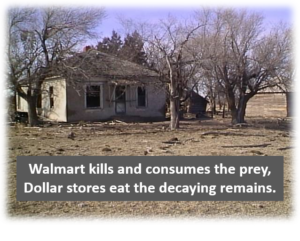
Standing before the rickety abandoned farmstead the young man asked, “What happened Grandpa?” Well son, the same thing happened to me and Grandma that happened to my grandparents in Ireland. We were driven from our land and home by low prices.

Like others on the land, we worked hard to produce the food to feed the nation, trusting that our works would have its reward and that we could live out our hopes and dreams. We know now that the markets didn’t work for us, they only worked for those who bought our grain and livestock. The big grain and meat packing companies were making record profits while we were going bankrupt.

Son, I remember when we were losing this farm. Grandma and I felt like we had failed. We felt so alone. We thought it was something we had done wrong.

Grandma had two jobs in town and I had one. No matter how hard we worked, it just wasn’t enough. We were convinced we had failed not only as farmers, but we worried we had also failed our ancestors and our children, including your father and even you. 

The government, our universities, and our own producer organizations kept telling us we had to become more efficient and that we had to continue to lower our costs. They told us, if we were struggling, it was our fault, not theirs. They told us we were just bad managers. They said low prices were a cycle and things would get better. Despite what we were told, we knew then and we know now that we really were efficient and low cost producers.

Son, as I look back on it, I can’t blame Grandma for what she did. I was suffering, too. I only wish she was still with me today. Looking back, maybe I was better able to fight the depression big corporate and government economics put on us. I worked outside, closer to God’s daily miracles. But you know, son, there is something about working on the land, caring for livestock, the feel and smell of the soil, the caring for God’s blessings and creations that brings you closer to the understanding of what is really important in America. People like us will farm for very little income. We will fight the droughts and the blizzards. We love our country and what we do so much.

You see son, when it’s money and power that you think you need, you can never get enough. People are what really matter. Respecting the wonderful human spirit in all of us is what is most important. Doing unto others as we would have others do unto us, and investing today in our children’s futures by caring for God’s gift to us, the land, is what Grandma and I believed.

Most of us, so fortunate as to grow up on our farms and ranches, know this. We know that the land provides for everyone. We know how to help create the wealth that drives our nation’s economy. For these reasons, I worry about our nation on the long road towards losing its farmers and ranchers, and with that, our connection to the land.

Still, there are people fighting for farmers and ranchers. I know it is too late for many of us, but it is still probably the most important fight there is. After all, it’s about economic freedom allowing people all around the world to feed themselves and to care for the land, so the land can continue to provide wealth for all people, not just a few big corporations.  It’s about people everywhere sharing in the prosperity, not just creating prosperity for a few.

A few years ago Grandma and I attended a meeting at the livestock auction. A man told us it was the market power of big corporations that was the cause of our low prices, not oversupply like everyone else was saying. He said, “You are making too little because those who buy your farm commodities are taking too much of the consumer dollar.” He instilled hope in that crowd that night. He was so determined to do something about the problem. We thought maybe there was a chance for us to survive.

I was so proud of Grandma when she fought her way through the crowd to tell him to keep up the good work. But then I was so embarrassed when she told him that he should tell everyone that he spoke to, to not be too proud to accept welfare. She said, “We wouldn’t be here tonight if we hadn’t taken food stamps.”

Grandma seemed to do better for awhile after that meeting, but then the taxes were due, and we missed another mortgage payment. We lost too many calves in the spring blizzard. When we couldn’t pay our doctor bills she seemed to just give up. I pray that she is with God. I believe she is, I feel her spirit helping me through each day.

Son, all things considered, I think there is still hope. I believe people are beginning to understand the importance of what our family and others have done so well for generations. Thankfully, today we are beginning to hear God’s message crying out from the pulpit, answering prayers to help his people of the land. I believe we are making progress. Maybe with God’s help, farmers and ranchers will be given the opportunity to do what we love for ourselves and our country.

Grandpa, “I’ve heard all you have said. I’ve thought about it. I’ve thought about it a lot, and, if you don’t mind, I think I want to be a farmer!”

Posted in General Advocacy | 1 Comment

Attorney Offers Observations On IBP-Tyson Price-Fix Case

Attorney Offers Observations On IBP-Tyson Price-Fix Case
By David Bowser
2003 – http://www.livestockweekly.com/papers/05/01/27/whldomina.asp
DENVER — “Julia walked into the courtroom in Montgomery with 75 other people,” said Dave Domina, an Omaha, Neb., attorney who represented cattlemen suing the world’s largest beef packer in Montgomery, Ala., last year.”She was the fifth of those 75 people to walk into the courtroom. She didn’t know it, but that meant there was a pretty darn good chance statistically that she was going to serve on the jury.”

Julia was 65 years old.

“She looked like she was frail and in ill health,” Domina continued. “She may have weighed a hundred pounds.”

When the jury panel was asked if any of them had served on a jury before, Julia raised her hand along with a few others.

“No other prospective juror had served three times,” Domina said. “Only Julia.”

Domina said she talked with such an accent and such difficulty of speech he was tempted at first to think she was illiterate.

“Julia answered a few more questions and was largely ignored by the process of choosing the jury, and she survived to sit in the third seat in the front row for the next five weeks,” Domina said.

Domina later learned that Julia was the research librarian for the University of Alabama’s public library system.

Six months before this jury was empanelled, he said, budgets dictated that position in the library be eliminated. The final decision came down between Julia and a 32 year-old widow with three young children. Either Julia or the mother had to go.

Julia resigned her position so the mother of the three children wouldn’t lose her job.

“Nobody knew that when she was sworn in as a juror in this case,” Domina said.

Julia has never been out of the Deep South. She didn’t live too far from Henry Pickett, the plaintiff in the case from Alabama.

At the sixth annual convention of R-CALF, Domina talked about the case, Pickett v. IBP, its implications, where it stands and what the future might hold.

The case stems from a lawsuit filed in 1996, alleging that IBP, now Tyson Fresh Foods, violated the Packers and Stockyards Act of 1921 by using captive supplies, cattle contracted for slaughter, to manipulate prices. It was made a class action case in 2000, representing cattlemen who had sold their animals to IBP between 1996 and 2002.

Following six weeks of testimony, arguments and deliberations, the Alabama jury found for the cattlemen and awarded them $1.28 billion in damages. The judge in the trial, Senior U.S. District Judge Lyle Strom, later set aside the jury’s verdict. The case is now before the 11th Circuit Court of Appeals.

The judge concluded that he had to take the jury verdict away, Domina said, because he believed IBP had proven that captive supply would give them a constant and reliable source of cattle, an affirmative defense in an antitrust case.

“I think he genuinely believed that,” Domina said. “I know this judge. I respect him. I’m not just saying that because he’s from my home state. It is a very rare event when this happens. There was no doubt during the oral arguments that the three members of that (appeals court) panel know it’s a rare event.”

But Domina maintains that the judge viewed the case under the Sherman Anti-Trust Act, not the Packers and Stockyards Act, the law under which the cattlemen sued.

“We think we have by far the proper legal argument,” Domina said, “and that therefore the jury verdict has a high probability of being reinstated.”

Domina said that when they went to trial, he knew they would be trying the case before a jury that was not from cattle country. Therefore, he said, they had to start the case by teaching the jury about the cattle business, and they had to teach them in such a way as to dispel what Domina said are the many falsehoods he felt the other side would try to use in the case.

“Those falsehoods included the falsehoods about genetics and about whether the packers’ use of captive supply encouraged people to improve their genetics,” Domina said.

The plaintiffs suing IBP called on Leo McDonnell, not because he is the president and founder of R-CALF, Domina said, but because he’s a seedstock producer.

“As the case progressed,” Domina said, “we called on a couple of feeders, big feeders with a lot at stake, who were willing to testify about what the cash market means to them and their business.”

At the end of the testimony after the first three witnesses, Domina said Joe Whatley, one of the Alabama lawyers for the cattlemen, told him that with the testimony of economist Robert Taylor of Auburn, Whatley thought they’d made a case that they could submit to the jury and get a verdict that wouldn’t be taken away.

Domina said they called witnesses representing the class in the class action lawsuit and some more feeders from other parts of the country and their economist, Taylor.

“Bob had been in depositions for four full days with Tyson,” Domina said. “He had performed hundreds of regression analyses and had seen more than a million data points from Tyson records.”

Each data point represented a sale of cattle.

“He had looked at more than a million individual transactions,” Domina said. “The attack on him was that he wasn’t qualified and hadn’t done enough work.”

Domina said Taylor had seen more about the packing industry than all of the economists in the history of the United State Department of Agriculture had seen because the packers had never disclosed the data to the USDA.

“When we closed with our evidence,” Domina said, “we wanted to reach Julia and the other 11 jurors with one single, forceful, simple, but really important impression.”

Herman Schumacher from near the border of North and South Dakota was their last witness. That part of the country, Domina said, has land with little utility except for grazing cattle.

“He got on the witness stand and he was only there four or five minutes,” Domina said, “but after I asked him to describe where he was from and describe the appearance and configuration of the lay of the land in those states, I said, ‘What do you use land like that for?'”

Schumacher leaned forward in the witness stand, looked at Domina and then looked at the jury and said, “We live on cattle.”

Tyson’s lawyer, Domina said, asked Schumacher if he flew to Montgomery just to say what he said. Schumacher replied, “Yes.”

“Did you have a good flight?” asked the Tyson lawyer.

“Yes,” Schumacher replied.

“Hope you have a good flight home,” the Tyson lawyer said.

Domina said the packer missed the point.

“We hoped the jury hadn’t,” Domina said.

One of the important things in the case, Domina said, was that they were able to make public testimony by some of the officers and directors of the nation’s largest slaughterhouse.

One of those directors was a former undersecretary of agriculture. She gave a deposition that Domina videotaped in Sioux City, Iowa.

“When I got home that evening,” Domina said, “I said to my wife, ‘If I ever get a chance to play the deposition that was given today by a director of IBP, the cattlemen will win their case.’”

In the courtroom, Domina played the videotape and watched the look on the jurors’ faces.

“I watched every single, solitary juror’s face turn from dumbfounded to expression-filled to mirthful,” Domina said. “I watched the United States district judge, who was trying to keep a close rein on his face, bite his hand so he would not laugh as we listened to a director of IBP — not once, not twice, but three times — testify under oath that the company’s annual revenues were nine million dollars.”

When Domina asked her if she was sure it million and not billion, she said it was million.

“That was one of her better answers,” Domina said.

Domina said the IBP lawyers called captive suppliers to the stand.

“They affirmed the description of the market that our witnesses had given,” Domina said. “They described the advantages of captive supply and said they had the right to contract, and therefore we should lose.”

IBP proved captive supply can assure a steady and continuous stream of cattle to the packing plant.

“We, of course, conceded that,” Domina said.

Bruce Bass, the IBP vice president in charge of procuring cattle, testified that captive supply assured a steady stream of cattle to the plant, and that’s why the company uses captive supplies.

Domina said Bass admitted that the packer would have to pay more if they bought the cattle on the cash market.

Bass, Domina said, admitted to setting the price for IBP’s cattle bids each day, and that the bid depended upon the inventory at the plants. That inventory includes the cattle under contract. The more cattle under contact, the lower the price.

“He shrugged his shoulders,” Domina said, “and said, ‘Of course.'”

With that, Domina contended, the vice president for cattle procurement for the largest beef packer in the United States admitted a violation of the Packers and Stockyards Act.

Domina said that at the end of the trial, the judge announced he would instruct the jury according to guidelines under the Sherman Anti-Trust Act, not the Packers and Stockyards Act.

“The difference is that the burden of proof under the Sherman Anti-Trust Act is significantly higher,” Domina said. “The reason it is significantly higher is because if you bring a Sherman case, you’re entitled to triple damages and you’re entitled to recover attorney fees.”

There’s no provision for that under the Packers and Stockyards Act.

Domina said that by then he thought the judge had become frightened of the lawsuit.

During a battle over a motion earlier in the case, Domina said, the judge commented that he didn’t know how he would ever impose an injunction on IBP.

“In this candid and intelligent and thoughtful exchange, the judge — who should get credit for it, not be condemned — made it very clear that he was threatened by the responsibility that he suddenly realized he had,” Domina said.

The Omaha attorney said since 1921 there have been 15 presidents of the United States and there have been 24, soon to be 25, attorneys general.

“None of them,” Domina insisted, “have enforced the Packers and Stockyards Act in an effective way, and certainly not since Franklin Roosevelt’s first term in the early 1930s.”

Despite the stiffer requirements, Julia and the 11 other jurors returned a verdict for the cattlemen and awarded them $1.28 billion.

But the judge, viewing the case through the lens of the Sherman Anti-Trust Act, where any economic justification for IBP’s actions justifies the action, a few weeks later set aside the jury verdict.

“Our contention is that we didn’t try a Sherman Anti-Trust case,” Domina said. “If we had, the verdict would have been $3.8 billion, not $1.3. We would have had an attorney’s fee award.”

Domina said profit doesn’t justify a monopoly.

“It never has,” Domina said. “It never will. If it does, then the anti-trust law has been repealed by judges.”

The case has been appealed to a three-judge panel in the 11th Circuit Court of Appeals.

One of those judges is an expert in anti-trust cases.

“In one published opinion by this judge,” Domina said, “he starts his opinion by saying, ‘The anti-trust laws of the United States are the Magna Carta of our economic freedom. They are as important to our economic liberty as the Bill of Rights is to our personal liberty.’

“We think we’ll get a fair shake from him and the other two judges.”

Domina said he thinks the cattlemen have a good chance on appeal.

“We may have to retry the damages aspect of the case,” he conceded, “but we expect that there will be injunctive relief.”

If the appellate judges find for the cattlemen, there will be another trial for injunctive relief, that is, an order by the judge changing the way packers buy cattle.

The appeals court could send the case back down and order that the damages aspect of the trial that was held in Montgomery last year be retried.

Retrying the case wouldn’t be all that disappointing, Domina said.

“We probably have the potential to get a larger verdict,” he opined. “We’d like to keep the one we have, but if we have to retry it, then so be it.”

Domina said he expects to hear from the appeals court sometime before June, but there is no timetable for the judges to issue a ruling.

If the court finds for IBP, Domina said the cattlemen can ask the entire 11th Circuit, 11 judges, to hear the case. That is not likely, he said, but it could happen.

In the end the case probably will be appealed to the U.S. Supreme Court.

“If we win in the 11th Circuit, Tyson can go through the same steps,” Domina said.

The Supreme Court does not have to hear the case. They can let the appellate court ruling stand.

“A lot of people think that this particular anti-trust case will wind up on the Supreme Court’s docket,” Domina said. “We’ll see.”

After the judge in Alabama read out the verdict, Domina ran into Julia and two other women from the jury at the foot of the stairs in the Montgomery federal courthouse.

“Julia leaned forward and grabbed my hand and said, ‘I was prepared to stay here in this building until Christmas if I had to to get this verdict for your people.'”

Julia, Domina said, has become one of the most important people in the history of the cattle business.

Posted in Cattlemen's Legal Fund | 2 Comments