Pickett v. IBP: Judge Rules To Allow Testimony By Plaintiff’s Experts: Experts will testify in the most significant cattle industry trial since the 1920’s.

April 16, 2003

Pickett v. IBP: Judge Rules To Allow Testimony By Plaintiff’s Experts
Experts will testify in the most significant cattle industry trial since the 1920’s…

AgriNews, Billings, MT
By Leesa Kiewel

On April 8, U.S. District Judge Lyle Strom, Middle District of Alabama, issued a decision in Pickett v. IBP to allow the plaintiff’s expert witnesses to testify that IBP’s captive supplies unlawfully depress cattle prices. The ruling came as a result of a March 13 hearing over IBP’s motion to strike the plaintiffs’ expert witnesses for failure to meet certain legal standards.

IBP had objected to testimony from Dr. Robert Taylor, an Alfa Eminent Scholar and agricultural economist at Auburn University; Dr. Bernard Siskin, who holds a doctorate in Applied Statistics from the University of Pennsylvania and is a former professor of statistics at Temple University; and Dr. Catherine Durham, an Assistant Professor of Economics and agricultural economist at Oregon State University. IBP had also motioned to strike the testimony of Mike Callicrate, a cattleman from St. Francis, KS, who is a plaintiff in Pickett v. IBP.

The “Pickett Case”, as it has become known, is the first class action suit ever certified under the Packers and Stockyards Act (P&SA), and has therefore become a precedent setting suit regarding the issue of captive supply cattle. The plaintiffs claim that IBP’s use of captive supply cattle has downwardly depressed the cash market price for fed cattle, constituting an unfair practice under the P&SA.

Judge Strom’s ruling clears the way for the case to go to trial, most likely in January 2004.
Supporters say the case could be the most significant event in the cattle industry since the government broke up the packer-cartel in the early 1920’s, if the jury rules in favor of the cattlemen involved in the class action suit.

Judge Strom’s 37 page ruling includes an individual analysis of IBP’s objections to the expert testimony. (A full text of the ruling and other case information can be found on the web at www.endcaptivesupply.com).

Dr. Robert Taylor: “There is no question that Dr. Taylor’s education, knowledge and experience qualify him to testify as an expert under Federal Rule of Evidence 702. Dr. Taylor plans to testify that, in his opinion, IBP’s use of captive supply caused low prices for fed cattle on the cash market. In reaching this opinion, Dr. Taylor created and analyzed over one hundred regression models, using data supplied to him by Dr. Bernard Siskin, a fellow plaintiff’s expert in this case. IBP argues that Dr. Taylor’s analysis demonstrates only that there is a correlation between captive supply and cash market prices, and not that captive supply causes low prices on the cash market…IBP claims that Dr. Taylor’s tests do not prove causation, and the Court should not permit Taylor to draw a conclusion regarding causation. If permitted to testify, Dr. Taylor will testify that IBP’s use of captive supply caused low prices on the cash market. Although IBP claims that Dr. Taylor has confused causation with correlation, the Court finds that Dr. Taylor’s opinion is sufficiently reliable to be admissable. Second, Dr. Taylor will testify that IBP’s use of captive supply had a downward effect of four percent on the cash market price for fed cattle. Based on the one hundred plus regression models, which he analyzed along with anecdotal evidence, he concluded that IBP’s practice caused a four percent downward effect on the price paid in the cash market. Third, Dr. Taylor plans to testify as to the aggregate damages in this case. Dr. Taylor is expected to testify that, in his opinion, IBP’s use of captive supply damaged the class members by a total of $573 million. Dr. Taylor reached this conclusion by considering data supplied to him…including the number of head of cattle in the class for each week during the class period. Dr. Taylor also acquired the average live weight for each week from the IBP Profit and Loss statement, and he then multiplied that number by the estimated price impact for the week. IBP claims that this damage calculation is incorrect because it is based on the assumption that captive supply had a uniform effect on the cash market price in all parts of the country. The Court finds that defendant’s objection to the foregoing proposed testimony of Dr. Taylor should be denied.”

According to Court documents, Dr. Bernard Siskin’s expert report explains how he was able to determine whether a particular purchase by IBP was a cash purchase or a captive supply purchase. In making his calculations, Dr. Siskin relied on data from various sources, including 1) IBP’s summary of its Monday Marketing Meetings; 2) IBP’s profit and loss statements for slaughter and processing; 3) various informational responses regarding how IBP operates and what its data represents; 4) various published literature concerning cattle purchases and captive supply; 5) computerized data supplied by IBP and 6) various publicly-available agricultural and economic data. Siskin has never before testified in an antitrust case or a case under the P&SA.

Regarding Dr. Siskin’s testimony Judge Strom wrote, “The important factor in this case is that Dr. Siskin was able to distinguish between captive supply sales and those on the cash market. That fact is relevant to which sales allegedly damaged members of the plaintiff’s case. The Court has reviewed IBP’s other arguments relating to Dr. Siskin’s testimony and finds them to be unpersuasive.”
Dr. Catherine Durham is expected to testify regarding the impact that captive supplies has on market prices along with testimony about her own econometric model that she developed, “which shows a significant and large impact of captive supply on fed cattle prices.”

IBP argued during the March 13 hearing that Dr. Durham’s testimony using her own models should be disallowed because they are allegedly based on “unrealistic assumptions.” IBP argued that Dr. Durham’s models assume that captive supply feedyards supply more cattle than they would have supplied had they sold on the cash market. Saying that Dr. Durham’s testimony is the “type of evidence that could assist the jury in understanding the evidence”, Judge Strom overruled IBP’s objection to Dr. Durham’s testimony.

With regard to the testimony of Mike Callicrate, Judge Strom’s ruling was concise. “IBP’s objection regarding Callicrate’s lack of independence is not well taken. Mike Callicrate’s vast experience as a feedyard operator and his many years in the cattle business provide him with sufficient experience and knowledge to testify to those matters contained within his expert report. IBP’s objection to Callicrate’s testimony will be overruled.”

Posted in Cattlemen's Legal Fund | Leave a comment

Mike Callicrate: Crusader for independence

Mike Callicrate: Crusader for independence
By Jeanette Larson
Ag Journal Managing editor

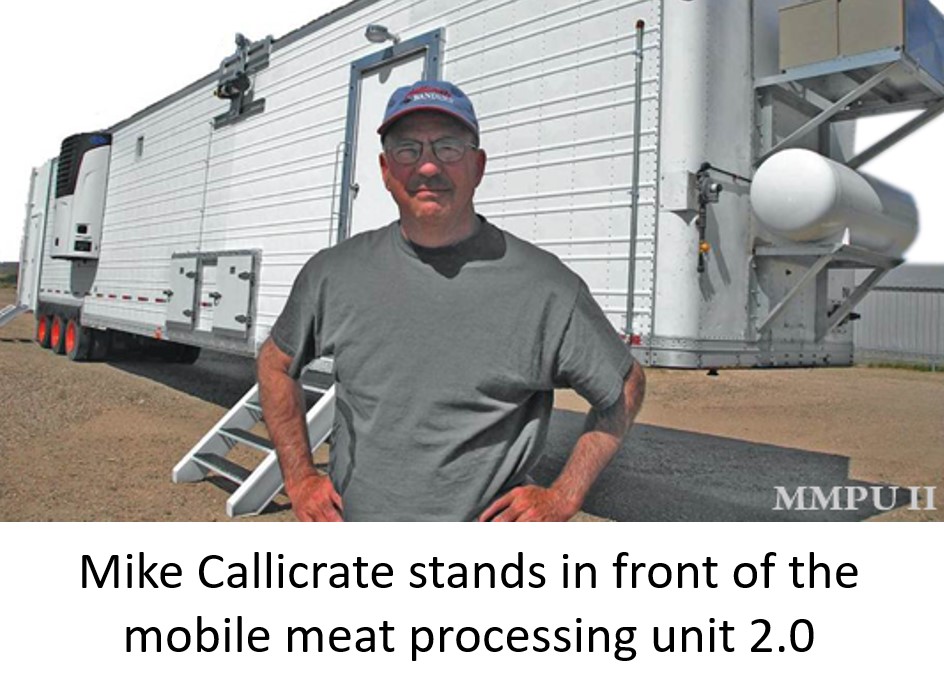
St. Francis, Kan. – Outspoken and passionate, Mike Callicrate is not afraid to take on anyone in his pursuit of fair markets for the American ag producer.
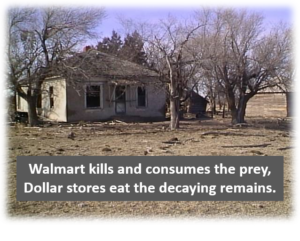
“See this,” he said, pointing to a picture of the Walmart sign while speaking at a conference. “That’s the tombstone of rural America.”

His outspoken, flamboyant style causes some people to discount him as a rabble-rouser, but no one denies that he does manage to get things done.
Callicrate was one of the driving forces in getting the Country of Origin Labeling passed in the 2002 Farm Bill. He is now working hard to make sure the original intent of the law is fullfilled in the rules being written for its implementation. Promoting fair labeling for US products is just one of his many projects.

“That’s my reason for living,” said Callicrate. “to increase income at the farm and ranch gate.”
Born in Denver, Colo.,in 1951, he has always loved agriculture.
“I was in awe of a tractor farming a field next to our house in Broomfield Colo.,” he said. “I was probably two years old.” 

The third of eight children, he carried his curiosity about agriculture through college, first attending Sam Houston State University, Huntsville, Texas, then Lamar Community College in Lamar, Colo., and finishing with an Animal Science degree from Colorado State University in 1975. 
“I learned to always question,” he said. “And I learned how to look for answers.”
He is quick to credit friends, family and partners that have helped him along the way. The mentor who taught him the most was a business partner.

“Theron Culwell, St. Francis, Kan., ten years my senior, was a partner of mine in my first feedyard,” he said.  “He taught me how to laugh at adversity, and turn problems into opportunities.”
Callicrate has become skilled at turning problems around. He closed his feedlot last year, when he was unable to get fair prices on the open cattle market. Now he is reopening it next week, with a whole new approach to marketing. He will be selling all his cattle to another one of his operations, which will take them directly to the consumer.

“Feeding cattle the last ten years was my biggest failure,” he said. “But that has led to my next success.”

This new venture, Ranch Foods Direct, a partnership with Doug and Susan Samuelson, owners of Warren Ranch Company of Cheyenne, Wyo. has been in the works for several years. Now, through a joint venture with G&C Packing in Colorado Springs, Colo. they plan to process and sell 4-500 head of cattle a month, as well as bison and other livestock.
A true modern renaissance man, Callicrate is fascinated by everything and lets one project flow into another.

“The feedlot led to the Bander,” he said. “I’ve always had an inventive streak.”
He was using a standard bander to castrate bulls and was unhappy with the results. However, his vet Dr. Lynn Locatelli, told him that ligation was a great tool, if the pressure was right. So he set about tinkering and invented the Callicrate Smart Bander, which he patented in 1991.
“It took about 5 years for the bander to take off and start paying,” he said. “The feedlot carried the Bander and now the Bander is carrying the beef venture.”

Just as his business ventures flow naturally together, his favorite ways to relax, eating good food and reading are really just extensions of everything else he enjoys.

He has dealt with adversity and bright sides in his personal life, also. His son Tyler was killed in 1996 in a car accident. His other son, Teegan is seventeen, and a junior at St. Francis High School. Teegan inherited his dad’s inventive streak and loves to build things, including beautiful cabinets. He also continuously works on and builds dune buggies, according to his dad.

What about young people who are looking at agriculture as their future?

“I would encourage them, only with full knowledge of what they are getting into,” he said. “I think the timing is good for farmers to link with consumers via a new sustainable food system that provides real food to people that want to be healthy. The idea that you have to be big is wrong – you have to be profitable.”

While he thinks that this is a good time for farmers to market direct to consumers he is adamant that the market needs to facilitate this link.

“Farmers and ranchers should do what they do best – farm and ranch, he said. “They shouldn’t be told that they have to create their own markets and distribution in competition with global market predators like Tyson, ADM, ConAgra and Cargill.”

Through other ventures, Callicrate has discovered that consolidation is a problem in many markets, from cattle to books. One of Callicrate’s side ventures is Callimuth Press, a partnership with John Helmuth. They have published Helmuth’s novel Voices Rise From the Land, a fictional account of the consolidation lawsuit against packer IBP. They discovered through marketing the book that independent publishing is as rare as independent meat marketing.

“Joyce Meskis, owner of the Tattered Cover (book stores in Denver, Colo.,) is to book selling what I am to cattle feeding,” he said.

Callicrate spends much of his time on the road, working with organizations to try and bring profitability back to agriculture. He thinks there is a future for American ag, but people need to be aware of what is happening in the marketplace.and work to “See that a new competitive market infrastucture is developed and remains open for them (farmers and ranchers), to receive fair prices and deal more directly with the consumer,” he said, “And then just farm and ranch the best they know how.”

Posted in General Advocacy | Leave a comment

OCM’s Cattlemen’s Competitive Market Project Applauds Favorable Decision in Cattle Price Manipulation Case

April 11, 2003
 
OCM’s Cattlemen’s Competitive Market Project Applauds Favorable Decision in Cattle Price Manipulation Case
 
Lincoln, NE ~ The Organization For Competitive Markets’ Cattlemen’s Competitive Market Project (CCMP) applauded the recent decision of the trial court in the case of Pickett v. IBP which allows the plaintiff’s experts to testify that IBP’s captive supplies unlawfully depressed cattle prices.  IBP tried to exclude the testimony of Dr. Robert Taylor of Auburn University and Dr. Catherine Durham of Oregon State University saying that they were unreliable.  Judge Lyle Strom, in an April 8, 2003 decision, disagreed.
 
“IBP will now have to explain themselves before an unbiased jury,” said Randy Stevenson, CCMP steering committee member and Wheatland, Wyoming feedlot owner.  “The meat packers have always said that captive supplies are wonderful for the producers and that they do not manipulate prices with captive cattle.  Judge Strom has now told IBP in clear terms that the economic evidence is reliable and that a jury is entitled to decide who is right.”
 
The Pickett v. IBP case is the first class action ever certified under the Packers & Stockyards Act.  Plaintiff’s counsel David Domina, Joe Whatley, Randy Beard, Clay Hornsby and Steve Griffith have guided this precedent setting case through several attempts by IBP’s lawyers to have it thrown out of court.  The plaintiffs allege that IBP has used its contracted and packer-owned cattle as a marketplace weapon to manipulate cattle prices downward.
 
“The packers have succeeded in convincing USDA and the Congress that captive supplies are merely a natural change in the industry,” said Korley Sears, CCMP steering committee member and co-owner of Ainsworth Feedyards in Ainsworth, Nebraska.  “They will not be able to use campaign contributions and K Street lobbyists to influence the decision of the jury that will hear this case.  If the jury rules for cattlemen, it will be the most significant event in the cattle industry since the federal government broke up the packer-cartel in the early 1920’s.”
 
The OCM Cattlemen’s Competitive Market Project works to increase competition in the live cattle markets through research, education and advocacy to reduce captive supplies and retail market power.
 
The Organization For Competitive Markets is a multidisciplinary, nonprofit group of farmers, ranchers, academics, attorneys, and policy makers dedicated to reclaiming the agricultural marketplace for independent farmers, ranchers and rural communities.
 
 
Posted in Cattlemen's Legal Fund | Leave a comment

Seeking Freedom in America – Modern day slaves are denied justice

March 25, 2003

By Mike Callicrate

“A 38-year-old poultry grower in my county in North Carolina committed suicide in his chicken house Sunday morning.  After the first shock and sorrow for the family, I felt anger with myself for not visiting that community more often, then anger that the growers won’t stand up anymore even though I know that you can’t fight when your head is on the block and the sharp blade of the guillotine is held by a fraying rope,” reported a long time grower advocate. This is just one of many farmer suicides in production agriculture. The so-called efficient, vertically integrated, industrial manufacturing model of global food production and distribution has ensnared and enslaved farmers.  Pork producer necks are also now under the blade with beef producers being herded rapidly to slaughter by the meat integrators Tyson, ConAgra, and Cargill. This global cartel controlled food system, rather than nourish the people who sustain it, consumes them. The result is a food system that concentrates money and power at the top and poverty at the bottom while compromising food access, quality, and safety in the process.

Hopelessly indebted producers denied market access, have a choice: sign abusive, one-sided production contracts with built-in provisions barring their access to the courts or exit the business they love, leaving behind their property, homes, and unpaid debts.

Farmers and ranchers are failing under the low commodity prices and nonnegotiable fixed contracts of this food cartel at the same time as consumers are paying record-high prices for food. Hard fought new legislation, like mandatory price reporting, that sought to shine a revealing and healing light on market injustices, was gutted in rulemaking by the very packers and retailers it was designed to regulate. Now producers, fighting to save their latest legislative win, country of origin labeling (COOL), are being lied to, threatened, and intimidated by these same multinational fear-mongering rascals who stand to lose their exorbitant profits if consumers have the necessary information to choose where their food comes from and how it is produced and processed.

It’s been said that the foundation of suffering is ignorance. Most people don’t know how our food system is being monopolized and how producers and consumers are being exploited. They don’t know how our nation’s food security is being undermined?

Our current administration and many in Congress know, but they prove by their actions and refusal to enforce existing antitrust laws that corporate profits are more important to them than people. They don’t support local food security, human dignity, fairness, and a sustainable, affordable food system…the very foundation of human existence. Instead, they continue to sell out our vital interests to the big money that got them elected. Many have actually facilitated the takeover of the U.S. and global food systems by Tyson, Cargill, ADM, ConAgra, Wal-Mart, Kroger, and others.

The best selling book, Fast Food Nation, exposed a broken, unhealthy, and unsafe food processing and distribution system driven by fast food’s demand for higher and higher profits. You only have to look at McDonald’s earnings to see the change informed eaters are causing in the fast-food industry.
The newly published book, Plucked and Burned, exposes an equally abusive “immoral and fiendish” food production system that has turned once prosperous independent farmers into slave laborers.

Brother David Andrews, CSC, Executive Director of The National Catholic Rural Life Conference, www.ncrlc.com, recommends the book, “The truth about the poultry industry needs to be told, as it is here.  More importantly though, it needs to be heard, understood, received, and dealt with through justice and equity.  Eating is a moral act. The story Plucked and Burned blazes with moral insight and passion.  My prayer is that it leads to effective and prompt changes in a system that is morally degrading.” This model of control and abuse is now being fully executed on all of us, from those who consume, to those of us who produce everything from shirts to coffee to lamb chops.

Plucked and Burned completely captures the life and sadly the death of the poultry farmer. Poultry farmers cannot be away from the farm to walk the halls of the legislative buildings to tell their stories of unfairness and corruption to government officials. “Plucked and Burned” delivers the story to people who can change things as it takes the reader into a world of lies and deception,” Kay Doby, President, North Carolina Contract Poultry Growers.

The U.S., which sets the world market for food commodities is being “plucked and burned”. The fruits of our earth and the labor of the world’s people are stolen from its rightful recipients without the fair distribution of wealth provided by fair, open, and competitive markets. A properly regulated free market system is a proven delivery mechanism for the promises of America – economic freedom, economic fairness, social justice, and the opportunity to prosper.

Eating really is a moral act. Consider the difference you can make with your food dollars, the values, and ethics you can support. Your legislators should know you expect a just and safe food system free from monopoly control and that you want no less for other people around the globe.

Mike Callicrate is a cattle feeder from St. Francis, Kansas. He is an outspoken advocate for competitive markets, family farmers, ranchers, and rural communities. He is a plaintiff in the national class-action antitrust lawsuit against Tyson/IBP. The 12,000 head Callicrate feeding operation remains closed, waiting for a fair and competitive market.  

Posted in General Advocacy | Leave a comment

Wal-Martization Represents Destruction to the Global Community

February 5, 2003
 
Wal-Martization Represents Destruction to the Global Community
By Mike Callicrate
 
Our freedom is being stolen away in every Wal-Mart bag
 
Last week’s USA Today article about Wal-Mart’s influence on the U.S. economy should be deeply troubling to all Americans interested in preserving a fair marketplace and healthy, sustainable national, state, and local economies.
 
Wal-Mart’s crushing market dominance is the result of unchecked anticompetitive behavior, including predatory pricing, worker abuse, and the shake down of suppliers. Wal-Mart is only the tip of the iceberg in the economic destruction resulting from ineffective U.S. antitrust law enforcement. Economists, from Adam Smith to Frank Knight, agree regulation of economic power is required to ensure the preservation of the free market system, which provides for the fair and equitable distribution of dollars within an economy. The economic and political freedom of America will no longer be available to U.S. citizens or to most working people around the world without swift and aggressive U.S. antitrust action to protect our markets from abusive market power and monopoly. When we lose our markets, we lose our freedom.
 
Today’s Wal-Mart and other competition killing business trusts, should be broken up, as were the monopolist-oligopolist oil companies, meat packers, banks, and railroads of 100 years ago. 
 
In the name of free trade and globalization, Wal-Mart, Kroger, Safeway, and many other national and multinational food retailers have, with their supply chain partners, Tyson, Cargill, Smithfield, and ConAgra, promoted and driven the unlawful, highly-concentrated, centrally-planned model of business that is steamrolling independent businesses and busting our economy and many economies around the world. These dictator merchants and processors are not only harvesting and processing the commodities off the land below the true cost, but are also destroying the independent businessmen, farm and ranch families, and their futures.
 
Pandered, deceived, corrupted and frightened governments have facilitated the wealthy multinational corporations in forcing their irresponsible, dangerous, high cost, socially and environmentally destructive, industrialization of production, processing, and distribution of food and consumer goods on the global consumer.  University and government economists, who are the economic equivalent of an Arthur Anderson accountant, hype the lies of globalization, the need to “give access to get access” in trade, and pile shame on U.S. workers and farmers unable to produce at Chinese or Brazilian prices, which are mostly dependent on slave wages and destruction of the environment. Everything vital to human existence, from commodities to consumer goods, and industries from agriculture to textiles, is at risk of being further controlled by a handful of companies.
 
This abusive, exploitive, and destructive economic model promoted by Wall Street, some universities, and this Congress and Presidential administration, is in my opinion, the greatest present threat to world safety, economic well-being, and peace. This concentrated money power has become overwhelming and abusive political power.
 
Deceived and manipulated people, communities, states, and countries are wondering what happened to globalization’s promises of jobs and prosperity as tax revenues decline and spending deficits explode and as they decline dumbfounded into deep economic and social ruin. Additional once-prosperous farm communities, where healthy, safe food and responsible farm kids were raised, will be turned into ghost towns. Left unchecked, we will soon wake up to find our life-sustaining food and fiber industries lost, and probably most tragic of all, our sovereignty. 
 
This fearsome economic and political force, known as globalization, has turned our world into its own private colony of serfdom, to be strip-mined and plucked like a chicken.  Under this corporate-controlled WTO globalization plan, cheap goods sourced in low cost, poverty stricken countries are sold by Wal-Mart and their friends for exorbitant profits in the highest priced consuming markets, like the U.S.  Living wage U.S. jobs in manufacturing and production continue to be sent off-shore, avoiding the higher mandated costs of doing business in our once safe, solvent, prosperous, and free country.
 
Mutually beneficial trade between people lies in sharp negative contrast to the hate and discontent that results from unethical corporate dealing as it exploits low-cost, off-shore production. Global traders, with comparably little investment, are vacuuming up dollars created from production and manufacturing that once circulated and multiplied in our communities, along with precious equity, lost to below-cost-of-production prices, below-living wages, and higher consumer prices than a competitive market would allow.
 
The well-being, liberty, and freedom of every country, independent business, and person is threatened in the leveraging of people against people, and country against country, as these killer greed driven corporations, empowered by WTO rules, search the globe for higher and higher profits in the lowest-cost commodities and in the most desperate people that will work the cheapest.
 
Liberty, God’s gift to humanity, is not available under this U.S. sponsored, global economic dictatorship.  If American’s won’t take a stand against this economic genocide, who will?
 
Some people who have spoken out for liberty, justice and freedom: 
 
 “The people who own a country ought to govern it.”
– John Jay, first chief justice of the United States, 1787
(From Wealth and Democracy, by Kevin Phillips, First edition 2002) 
 
“The condition upon which God hath given liberty to man is eternal vigilance;
which condition if he break, servitude is at once the consequence of his crime,
and the punishment of his guilt.”

– John Philpot Curran, Irish lawyer and politician, July 10, 1790
 
 “When plunder becomes a way of life for a group of men living together in
society, they create for themselves in the course of time, a legal system
that authorizes it and a moral code that glorifies it.”

– Frederic Bastiat, The Law, 1846.
 
“As a result of the war, corporations have been enthroned and an era of corruption
in high places will follow, and the money power of the country will endeavor to prolong
its reign by working upon the prejudices of the people until all wealth is aggregated in
a few hands and the Republic is destroyed.  I feel at this moment more anxiety for the
safety of my country than ever before, even in the midst of war.”

 – Abraham Lincoln, letter to William F. Elkins, Nov. 21, 1864.  Archer H. Shaw, ed., The Lincoln Encyclopedia 40 (1950)
 
U.S. economy follows the Wal-Mart way, By Jim Hopkins, USDA Today: http://www.delawareonline.com/newsjournal/business/2003/02/03useconomyfollow.html
 
Mike Callicrate, from St. Francis, Kansas, is a cattle feeder and outspoken advocate for competitive markets, family farmers, ranchers, and rural communities. He is a plaintiff in the national class-action antitrust lawsuit against Tyson/IBP. The 12,000 head Callicrate feeding operation remains closed, waiting for a fair and competitive market.  
 
 
Mike Callicrate

Posted in General Advocacy | Leave a comment