WRB Cooperative to Honor Mike Callicrate as “Westerner of the Year”

WRB Cooperative to Honor Mike Callicrate as “Westerner of the Year”

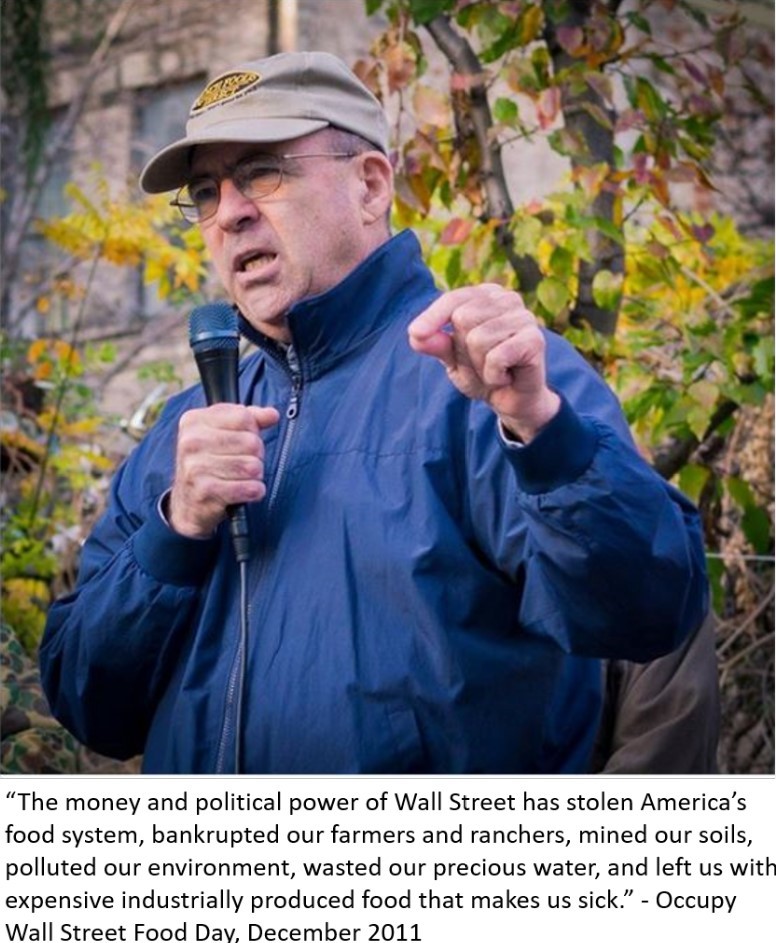
Western Ranchers Beef Cooperative (WRB) has announced that Mike Callicrate of St. Francis, Kan., will be honored as “Westerner of the Year” at the annual WRB Profit Conference. The seventh annual Beef Producers Profit Conference will be held again at John Ascuaga’s Nugget on Saturday, Jan. 4, 2003. In addition to the award, the conference will provide beef producers with the tools to add value to their herds.

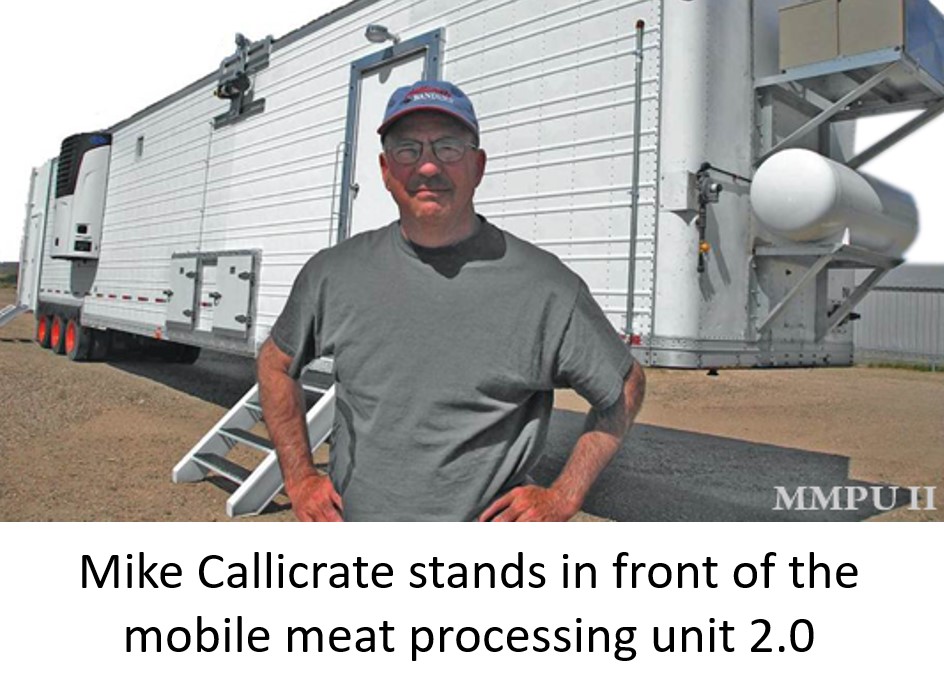
This year’s “Westerner of the Year” will be Kansas feedlot operator Mike Callicrate. For years now, Callicrate has spoken out against consolidation in the beef industry. He has also developed a unique beef processing system and a Ranch Direct marketing program that provides a high-quality product to consumers and a fair profit to producers. In 1996, Callicrate testified before Secretary of Agriculture Dan Glickman’s panel on Concentration. He is also a lead plaintiff in a national class action antitrust lawsuit against Tyson/IBP.

In addition to Callicrate, speakers at the conference will include Chad Ellingson of Genex, Inc.; Roger Ingram of the University of California Extension Service; CEO Bill Bullard of R-CALF USA; and Donald Nelson of Washington State University (WSU).
Nelson will present an extensive program entitled “Creating a Sustainable Future.” This program will touch on issues facing ranchers and look toward sustainable means of production. Currently, Nelson is the Extension Beef Specialist for Washington State University. He also works through the WSU Center for Sustaining Agriculture and Natural Resources. In addition, Nelson is certified by the Allan Savory Center for Holistic Management and is in training in Stephen R. Covey’s “The Seven Habits of Highly Effective People.”

Nelson’s previous experience includes working with the Texas Beef Industry Council as director of a branded-beef program, and as a professor, a ranch manager, and an executive officer for the American International Charolais Assn.

In addition to the above headliners, a program entitled “Getting Back To Basics” will focus on the things that you can control as a beef producer. The program will address all segments of the beef industry, including nutrition, cull cows, added-value products, and ensuring sustainability.
For more information about the program, contact WRB at (530) 233-2334.

Posted in General Advocacy | Leave a comment

Officials of Porter Township move to end corporate rule and tyranny in their community

OFFICIALS OF PORTER TOWNSHIP MOVE TO END
CORPORATE RULE AND TYRANNY IN THEIR COMMUNITY…
 

Published on Thursday, December 19, 2002 by CommonDreams.org
Americans Revolt in Pennsylvania – New Battle Lines Are Drawn
by Thom Hartmann
 
The good citizens of Pennsylvania have done it again.

Back in 1776, they hosted at Liberty Hall in Philadelphia a gathering of people radicalized by the predations of the East India Company. The world’s first multinational corporation then held a virtual stranglehold on commerce and politics in North America, and brazenly used British troops as its enforcers. On the first week of December, 1600, when she created the East India Company, Queen Elizabeth I became the first CEO monarch, and by 1776 King George II was following in her footsteps with his sizeable holdings in and open advocacy of corporate rule.

The American colonists were offended by the idea they should be vassals of a corporation and a kingdom that supported and profited from it. Thomas Jefferson wrote the Declaration of Independence, which explicitly stated that humans were born into this world endowed by their Creator with certain rights, that governments were created by humans to insure only humans held those rights, and “That whenever any form of government becomes destructive of these ends, it is the right of the people to alter or abolish it…”

Stating flatly that “it is their right, it is their duty,” to alter their government and thus claim their unique human rights, 56 men defied the East India Company and the government whose army supported it by placing their signatures on the Declaration of Independence, saying, “with a firm reliance on the protection of divine Providence, we mutually pledge to each other our Lives, our Fortunes and our sacred Honor.”

Thus began America’s first experiment with democracy.

The first week of December of that same year, Thomas Paine wrote in a pamphlet he published a few weeks later that, “Tyranny, like hell, is not easily conquered… What we obtain too cheap, we esteem too lightly: it is dearness only that gives every thing its value. Heaven knows how to put a proper price upon its goods; and it would be strange indeed if so celestial an article as FREEDOM should not be highly rated.”

Exactly 226 years later, another small group in Pennsylvania also met in early December to sign a document that claimed the same right – their duty – to alter their government in a way that would restore the democracy the original Founders were willing to fight and die for. The democratically elected municipal officials of Porter Township put their signatures to an ordinance passed unanimously on December 9, 2002. It reads, in part:

“A corporation is a legal fiction created by the express permission of the people…;
“Interpretation of the U.S. Constitution by the Supreme Court justices to include corporations in the term ‘persons’ has long wrought havoc with our democratic processes by endowing corporations with constitutional privileges intended solely to protect the citizens of the United States or natural persons within its borders;

“This judicial bestowal of civil and political rights upon corporations interferers with the administration of laws within Porter Township and usurps basic human and constitutional rights exercised by the people of Porter Township; …

“Buttressed by these constitutional rights, corporate wealth allows corporations to enjoy constitutional privileges to an extent beyond the reach of most citizens;

“Democracy means government by the people. Only citizens of Porter Township should be able to participate in the democratic process in Porter Township and enjoy a republican form of government therein;…”

And then, with an audacity and willingness to take on overwhelming multinational corporate power similar to that displayed by the Founders, the elders of Porter Township said that “Corporations shall not be considered to be ‘persons’ protected by the Constitution of the United States or the Constitution of the Commonwealth of Pennsylvania within the Second Class Township of Porter, Clarion County, Pennsylvania.”

It became the law of that land five days later.

In 1773, the East India Company had claimed the “right” to participate in the political processes of England and, with wealth and power greater than the average citizen, got passed for themselves a huge tax reduction on tea and an overall tax rebate so large they could undersell and wipe out their small Colonial competitors. The response of the entrepreneurial colonists to the Tea Act of 1773 was the Boston Tea Party revolt against that transnational corporation, setting the stage for the Declaration of Independence and the beginnings of what Lincoln called “government of the people, by the people, for the people.”

Similarly, in 2000, one of the largest sludge hauling corporations in the United States sued Porter Township, claiming that as a “person” the corporation had rights equal to the citizens of the township, and therefore they couldn’t “discriminate” against the corporation under the due process and equal protection clauses of the 14th Amendment, which was passed after the Civil War to free the slaves.

Porter Township, supported by a coalition including the Pennsylvania Farmers Union, the Pennsylvania Association for Sustainable Agriculture, The Sierra Club, the AFL-CIO, the United Mine Workers of America, Common Cause, the Program on Corporations, Law, and Democracy (POCLAD), the Community Environmental Legal Defense Fund (CELDF), and other pro-democracy groups, fought back. They bluntly asserted that – as it was from the founding of this nation until the bizarre Santa Clara County v. Southern Pacific Railroad Supreme Court case in 1886 – only humans are entitled to human rights in their community.

In the law they passed on December 9, 2002, they explicitly said, “The judicial designation of corporations as ‘persons’ grants corporations the power to sue municipal governments for adopting laws that violate the purported constitutional rights of corporations. For example, in September 2000, Synagro Inc. filed a federal lawsuit against Rush Township (Centre County) Supervisors, forcing the Township to spend tens of thousands of taxpayer dollars to defend its health-related sewage sludge testing ordinance against claims that the ordinance violated the corporation’s constitutional rights.”

The implications of this are staggering. For example:

Before 1886, it was a felony in most states for corporations to give money to politicians or otherwise try (through lobbying or advertising) to influence elections. Such activity was called “bribery and influencing,” and the reason it was banned was simple: corporations can’t vote, so what are they doing in politics? Their concern is making money, and they don’t need clean air to breathe or fresh water to drink; leave them to making money and leave the administration of the commons to We, The People.

Before 1886, it was a crime in most states for corporations to own others of their own kind. The need to keep corporations from becoming so large that they could usurp democracy was so clear to the Founders that Jefferson and Madison proposed an 11th Amendment to the Constitution that would have banned “monopolies in commerce,” restricting each company to performing a single purpose, making it responsible to its local community, and barring it from owning other corporations. The amendment didn’t pass because everybody at the time knew that the states already had such laws in place.

Before 1886, only humans had full First Amendment rights of free speech, including the right to influence legislation and the right to lie when not under oath. Now corporations have claimed that they have the free speech right to influence public opinion and legislation through deceit, and a case based on a multinational corporation asserting this right is poised to go before the Supreme Court as you read these words. That corporation reserves the right to fire and even prosecute human employees who lie to it, however.

Before 1886, only humans had Fourth Amendment rights of privacy. Since then, however, corporations have claimed that EPA and OSHA surprise inspections are violations of their human right of privacy, while at the same time asserting their right to perform surprise inspections of their own employees’ bodily fluids, phone conversations, and keystrokes.

Before 1886, only humans had Fifth Amendment rights against double jeopardy and the right to refuse to speak if they’d committed a crime. Since 1886, corporations have asserted these human rights for themselves: the results range from today’s corporate scandals to 60 years of silence about the deadliness of tobacco and asbestos.

Before 1886, and following the Civil War, only humans had Fourteenth Amendment rights to protection from discrimination. Since then, corporations have claimed this human right and used it to stop local communities from passing laws to protect their small, local businesses and keep out predatory retailers or large corporations convicted of crimes elsewhere.

Porter Township has fired the first shot in the New American Revolution with this first binding law denying corporate personhood. It’s a revolution that will be fought not with guns but in the courts, in the voting booths, and on the battlefield of public opinion. (Far from harming corporations, returning human rights solely to humans will lead to an entrepreneurial boom in America – only a small handful of very large corporations abuse these rights to deceive people, hide crimes, or make politicians violate the will of their own voters. The millions of ethical corporations will thus be freed from the tyranny of the few while democratic government will be returned to its citizens.)

As Thomas Paine – another Pennsylvania resident – wrote on that 1776 December night and published 2 days before Christmas, “Let it be told to the future world, that in the depth of winter, when nothing but hope and virtue could survive, that the city and the country, alarmed at one common danger, came forth to meet and repulse it.”

Thom Hartmann is the author of “Unequal Protection: The Rise of Corporation Dominance and the Theft of Human Rights,” a book containing a version of the above ordinance customized for each of the 50 states. www.unequalprotection.com. He holds the copyright to this article, but grants permission for reprint in print, web, and email media as long as this credit is attached.

Posted in General Advocacy | Leave a comment

Feedlot owner files lawsuit against KC-based meat packer

Tue, Dec. 17, 2002

Feedlot owner files lawsuit against KC-based meat packer
By ERIC PALMER
The Kansas City Star
�
Kansas City-based Farmland National Beef used its market power to punish a small Kansas cattle feeder that publicly criticized the giant meat packing operation, according to a lawsuit filed in Kansas City.

The lawsuit in U.S. District Court alleges Farmland National Beef quit buying cattle from Callicrate Feedyards in St. Francis, Kan., because Mike Callicrate publicly criticized Farmland and other large meat packers for having too much market power.

The lawsuit seeks actual damages of $5,345,000, as well as punitive damages and attorney’s fees.
Callicrate’s lawsuit is similar to a complaint filed by the U.S. Department of Agriculture against National Beef in 1999. The USDA alleged National Beef used its market muscle to retaliate against Callicrate. The USDA dropped that complaint last year after National Beef agreed to repay the government the cost of the investigation.

That administrative action did not keep Farmland from continuing to refuse to buy cattle from him at competitive prices, Callicrate said. The result, he said, is that he must now close his feed yard.
“None of the meat packers will buy from me,” Callicrate said. “I have already let 12 people go that worked in the feed yard.”

John Miller, chief executive of Farmland National Beef, said Callicrate’s lawsuit was without merit.
“National Beef’s conduct with respect to Mr. Callicrate has always been fair and lawful,” Miller said in a prepared statement.

Miller said that when Farmland National Beef settled the complaint with the USDA, the agency’s order found that National Beef was not required to buy from any particular producer.
“National Beef owes an obligation to its customers and owners to buy the highest-quality cattle at the lowest possible price,” Miller said.

Farmland National Beef is a partnership of Kansas City-based Farmland Industries Inc. and U.S. Premium Beef Ltd. It operates beef processing plants in Dodge City and Liberal, Kan.
Farmland Industries, the country’s largest farmer-owned cooperative, has been operating under bankruptcy court protection since May 31. But the National Beef partnership is not part of the bankruptcy proceedings.

Callicrate has been an active critic of the consolidation in the meat processing industry, which has concentrated about 80 percent of that business in the hands of four major companies. Farmland National Beef is the country’s fourth-largest beef processing company.

The lawsuit points out Callicrate was a plaintiff in a class-action lawsuit against meat packer IBP for allegedly uncompetitive practices at the time Farmland began its boycott.

Callicrate said Farmland National Beef has the closest meat processing plant to his feed yard and does most of the cattle buying in the area. The company was his main customer for 12 years before it essentially stopped buying from him in 1998 after he and an employee spoke out against the prices National Beef was offering to cattle ranchers who sold direct to the company.

The new lawsuit alleges National Beef violated the Packers & Stockyards Act of 1921 and the Kansas Consumer Protection Act. The suit says both acts forbid retaliating against a critic, boycotting a cattle feeder and engaging in any act or practice to promote a monopoly “including a local or regional monopoly.”

The fact the federal government settled the USDA complaint without a finding of fault does not preclude Callicrate from filing his own action, said David Domina, the Omaha, Neb., attorney who filed the suit.

Callicrate believes there has been no political will for years to enforce federal laws against anti-competitive practices in the meat industry.

“This is why other people won’t speak out,” Callicrate said. “As result we are going to lose our markets and our domestic cattle industry. So much for free speech.”

To reach Eric Palmer, regional business editor, call (816) 234-4335 or send e-mail to epalmer@kcstar.com.
�
Mike Callicrate

Posted in Cattlemen's Legal Fund | 2 Comments

What can you do?

What can you do?
By Lee Pitts

I think we were all surprised at how little time it took for independent pork to be transformed into hog house janitors for the big packers. After the piggish pork packers drove the price of live hogs down to eight cents it was only a matter of months before most pig producers became nothing more than chicken farmers in rubber boots.  I am often asked by other cattlemen when the same thing will happen to us.  I always answer–“What are you asking me for?  You will decide the question.”

For those who want to stop cattlemen from becoming contractors for the Big Three I offer 10 things you can do to slow down the concentration of our industry.

1.  Only when a significant portion of cattle producers forgo the competitive bidding price and sign on the dotted line to become part of the packer’s captive supply will we be owned by the pork and poultry cartels.  If you hand your cattle over to a packer through a program, coop, contract, or feed your cattle and sell them on a grid or a formula through what the packers like to call a “strategic alliance,” you are not a part of the answer—YOU are the problem.

2.  Join R-CALF United Stockgrowers of America.  They are fighting for the rights and well being of cow-calf operators every day, and doing it effectively.  Their membership is growing and their presence in Washington is being felt.  R-CALF  is not beholding to packers and they are not financed by drug companies or the checkoff.

3.  Support those entities or organizations that are fighting our battles for us.  Two examples are the Organizations for Competitive Markets and Range Magazine.

4.  Quit organizations that are not representing your best interests. You won’t be able to change them by remaining a member— believe me I’ve tried.

5.  Don’t subscribe to national livestock publications owned by conglomerates and financed mostly by drug companies that only preach about partnering with packers,  Call on the carpet any editor who is
o afraid of losing his job that he lazily regurgitates NCBA press releases instead of doing his job in digging the truth.

6.  Don’t arbitrarily adjust your breeding program or the operation of your ranch to fit the specs of a particular program, especially a new one.  We have seen too many of these programs go out of business recently and the rancher is left with problems that will take years to fix.

7.  Raise cattle that are attractive to the largest numbers of buyers. this means not using any hormones or antibiotics and,  if you do, permanently identify those cattle. Natural beef companies have become major players at cattle auctions and these days a rancher can’t afford to exclude any buyer.  I feel that the premium you get for not implanting will more than make up for any lost pounds.

8.  Write letter to editors and to your Congressmen letting them know how you feel about concentration in the cattle business. Editors need to hear from people, not press releases,  and Congressmen should hear from someone other than a paid lobbyist.  You can’t believe the impact a single letter can have.

9.  If a professor at your alma mater has become a mouthpiece for the packers let it be known in a letter or a phone call that you don’t appreciate it.  Next time you receive a form letter asking for contributions use the return envelope to send a note as to why you aren’t enclosing any money.

10.  Educate your neighbor. We can win this war but only if enough of you volunteer to become soldiers.

Posted in Cattlemen's Legal Fund | Leave a comment

Battling for the Packer Ban

September 3, 2002

Battling for the Packer Ban
By Kari Lydersen, AlterNet

As with auto companies buying up steel plants or office supply companies owning lumber outfits, vertical integration and mass conglomeration are quickly becoming the name of the game in the meatpacking industry. It used to be that large meat packers such as Tyson and IBP would purchase hogs and cattle on an open market from producers of various sizes, including many small farmers with only a few hundred head of livestock.

Today, more and more often the meatpacking companies are owning and raising their own livestock or making deals with certain large farmers in which they essentially have control of an animal throughout its life and after its slaughter. This means that packers now keep the money that they otherwise would have paid to livestock producers for their animals, creating a domino effect on small communities since producers no longer have that money to spend in their communities.

Nolan Jungclaus, a Minnesota livestock and grain farmer, testified at a Senate Agricultural Committee meeting on July 16 about the effect of packer ownership on farmers and whole communities.
“I have witnessed ever-increasing vertical integration in the livestock industry,” Jungclaus said. “This shift in the economic balance from the rural sector to the corporate headquarters of the very large and monopolized packing industry is sucking the lifeblood out of our rural communities. The number of sows owned by packers has tripled since 1996. I don’t believe it is coincidental that the hog farmer’s share of the pork retail dollar has plummeted from 42 and a half cents in 1996 to 30 cents in 2001 — a drop of 29 percent. That is money taken out of my pockets, money that is not circulating in my community, and it is hurting us severely.”

The increased profit for packers has not been passed on to or shared with consumers in terms of lower prices. For small and medium-sized farmers, this trend is devastating, causing a huge shrinkage of the available open competitive market for livestock and forcing them to compete with the huge packer operations who have access to preferential price deals with their few chosen mega-farms.

And farmers aren’t the only ones being hurt. The meatpacking companies almost always raise animals in huge factory-farm style operations, which are much more harmful to the environment than typical family farms and are also usually considered less humane for both the animals and workers. Packer “captive supply” of livestock has been quickly increasing in the past decade.

aptive supply refers to either outright ownership in which animals are raised in feedlots owned by packers, or arrangements in which packers sign contracts with certain producers so that animals can only be sold to the given packer at a predetermined price, rather than sold on the open market.
The Northern Plains Resource Council (NPRC) and Western Organization of Resource Councils (WORC) say the use of captive supply buying doubled between 1997 and 2000, costing farmers over a billion dollars per year in lost profits. A 1999 study by the U.S. Department of Agriculture found that a 1 percent increase in the use of captive supply correlated to an 8 cent per hundredweight decrease in cattle prices — coming out to about $48 per head, or $1.44 billion for the approximately 30 million cattle slaughtered each year.

A USDA study also found that in 1999 the four largest packers held 32 percent of the country’s cattle in captive supply. “Over the past decade and a half, an explosion of mergers, acquisitions and anti-competitive practices has raised concentration in American agriculture to record levels,” says a press release from Sen. Paul Wellstone (D-Minn.), who along with Senators Tom Harkin (D-IA), Charles Grassley (R-IA) and Tim Johnson (D-SD) tried to pass a ban on packer ownership as part of the Farm Bill last winter.

NPRC member Gilles Stockton noted that in 2000, even when beef demand and prices were up, the prices farmers were getting for a head of cattle were still on average 10 cents below the break-even price, a fact he attributes to the growth of packer ownership.

“When farmers have fewer buyers to choose from, they have less leverage to get a good price,” said Wellstone in a release. “Anybody who has been to an auction knows that you get a better price when you have more bidders. Moreover, when farmers have fewer buyers to choose from, agribusiness can more easily dictate the conditions that farmers have to meet.”

The Campaign For Family Farms, which includes the Missouri Rural Crisis Center, Iowa Citizens For Community improvement, the Illinois Stewardship Alliance and the Land Stewardship Project, led a multi-state grassroots effort to push the packer ban through the U.S. Senate.

At the behest of grassroots farming groups and the sponsoring senators, the bill passed comfortably in two separate votes. On Dec. 13, 2001 the packer ban was introduced as an amended part of the Farm Bill and passed the Senate 51-46. That version of the bill prevented packers from owning, feeding or controlling livestock more than 14 days before slaughter, with exceptions for packers with less than 2 percent of the national market. It also mandated packers buy at least 25 percent of their kill on the open market.

In early 2002 the ban, also known as the Johnson Amendment, was further clarified to prevent arrangements giving packers operational, supervisory or other control over the livestock “to such an extent that the producer is no longer materially participating in the management of the operation.”
This amendment also passed 53-46 on Feb. 12. But then, members of the farm groups say, large meatpacking companies with their full lobbying war chests stepped in. The National Cattlemen’s Beef Association (NCBA) and the American Meat Institute, representing large meatpacking and selling companies, railed against the ban.

Among the lobbyists working for the American Meat Institute was Vin Weber, former Second District Congressman in Minnesota, who in that role had represented many small farmers supporting the ban.
“He took what he learned representing us and used it against us,” said Paul Sobicinski, a Minnesota hog farmer with the Land Stewardship Project and the Campaign For Family Farms. The packer ban never passed the House and was dropped from the Farm Bill.
Legislators made a bipartisan decision to instead do a study on the issue, a move that Jungclaus called “a corporate-generated stalling tactic.”

“I don’t need a study to tell me the effect [conglomeration and vertical integration] has on Lowell Petterson who owns and operates our local hardware store, the same man who fixes our church’s boiler and never sends a bill,” Jungclaus told the Senate Ag Committee. ” I don’t need a study to see the impact that consolidation has on Bob Hall, who owns our local grocery and is forced to live on ever tightening margins as packers and large retailers work together to eliminate competition.”
Though inclusion in the Farm Bill was considered a golden opportunity that is no longer available, advocates of the packer ban haven’t given up. Two pieces of legislation are slated to be introduced during the next Congressional session — the Johnson Amendment and a Senate bill regulating other captive animal agreements led by Sen. Mike Enzi (R-WY).

At the Senate Ag Committee meeting on July 16, Wellstone and others promised to go forward with the packer ban legislation and discussed their options. “Sen. Wellstone has felt for a long time that basically there is very little competition in our livestock markets,” said spokesperson Allison Dobson. “There’s a lot of conglomeration in the market. We need to keep open and free supply and demand. A number of people in the Senate will not let [the ban] go even though it was stripped out of the Farm Bill because of the interests of big agribusiness.”

NCBA spokesman Walt Barnhart said that the organization is against the ban mainly because they oppose government regulation of the industry in general. “Our organization has always been for small government — the less government involvement, the better off we feel our members are,” he said. “We need to see a lot more information about how packer ownership affects family farmers. There are so many things that hurt family farmers — the Endangered Species Act, the drought, the government controls on what people can and can’t do. Without knowing the extent of what’s happening, you don’t want legislation that locks something into place.”

Barnhart said he thinks the ban could flood the market with cattle, causing lower prices.
“The packers who own cattle now would have to sell them, and who would buy them?” he asked. “We don’t want the cure to be worse than the disease.” A study commissioned by the NCBA said that the proposed packer ban could cost the cattle and beef industry $3.5 billion.

“Over the long term, the amendment would be unlikely to benefit any sector in the domestic beef or pork industries, and especially not livestock producers who expect wider margins and greater independence,” said William Motes, senior vice presidents of the Sparks Company, which carried out the study. “The end result would likely be lower producer prices, higher costs, smaller markets and diminished returns for the foreseeable future.”

A study done by four midwestern law and agriculture professors in response to the Sparks study rebutted these economic arguments, however, calling them “either misleading or flatly inaccurate.”
The Smithfield meatpacking company, the country’s largest pork packing operation, is one conglomerate that has earned farmers’ ire and fear for its captive supply activities. In 2000 the Organization for Competitive Markets and other consumer and farm groups opposed Smithfield’s attempted merger with IBP, saying that it violated anti-trust laws and noting its propensity for buying up smaller operations like Dakota Pork and Farmland and closing them.

“They bought Dakota Pork and shut ’em down,” said Sobicinski. “That’s the kind of action we’re seeing in the livestock business. Obviously something’s terribly wrong when they can get into ownership and reduce the overall prices [of livestock] so much. The increasing ownership by packers means there are less and less competitive bids out there, less opportunity for farmers to sell their livestock.”
Smithfield, one of the state’s major employers, threatened to pull out of South Dakota if state politicians supported the packer ban. The move would have been largely symbolic, since the proposed packer ban legislation would have been federal law and applied to the whole U.S.

“They took out a full-page ad in the paper about all the jobs that would be lost in South Dakota if the packer ban happened,” said Sobocinski. “They were like the big bullies coming in saying if you don’t play my game, I’ll pick up my ball and go. But it was encouraging to see the support we got in the Senate in the face of these financial interests we were up against.”

Farmers with WORC, the NPRC, the Land Stewardship Project and Campaign for Family Farms and other groups note that the rise of packer ownership is part of the overall trend toward conglomeration and mass production that is sounding a potential death knell for family farmers and their communities.

“They’re taking more and more of our food money away from us,” said Sobicinski. “We need to work with farmers to keep independent producers out there. Independent producers are the best way of keeping rural communities alive.”

Staffers at the Dakota Resource Council, a member organization of WORC, said they think mainstream opposition to packer ownership is in fact growing. Sobicinski thinks the wide coalition of farmers groups working together on the issue will be able to get results.

“The lobbyists have a lot of power as relates to the D.C. scene, but we have the power of the people organized,” he said. “In terms of legislation, the packer ban wouldn’t be a cure all but it would be a key step forward in saying that just a couple entities shouldn’t have control over our food supply.”
Kari Lydersen is a Chicago-based journalist who has written for many publications, including the Washington Post, Chicago Ink, the Chicago Reader and In These Times

Posted in Cattlemen's Legal Fund | Leave a comment