The following article was first published October, 2008

Eating Is A Moral Act
By Mike Callicrate
Eating is a moral act. From the time of Adam and Eve, responsibility and choice have been associated with the acts to buy, sell, produce and process food far below its fair and honest cost. In return, what we support prospers; what we feed grows.
As we look from Colorado Springs in the direction of the rising sun, perhaps we could consider the farm and ranch families on the Eastern plains of Colorado and Western Kansas, whose kitchen lights — on long before the dawn — signal a new day, a day of work, caring for God’s creation from which our food comes. Without families honoring their vocation of tending the soil and caring for the animals, we would not eat. We would not only be denied the food essential to our survival, but the basic wealth the production of food represents to our economy. These farm and ranch families may be over the horizon and just beyond our sight, but they are vital to our survival and to the future of our urban community.
Founding father Ben Franklin described family farm agriculture as “. . . the only honest way [to acquire wealth], wherein man received a real increase of the seed thrown into the ground, in a kind of continual miracle, wrought by the hand of God in his favor, as a reward for his innocent life and his virtuous industry.”
St. Paul was an advocate for the farmer with these words: “The hardworking farmer ought to have the first share of the crop” (2 Tm 2).
Unfortunately, today, that is seldom the case. Big agribusiness companies, food service and retail firms are taking more than is fair, as described in Amos 8:5: “. . . skimping the measure, boosting the price and cheating with dishonest scales.” They are manipulating and controlling markets in their mission to design a food system that feeds mainly their profits. They have placed themselves strategically in a position of complete control, between fewer and fewer food producers on one hand and the disengaged urban masses on the other.
As a rancher and founder of a local natural meat market, I was invited to present my story to the National Catholic Rural Life Conference in recent years. I spoke about my experiences creating a morally just, environmentally responsible food business. I’m an advocate for a democratic system of food production and distribution in which farmers, farm workers and the environment won’t be exploited.
Joining me on the program and listening in the audience were many others who share a similar vision. Among our group were priests from rural parishes, monastic women who grow gardens to supply local food to surrounding communities, academics who study the social impacts of modern business models and farmers who seek to apply Catholic social justice teaching to the way they farm.
Sister Lyn Szymkiewicz, who belongs to the Sisters of St. Joseph in Pittsburgh, Pa., and is helping to shift more institutional food dollars to local farmers there, summarized what is at stake by pointing out that agribusiness profits increased 90 percent during the 1990s, while farmers’ net farm income dropped to the lowest level since 1940.
“Farmers are the new marginalized group in the United States,” she said in her presentation.
My long-time friends Tom and Sheryl Giessel from Kansas received a special award, named after the patron saints of farmers, Isadore and Maria. One thing that is unique about the NCRLC is that it gives its highest honor to a couple rather to an individual, which is symbolic of how traditional farms have always been family enterprises. The tradition of having businesses that center around and involve the entire family is one we are losing, along with our farmers, as we rely more on multinational corporations and global trade.
“I’m a firm believer that everything needs a rest — plants, animals and the land,” Tom Giessel said following the awards ceremony. “To succeed and to reap the greatest harvest, in the sense of the overall harvest and not just the physical harvest, you have to take all of these things into account.” This is someone whose care for the land and the animals is not subverted to unrelenting pressure to make the biggest returns possible, the kind of farmer I think we want to see prosper.
“Immoral is such a hard word to say,” said Nicolette Hahn Niman, an environmental lawyer, consultant and food producer during the conference. “But I think at some point we have to be willing to say when something is morally wrong.”
One phenomenal example of what is possible is Bon Appetit Management Company, founded by CEO Fedele Bauccio, a Catholic and graduate of Notre Dame University. His $450 million company, which has made socially responsible food purchases both a dream and a reality, operates here in Colorado. Its goal is to source at least 20 percent of its food from local farmers and businesses. [Unfortunately, Bon Appetit changed their buying practices.]
Indeed, I believe it has never been more critical that we bring our moral and ethical beliefs to our business enterprises and to our pantries, dinner tables, and even to the meals we choose to eat away from home. That means sometimes paying more and insisting on fair wages for farmers and farm workers, as well as safe and dignified working conditions.
For me, being involved with the National Catholic Rural Life Conference represents a journey that has come full circle. Raised a Catholic from birth, I was taught that life and work has a moral dimension and that we are expected to do good things for others and fulfill a role of responsibility in our family and community.
Over time, I have become increasingly disillusioned with an agricultural industry that puts extreme pressure on farmers and ranchers to get bigger or get out and that continually urges abuse of land and animals as the only way to make a profit. As a political and social activist supporting a more sustainable, less industrial model of farming, I became close personal friends with the National Catholic Rural Life Conference’s long-time executive director Holy Cross Brother David Andrews — who left that post last year after 15 years — engaging side-by-side with him in the fight for healthier food and farming methods.
Despite its 85-year history, many lay Catholics are unaware of the National Catholic Rural Life Conference and haven’t been introduced to its message that eating is not only an agricultural act — as the farmer, philosopher and writer Wendell Berry so eloquently wrote — but it is a moral act as well.
“I know we are having a ripple effect on other groups, religious and secular,” Brother Andrews has said about his work. “We’re getting more and more faith groups to join the conversation about what our preferred food future is. But a lot of this material starts at the top level within the denomination and doesn’t get down to the local congregations. So that’s why it’s important to involve priests and ministers. They are the ones who are going to get it down to the grassroots, where it will be most effective.”
I urge you to look into the resources and information available from the National Catholic Rural Life Conference, online at www.ncrlc.com. What we choose to eat can make a difference in our health and in the economic health of our communities. May we keep the farm and ranch kitchen lights of hope burning brightly by supporting local food systems that honor and fairly compensate these most important members of society.
(Mike Callicrate is a rancher and business entrepreneur from St. Francis, Kan. In 2002, he opened Ranch Foods Direct (www.ranchfoodsdirect.com), a natural foods store, in Colorado Springs, featuring beef raised on his own ranch and processed locally. He grew up in Evergreen and earned his degree from Colorado State University. When he is in Colorado Springs, he attends St. Mary’s Cathedral Parish.)


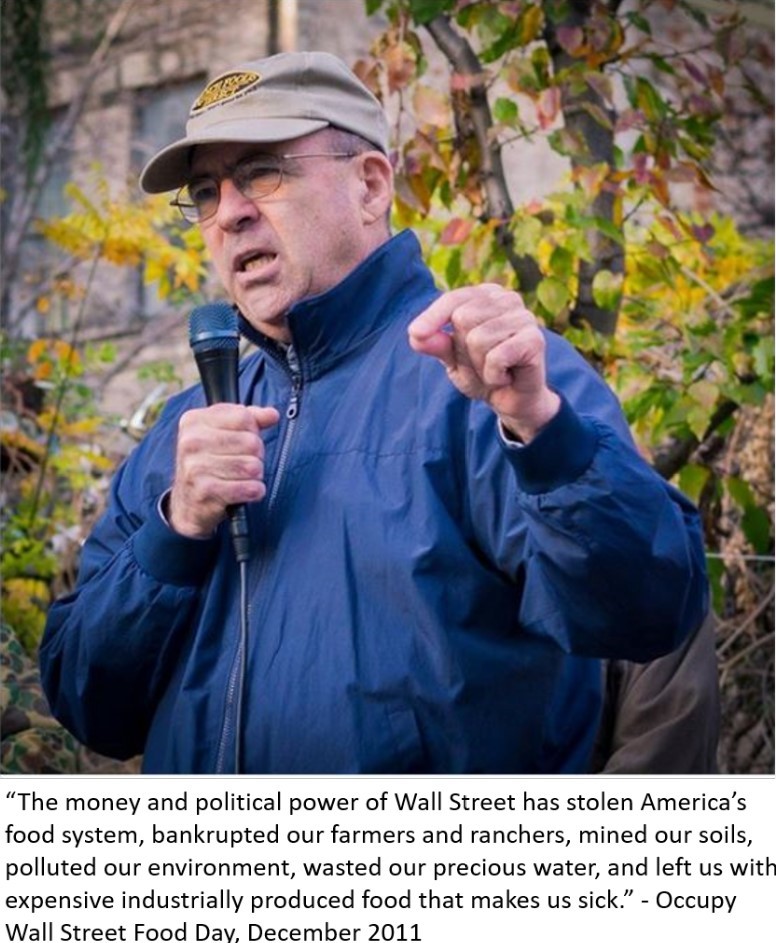
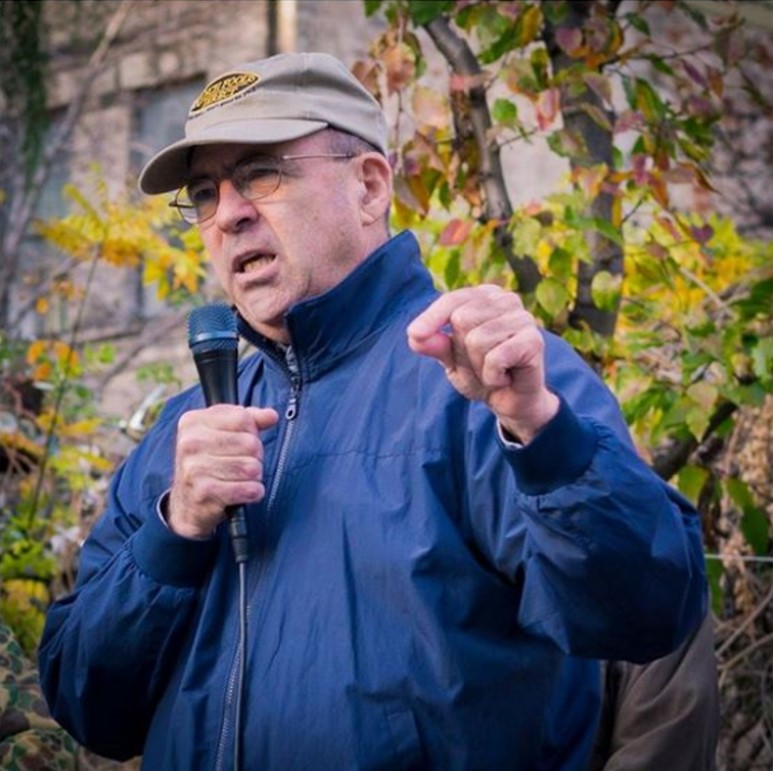 “The money and political power of Wall Street has stolen America’s food system, bankrupted our farmers and ranchers, mined our soils, polluted our environment, wasted our precious water, and left us with expensive industrially produced food that makes us sick.” – Occupy Wall Street Food Day, December 2011
 Industrial Agriculture and Urban Sprawl – A model of growth that’s made to fail.
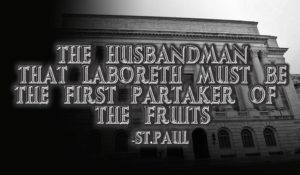
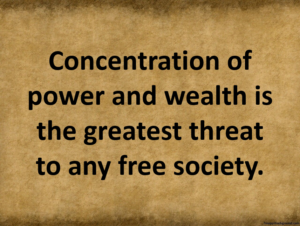
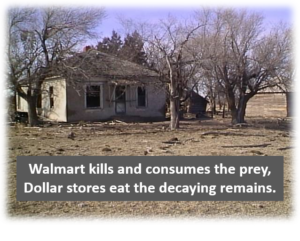
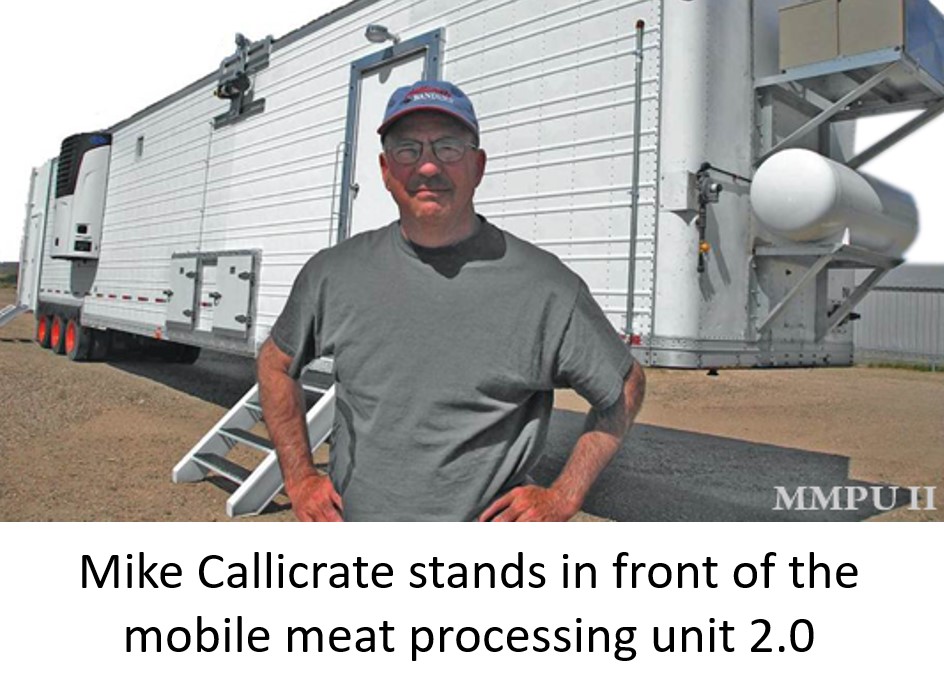
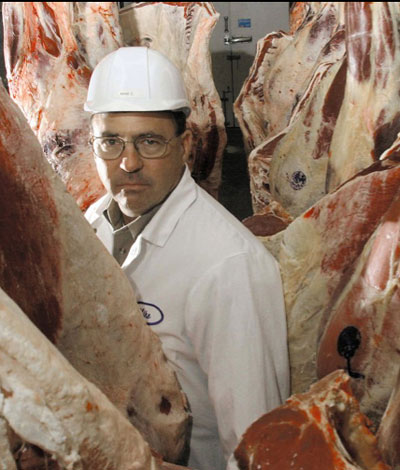 Photo: Sean Cayton - 2003People producing good food from happy animals, while improving the environment, shouldn’t have to fear the government.