Quarrel over meats changes steakhouse

By JIM BAINBRIDGE THE GAZETTE • Updated: February 16, 2007 at 12:00 am

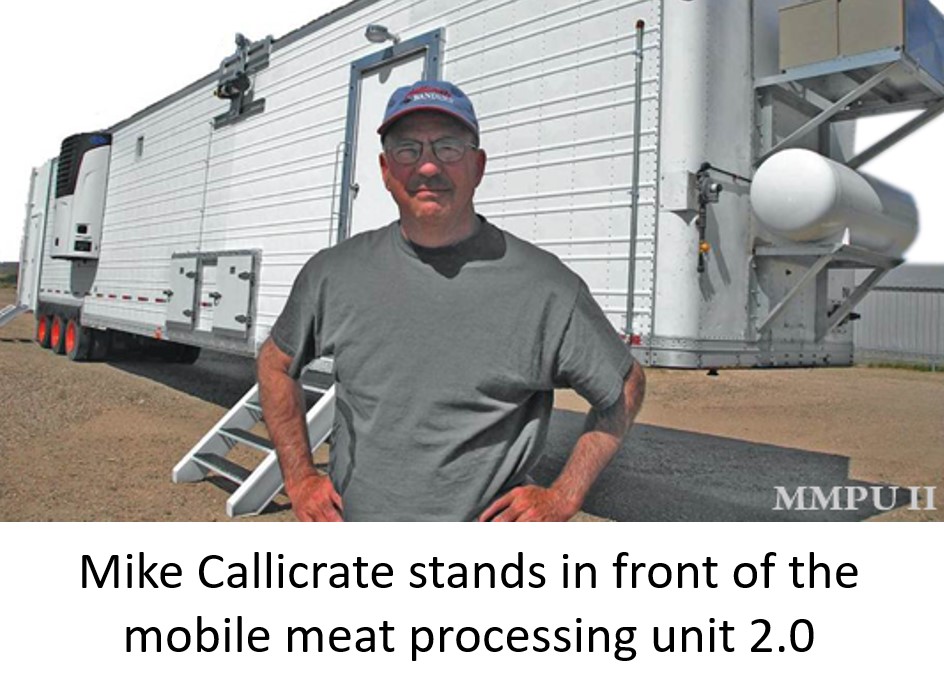
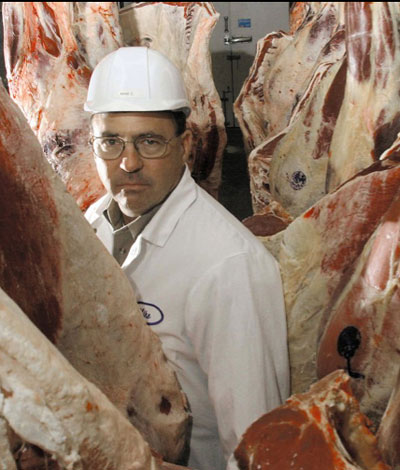
Mike Callicrate, the face of the Ranch Steakhouse and Market since it opened in October 2005, has sold his minority partnership in the restaurant because of a disagreement over how the business should be run.

Ranch Steakhouse was started as a showcase for the no-hormone, no-antibiotic brand of meats sold by Callicrate’s Ranch Foods Direct Co., and while it developed a loyal following — sales of $2.5 million last year — majority owner Neil McMurry wanted to try a new direction. McMurry is buying his meats from industry giant Iowa Beef Processors (IBP), a division of Tyson Foods.

“My partner and I didn’t agree on the concept for the restaurant,” Callicrate said. “Essentially, he owned the building and I was unwilling to compromise on our company’s pledge and purpose, so the relationship has ended.” The last meals with Ranch Foods Direct meat were served on Valentine’s Day, and the Ranch Food Direct market just inside the front entrance at 575 Garden of the Gods Road closed Thursday, soon to be replaced by a bar. The restaurant will undergo a name change — it may be announced as early as today, according to manager Steve Abeyta — and has placed notices on each table letting customers know about the change of meat providers. “I can’t tell you what it felt like to walk into the cooler at the restaurant and see IBP beef there,”

Callicrate said. “These are the people I’ve been fighting for years.” Callicrate, 55, was the lead plaintiff in a class-action antitrust lawsuit against Tyson Foods-IBP a decade ago — the first such challenge to a major meatpacker since 1921 — and has been an ardent opponent of big agribusiness all of his career. Callicrate said he attempted to buy the majority interest in the restaurant, but that McMurry, 83, “was not willing to work with me. It is a very big disappointment. I put a lot of money into the business, not to mention time and effort.” McMurry was not available for comment Thursday. Terms of the buyout have not been finalized. Callicrate said that McMurry once believed in the Ranch Steakhouse concept, but thought that his advisers had convinced him that he could do better “with less expensive meats.” “I think these guys see a place like Outback Steakhouse with the parking lot full,” Callicrate said, “and don’t see the value of buying a better product.”

Callicrate will continue to operate his Ranch Foods Direct store at 2901 N. El Paso St. and online at www.ranchfoodsdirect.com. The company’s products are served at restaurants all along the Front Range.

CONTACT THE WRITER: 636-0126 or jim.bainbridge@gazette.com
Read more at http://gazette.com/quarrel-over-meats-changes- steakhouse/article/5583#h2We8QGII7o4LbY9.99

FOOTNOTE: The restaurant lost 75% of its business in the 2 weeks following the article and closed one year later with a 4% increase in food costs compared to the year prior with Ranch Foods Direct as the provider of meats.
Posted in General Advocacy | Tagged , , , | Leave a comment

Fed Cattle Commentary – Walt Hackney, Hackney Cattle Company

Fed Cattle Commentary
Nebraska News – http://nebraska.statepaper.com/vnews/display.v/ART/2004/12/22/41c99d0ed53f0
Hackney Cattle Company / 402.680.4739
Hackney’s comments from Tuesday, March 28, 2006.The views expressed here are those of Walt Hackney and are not
necessarily those of DTN, its management or employees.
 
FED CATTLE

Lyle Strom, a federal judge and the 11th District Court, sealed the fate of any livestock producer who may have had the idea to sue a corporate packer for price manipulation. His decision presented an open highway to any packer to do most anything in terms of market manipulation to the livestock production sector and have full support from the federal judiciary system. The P & S, acting in full cooperation with the corporate packers, will have the needed backstop now to support their lack of service to the producer sector. Cattlemen, without the pseudo support of the federal judiciary system, will need to engrave their personal mission statement, draw a line of defiance in the sand and defend themselves without any help from their own government.

Even after last Friday’s Cattle on Feed report was digested, and deemed to be somewhat bearish, the beef cutouts only lost .28 cents on Monday’s close, and packers could only conjure up 112,000 head for Monday’s kill.

Very little feedlot activity is expected before Thursday afternoon and Friday.

FYI: Walt Hackney’s practical insight into the livestock markets, also dictates that he spend much time in the production areas, buying/selling cattle, and periodically he cannot do his daily commentaries in a timely manner.

Feeder Cattle Commentary
03/28 13:20

Hackney Cattle Company / 402.680.4739

Hackney’s comments from Tuesday, March 28, 2006.

The views expressed here are those of Walt Hackney and are not necessarily those of DTN, its management or employees.

FEEDER CATTLE

With manipulation tolerated by the CFTC by allowing the investment fund groups to dilly-dally at their leisure with futures contracts, and with the 11th District federal court, in support of Judge Lynn Strom, taking away any ability of the public livestock sector’s attempts to legally protect themselves from corporate packer’s price manipulation, the entire production livestock industry is basically left to fight-off the ever-tightening circles of corporate integration and market manipulation, by whatever means are left to the independent producer sector. The solution has evolved far past the idea of protesting, etc. and now is in the hands of the elected political members of Congress, to either change the force of power or promote its evolution! TALK TO YOUR ELECTED OFFICIALS, STATE AND FEDERAL!

So far, this week is quiet in the feedlots, as packers collect enough show-lists to do battle with later in the week, and sellers are waiting for some good news to fortify their positions.

Packers are laying in the weeds, waiting for the first cripple to come along, intending to pounce on the weak link with a lower bid.

FYI: Walt Hackney’s practical insight into the livestock markets, also dictates that he spend much time in the production areas, buying/selling cattle, and periodically he cannot do his daily commentaries in a timely

 
Posted in Cattlemen's Legal Fund | 1 Comment

Jury Nullification

Jury Nullification
Mike Callicrate
2006
 
The jury has the power to bring a verdict in the teeth of both law and fact. — Oliver Wendell Holmes, United States Supreme Court JusticeThe jury has a right to judge both the law as well as the facts in controversy. — John Jay, 1st Chief Justice of the Supreme Court

The pages of history shine on instances of the jury’s exercise of its prerogative to disregard instructions of the judge — U.S. vs. Dougherty, 1972

It would be an absurdity for jurors to be required to accept the judge’s view of the law, against their own opinion, judgment, and conscience. — John Adams

“If a juror accepts as the law that which the judge states, then that juror has accepted the exercise of absolute authority of a government employee and has surrendered a power and right that once was the citizen’s safeguard of liberty.”
(1788) (2 Elliots Debates, 94, Bancroft, History of the Constitution, 267)

Posted in Cattlemen's Legal Fund | Leave a comment

OCM: Supreme Court Denies Pickett Appeal

OCM: Supreme Court Denies Pickett Appeal

Nebraska News

Contact:  Keith Mudd – 573-735-2742 – www.competitivemarkets.com
March 27, 2006

OCM expressed disappointment today in the Supreme Court’s refusal to hear the Pickett v Tyson class action cattle price manipulation case. The Pickett plaintiffs filed a writ of certiorari on January 6, 2006. The Supreme Court declined to hear the case in a notice published today.

“The Courts have now rendered the Packer & Stockyards Act of 1921 (P&S Act) meaningless,” said Keith Mudd, OCM president. “The 11th Circuit Court of Appeals ruled previously that livestock producers can show billions of dollars harm from price manipulation, but if the packer has the smallest business justification for its conduct, the packer wins.”

The Pickett case was filed in 1996 in the U.S. District Court, Middle District of Alabama. The plaintiff cattlemen asserted IBP, Inc. (now Tyson) used captive supply cattle procurement strategies to lower cattle prices unlawfully. A class estimated to include more than 30,000 cattle producers was certified. On February 17, 2004, an Alabama jury found Tyson violated the law causing nearly $1.3 billion in producer market losses. On April 23, 2004, the judge presiding over the case overturned the verdict, claiming the jury was required to find Tyson had a legitimate business justification for its conduct.

“The Packers & Stockyards Act prohibits unfair market conduct, and price manipulation,” said Mudd. “Congress included no language allowing unfair practices or price manipulation if the packer has a good reason for doing so. Producers must now work through the state legislatures and federal Congress to return fairness to agricultural marketing.”

Another 2005 11th Circuit Court of Appeals case, London v. Fieldale Farms, held a poultry farmer contractually terminated for discriminatory reasons cannot prevail unless he/she shows the poultry integrator also harmed competition in the poultry market nationally.

Senator Tom Harkin introduced the Fair Agricultural Markets Act of 2006, in part, to eliminate the loopholes in the P&S Act. “OCM applauds Senator Harkin for his leadership on livestock market fairness issues,” continued Mudd. “Congress wrote the P&S Act, the Courts have now misinterpreted it, and Congress must now clarify it for the law to serve its original purpose.”

OCM is a non-profit, multidisciplinary organization working for fair, open and competitive markets in agriculture and realistic trade policies.

Posted in Cattlemen's Legal Fund | 3 Comments

Ranchers must pay Tyson’s expenses in cattle case

Fri, Aug. 26, 2005

Appeals court:

Ranchers must pay Tyson’s expenses in cattle case

SAMIRA JAFARI
Associated Pres

MONTGOMERY, Ala. – A handful of cattlemen, who saw a potential $1 billion verdict in their favor reversed in a price-fixing lawsuit against corporate giant Tyson Fresh Meats, now has to pay the nation’s largest beef packer more than $70,000 in court expenses.

“They’ve thrown our industry into the Tyson meat grinder and said ‘Welcome to serfdom,'” cattleman Mike Callicrate, a plaintiff in the beef lawsuit, said Friday.

The 11th U.S. Circuit Court of Appeals in Atlanta unanimously upheld a district court decision ordering five cattlemen and a corporation to pay Tyson, based in Springdale, Ark., expenses totaling $70,198.60 related to the trial held last year in Montgomery. The amount covers expenses such as transportation and office supplies, but does not include attorney fees.

In the Aug. 19 ruling, the appeals court said “this case was not a close and difficult one” and noted that those who filed the suit “lost every aspect of the case and Tyson prevailed on it.”

“Although it took a long time to try, the case was not especially complicated,” the court said.

The lawsuit accused Tyson of using illegal cattle-buying practices to help manipulate beef prices. Tyson countered that it used legitimate business practices that do not subvert the market principles of supply and demand.

Thomas C. Green, Tyson’s lead attorney, said the appeals court decision proves that corporations “have the freedom to make contracts in the agricultural sector.”

“I think the plaintiffs need to get a grip and relax. Their view of the law has always been one-sided and obviously shortsighted,” Green said.

Callicrate said the court developments were “an example of a complete failure of justice. These judges are not looking at the law. They are looking at what benefits big business.”

In a separate ruling last week, the three-judge panel unanimously affirmed a June 2004 ruling by U.S. Senior District Judge Lyle Strom, who threw out a jury’s finding that Tyson used contracts with a select few beef producers to manipulate cattle market prices.

As part of its verdict, the jury recommended that Tyson pay $1.28 billion to a class of cattlemen affected over an 8-year period. But the judge, instead of ruling on the size of the class and amount of damages, found that the cattlemen had failed to show sufficient evidence against Tyson, reversing the verdict.

In their appeal, attorneys for the cattlemen had asked the 11th Circuit to find that the jury based its decision on a reasonable review of the evidence. They said that in another case the 11th Circuit had refused to “second-guess the jury” if its action was reasonable.

But the appeals court disagreed on that argument and, on the matter of costs, said the cattlemen must pay Tyson’s expenses despite the beef packer’s wealth and their “limited financial resources.”

Callicrate said the plaintiffs would request a full-panel review by the 11th Circuit, and if that fails, petition the U.S. Supreme Court.

Posted in Cattlemen's Legal Fund | Leave a comment