The Politics of Food: Food Bio-Diversity and Democracy
An address by Father Miguel d’Escoto Brockmann,
President of the United Nations General Assembly
Conference on the Politics of Food:
New York’s Next Policy Challenge
19 November 2008
Lerner Hall, Columbia University New York City
Manhattan Borough President Scott Stringer,
Deputy President Rosemonde Pierre-Louis.
My Fellow speakers: Mayor Bloomberg, Ms. Maya Wiley.
Dear brothers and sisters.
I thank you for inviting me to join you today and I am pleased to return to Columbia University where I attended the graduate school of journalism 47 years ago. Mayor Bloomberg is the expert here, but I certainly like to think of myself, at least partly, as a New Yorker.
Some of the most formative and fruitful years of my life were spent here. I first arrived in 1947, the year Jackie Robinson started playing with the Brooklyn Dodgers. Watching him play shortstop remains one of my most vivid and fondest memories. Later I entered the Maryknoll Seminary in Ossining and, after becoming a priest, returned to study at Columbia.
Later, I founded a publishing company, Orbis Books – I will say more about that in a moment — and resided in the area for several years. More recently, I assumed the presidency of the 63rd session of the United Nations General Assembly and reside in Kips Bay. There were a few years in between, which I won’t try to cover here today.
So I love this city and have known it over many decades, watching it change and evolve. Today, I think I can contribute to this meeting by providing some observations on food policies, drawing on my international experience and applying it to the local context of New York City. This is an issue dear to my heart and one that I have made a priority for this session of the General Assembly.
From an international point of view, I do believe that the current food crisis that we are watching unfold on a global scale is a symptom of a broader breakdown of models of governance and production that have failed us and betrayed the trust of billions of people around the world. They are unsustainable and we must find alternatives both internationally and locally. The food crisis is linked directly to our financial crisis, the energy crisis and the overarching problems associated with climate change.
Without innovative and broad changes in our food policies, we will see hunger once again spread across the world like a medieval plague. The shameful reality is that, despite the fact that we have the knowledge, the financial and technological means to prevent it, half of the human population subsists at levels of malnutrition and poverty completely incompatible with their inherent dignity and rights. This is not only shameful—it is, to use religious terminology — down right sinful.
In addition to being a priest and a community organizer, I am an internationalist. My sense of internationalism and the spirit of solidarity that guides me are in part inspired by education and work here in New York
I mentioned earlier that I headed the publishing house called Orbis. Reflecting the concerns of the Maryknoll order, our publications focused on moral and spiritual issues related to global affairs. At Orbis we brought new voices to the world scene. `Our authors, many of them from new independent developing countries, brought differentiation to a debate that was increasingly dominated by the monotone voices advocating a one-size-fits-all vision for humanity.
These new voices from Asia, Africa and Latin America were the seeds of a new global vision, a distinctively multi-national set of voices with local identities, indigenous identities, with vitality rooted in distinctive cultures, lands, traditions and peoples. We encouraged the voices of previously invisible human communities and we encouraged a new appreciation of geography, land and of Earth.
These views served as the foundation for what I have done since and for what I have to say today about the politics of food.
Today we still must move beyond homogeneity, mono-cultural hegemony into a new and revitalized bio-diversity and differentiation; we need a new localization and communal participation. A politics of food needs to be rooted in the local, distinctive and the communal. It has to be fully representative of all members of the community. And it needs to be closely linked to a global reality as well.
The United Nations is changing. It has taken decades of failed development policies to realize that we must put people first, that we must listen to the voices of people most affected by poverty and hunger which are shocking in their global dimensions. The long standing top-down approach has enabled lopsided development and outrageous abuses. It has led to the lamentable situation where we are today. The unfettered pursuit of neo-liberal policies and the culture of aggressive individualism that they engender, contradict the core values and principles of all of our religious and ethical-philosophical traditions. As well, they clash with our innate common sense.
I am convinced that today’s burgeoning food crisis does not have to lead to wider human tragedy. It offers an opportunity to strengthen food security and agriculture, but we must overcome the moral mediocrity that keeps us from making the great sacrifices that the magnitude of the problem requires of us. We must show our readiness to address the underlying patterns of consumption that are clearly unsustainable. We need big changes. The policies we seek must be cross cutting.
As all New Yorkers, I marvel at the diversity of our cityscape, from neighborhood to neighborhood. We are indeed a global city, comprised of infinite distinctive features that create a mosaic that fascinates the entire world. The politics of food is also part of this mosaic. This place and its people shape the city’s food provisioning. So is it in Rio, in London, Istanbul, Moscow, Delhi, Kampala and Tokyo. Each has a distinctive landscape, distinctive communal dimensions, distinctive food culture. What has been lost to a globalization inspired by a drive to domination must be retrieved and restored. I believe this is possible.
I have come to think of the General Assembly as the town meeting of the global village. We feel at home here in New York and, as concerned citizens, should bring something to this reflection on the politics of food in this great city. I would like to provide some thoughts on the global in the local, the universal in the particular.
As in many other cities of the world, hunger and poverty in New York co-exist side by side with obsessive consumption and staggering wealth. A recent report on poverty from the Center for Economic Opportunity points out that one in four New York residents live in poverty. One in five children is hungry in New York.
These are statistics that highlight a profound moral lapse in our governance. Unfortunately, they reflect the reality in cities around the world.
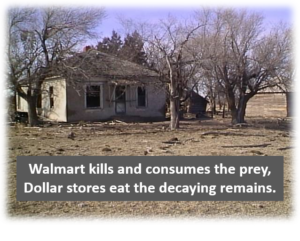
Our problems are complex and inter-related. I understand that New York City has lost one third of its supermarkets in the last five years, helping create nutritional wastelands and contributing to diet-relate chronic disease. This is not the New York that most of the world knows from television and movies.
The vigorous and innovative response to the food-related problems by New York activists, NGOs and government agencies are not well known or understood.
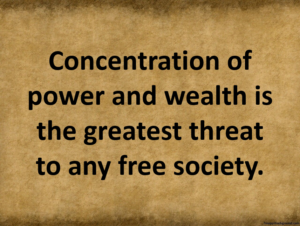
As a media capital, the center of global financial markets, and a place of great power, New York has historically had a central role in promoting the dominant global and industrial food system — a system which has entered a process of decline. The meltdown on Wall Street and the growing calls for the overhaul of the deeply flawed Bretton Woods institutions have initiated a process of dramatic change in the international financial architecture. We can only hope that the days of the dominance by the monoculture of industrialized food, Monsanto and Cargil, McDonald’s and Wal-Mart are numbered as well.
And we need to shape that change. We have good advice on food politics from many places. Last month, the United Nations World Food Day highlighted the work of the UN Food and Agriculture Organization (FAO) and the UN Environment Programmes (UNEP) in the areas of food policy and raised alarms regarding the spreading food crisis.
UNEP, for example, recently released a report indicating that organic, small-scale farming can deliver the increased yields which were thought to be the preserve of industrial farming, without the environmental and social damage caused by industrial agriculture. Other reports point to the ecological damage and extraordinary costs related to meat production. The International Assessment of Agriculture Science and Technology in Development released its exhaustive report earlier this year, reflecting the work of many United Nations offices, which emphasized that current methods of food production are no longer sustainable. It argued that we must change from industrial to agro-ecological methods.
Again, we are at a moment of dramatic change, perhaps a turning point. The voices for change are multiplying and, as old systems collapse in exhaustion, finally are being heard. It is time for a new politics of food, one that starts from the bottom up, not the top down. We need to have an approach to food production that is multi-functional, that has a concern for the poor and their right to food; a concern for the earth and its right to life; a concern for communities and their right to self-governance, what is referred to as food sovereignty.
At the United Nations, I have made democratization of the Organization my number one priority. So too, in food politics, I would advocate food democracy. We can move our food provisioning away from dominance by a few very large corporations to the control of people-oriented food systems that respect communities and their right to food sovereignty, and localized and regionalized food systems at the local and regional levels.
People talk about Wall Street and Main Street. How about the side streets? Don’t our neglected neighborhoods have a right to food self-governance? New York can use its empty lots for food production, and its roof tops. Ethnic neighborhoods can raise the preferred foods and share with other neighborhoods.
I hear that the city is producing more and more food for itself and bringing it growing regional bounty into the city. Farmers’ markets and urban gardens are beginning to flourish again. These efforts of feeding the city, by the city, for the city should be part of a global effort that can only enhance food security and diminish the numbers of hungry people among us.
As well, local markets can bring a multiplier effect by localizing economic life and increasing economic vitality for farmers and consumers alike. We can rally around the city’s commitment to serious engagement around climate change and the responsible utilization of the regional public water system. If we can be stewards of the fresh water resources of the Catskills watershed, we can do the same with food.
We can make New York City model for a new food politics that puts the poor, our communities and the right to food at the center of a more sustainable system of self-governance. We can be a model that is appreciated and replicated cities around the world.
It is easy to envision New York as a model for urban-rural partnership and the development of a vibrant market for locally grown food. The UN would be honored to showcase such efforts at the next meeting of the Commission on Sustainable Development here at Headquarters in 2009.
On World Food Day at the United Nations, I said that an alternative food politics means that we must begin by expanding the circle of decision making and ensuring that multiple and varied voices are heard. This is not accomplished through symbolic events or publicity stunts. New stakeholders must participate at all levels from the local to the international.
Let us keep in mind that for some people, these solutions are coming too late. Hunger and malnutrition, exclusion and poverty are taking thousands of lives each day. New York has many advantages. Let use them. Now is the time to bring to the forefront the voices of our scientists, our community activists, our and above all the food producers to proclaim what should have been a fundamental right in every society: the right to food.
Moreover, we must stop deluding ourselves and face up to the fact that the “haves” of this world must change their way of life, the patterns of consumption that show little or no regard for the disastrous impact of their lifestyle on the wellbeing of their neighbors, our brothers and sisters, and our shared home, the planet Earth.
We can learn from those who are moving in the direction of a new food politics, toward food democracy. We have to move ahead in this direction. We should not hesitate.
As President of the United Nations General Assembly, I serve as a facilitator in the search for lasting solutions to the complex problems we face. In seeking solutions, we must transcend narrowly defined national interests and make the common good of all our peoples, nations, as well as our fragile planet Earth, paramount. We must demonstrate a readiness to undertake difficult political and ethical decisions.
So let us take today’s terrible confluence of crises and turn them into an opportunity to take courageous actions that are needed to ensure new levels of co-existence between humans and between us and nature, and thereby ensure a better world for present and future generations.
Thank you.