An open letter to Secretary of Agriculture Tom Vilsack: Will we eat from our own backyards or beg food from big agribusiness?

An open letter to Secretary of Agriculture Tom Vilsack: Will we eat from our own backyards or beg food from big agribusiness?

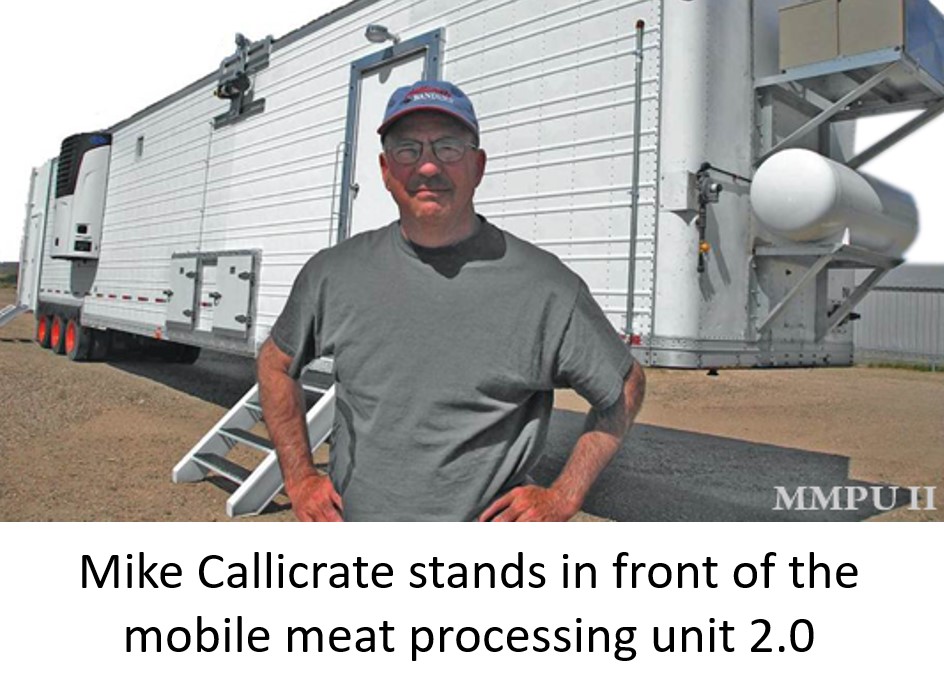
By Mike Callicrate 

Pulitzer Prize winning author Charles Simic once wrote, “Stupidity is the secret spice historians have difficulty identifying in this soup we keep slurping.” 

As our precious few independent livestock producers and small processors continue their losing fight for survival, the USDA dreams up even more ways to make their lives more difficult. These are the people producing the safest, highest quality and most dependable food for our tables. As we sit here today at this listening session in Greeley, Colorado, considering the depressing possibility and cost of tracing back every healthy animal to its home of origin so Tyson, Cargill and JBS can export more, the farmer and rancher with the heaviest workload and the least income will pay – and down the road – consumers will also pay.  

Today, USDA, in protecting the biggest and dirtiest meat plants, continues to block trace-back of pathogens to the source plant, a very easy and inexpensive measure that could improve food safety tomorrow – and you say instead you want to track healthy animals back to the farm! Where USDA’s farm-to-kill plant NAIS ends, contamination and food degradation begins. What do you call an agency that actively undermines a nation’s ability to feed itself? What term defines an agency that sells out its mission to serve and protect the people in favor of serving higher profits of multinational agribusiness corporations? Stupid would be a kind choice of words. 

Thinking about NAIS and possible ways to improve food safety and disease traceability, we might reflect back to 2002 when we experienced one of the biggest meat recalls in our history. From here we can almost see the Greeleypacking plant, from which the nearly 20 million pounds of E. coli tainted beef was shipped across the to unsuspecting eaters. Having experienced this and many other catastrophic failures in our nation’s food safety system, USDA actually continues to do even less to protect our food supply. USDA has done nothing to address the problems in the big packing plants where E. coli is systematically put into our meat daily while trusting these big profit-driven companies to self inspect under the HACCP hoax. You may ask why meat cooking companies like Advance Foods, a major supplier to the school lunch program, are doing so well and expanding their facilities? Might it be due to the growing supply of cheap E. coli tainted meat, marked “FOR COOKING ONLY”? 

Thanks to USDA antitrust cops and inspectors sleeping on the job, Americans now eat meat from essentially four big meat packers, running faster chains with inexperienced workers suffering high injury rates, resulting in even more meat contamination. USDA has ignored the existing laws and rules designed to protect our markets and keep our food safe, in favor of rules and policies that make big packers and processors more money and more market advantage over smaller independent processors. Why does USDA want to track every healthy animal and ignore the current foreign animal disease threats? Why does USDA fail to properly implement our own county of origin labeling law while refusing to inspect or even care about the origin of imported cattle? Even with the specter of Mad Cow disease, USDA continues to block routine testing and allows processors to grind the brain and spinal tissue of domestic and imported animals into our sausage and ground beef patties. (AMR, or Advanced Meat Recovery, optimizes meat yield through a special process of pulverizing meat and bone scraps into a paste which is pelleted and added to many meat products.)

Why would USDA pursue this expensive and unnecessary ID system, under the pretense of improving food safety, when machine tenderizers and injectors (making tough meat from implanted and low quality cattle more tender) are punching pathogens that reside on the surface of primal cuts of meat (normally killed with minimal cooking) into the middle of our rare and medium rare steaks without so much as a “COOK TO WELL DONE” warning label?  

Could USDA possibly have the dreaded and highly contagious disease known as covering-your-butt-with-heaps-of-paperwork? You want to spread this “I-covered-my-butt-so-it’s-not-my-fault” plague down the food chain from your comfortable perch in Washington D.C.to your inspectors, who shuffle paper all day, instead of inspecting cattle and meat, to those of us who are breaking our backs raising the livestock. We don’t have time for it. In many cases we are working two off-farm jobs while trying to keep our operations afloat. Non-factory, independent family farmers and ranchers produce safe and wholesome food. Why don’t you make sure it stays that way? 

You say that NAIS will increase our ability to export. Why does our government continue its march of folly towards increased globalization, appeasing the WTO and their multinational corporations, while blocking farmers and ranchers fair access to better markets here at home? Past and present history, from Ireland to Canada has recorded the dramatic social declines and economic failures of export oriented agriculture.  

I suggest to you today that rather than facilitating the profit over people WTO mission of increasing the miles that food travels around the globe with NAIS, that we support a new policy that enables people everywhere, through local food production and processing infrastructures, to eat food from their own backyards, communities and regions. It is time to give up on the folly of corporate controlled, bigger-is-better factory agriculture. It is time to reverse the current pandemic of “free trade” that survives only due to government support and the anticompetitive, abusive rules and regulations like NAIS.  

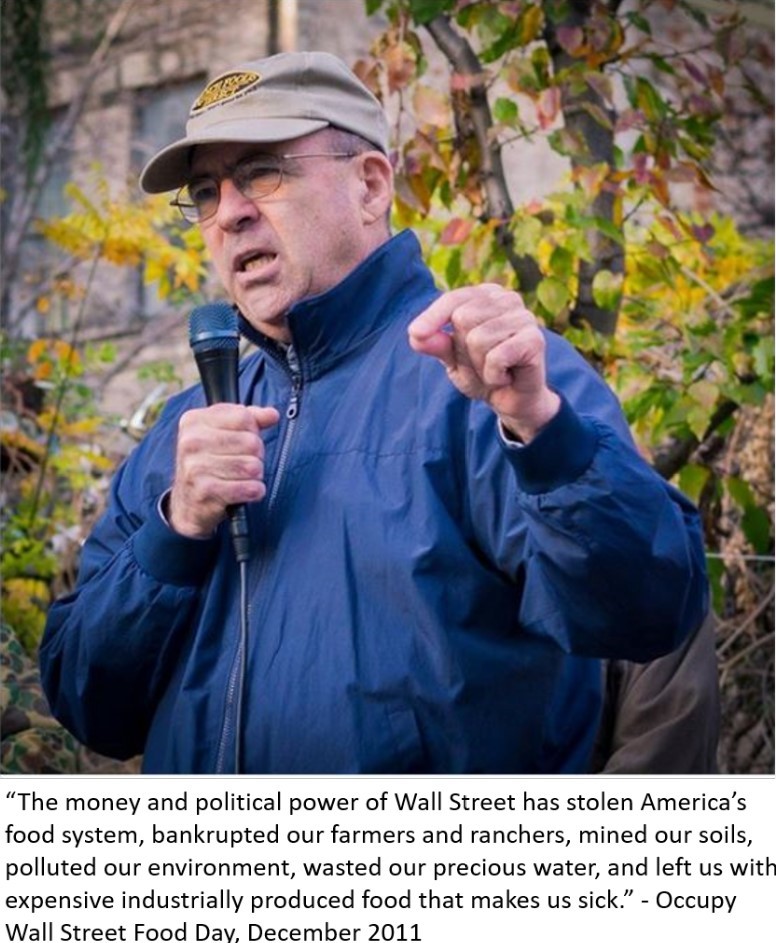
I suggest that people everywhere would not only be better off without NAIS, but also without the WTO and the global corporations it serves. I suggest that this administration honor its promise of CHANGE and begin by ordering USDA to support those who make and grow things here at home. We should support our main streets and rural communities where our nation’s wealth is created, instead of Wall Street where our nation’s wealth is stolen. Instead of wasting precious resources and our time to identify and track every healthy animal in America,let’s protect against the real sources of disease and causes of economic and social decline. 

Corporate power over policy and the so-called cheap factory foods are the real threat to our well-being, making people everywhere sicker, poorer and more dependent on low quality imported food? What do you call something that is so contrary to our self interest like NAIS?  

Mike Callicrate is an independent cattle producer, business entrepreneur and political activist, particularly outspoken in addressing the rural and social impacts of current economic trends.

Posted in General Advocacy | 2 Comments

Food Inc: This film is a gift to humanity

This film is a gift to humanity 

I had the pleasure of viewing this film this week at a screening in Denver. 

Eating food should nourish our bodies, give us strength and keep us healthy.  The process of growing food should enrich the earth as well as provide for the farmers, ranchers and their communities. 

Instead, we now have a Wall Street based, profit at all costs, industrial food system that is producing and selling food that makes us sick. The demand for excessive profit requires the mining of our land, the over processing and refining of our food and the exploitation and abuse of people and animals. 

A better farming and food system is possible. We can choose to buy from farmers and ranchers in our communities and regions. We can choose to eat better and regain our health. I believe Food Inc. will awaken and motivate us like never before.

 What we feed grows, what we support prospers. Your fork is a powerful thing! 

Mike Callicrate

 Go to Robert Kenner Films website to sign up for the newsletter and to purchase dvd’s when they are available.

Posted in General Advocacy | Leave a comment

Mondragon Video – Creating Sustainable Community

Mondragon is an inspiring story of the ability to rebound in the face of adversity – An economic model that serves the interests of people and community first. Be sure to watch the video to the end. Then and Now.

The Mondragon Experiment 1/5

The Mondragon Experiment 2/5

The Mondragon Experiment 3/5

The Mondragon Experiment 4/5

The Mondragon Experiment 5/5

Full Video

Posted in General Advocacy | Leave a comment

FARE’s Word For The Day: Abrogate

FARE’s Word For The Day: Abrogate

“Abrogate” is defined as “abolishing by authoritative action, to annul, to do away with”.

USDA’s eager surrender of authority to the current HACCP-style protocol of meat non-inspection constitutes a willful abrogation of its responsibility mandated by the Federal Meat Inspection Act. By intentional agency design, USDA no longer has the authority to force the largest slaughter plants to produce wholesome meat. This system allows big packers to knowingly ship E.coli-contaminated meat into commerce, with tacit agency approval.

USDA’s deregulation of the biggest packers (not the small!) has been a convenient quid pro quo arrangement, in which the agency relinquished its authority, while in return being blessed with the ability to assume a comfortable semi-retirement role at behemoth plants. These multi-national facilities enjoy political clout and have the financial wherewithal to engage USDA in protracted litigation. Small plants lack both these advantages, and are easier enforcement prey for an agency which is struggling to portray an image of being pro-public health. See no evil, hear no evil, and do no enforcement actions…at the biggest plants.

When USDA announced that its role under the HACCP umbrella would require the agency to adopt a “Hands Off” non-involvement role, America should have anticipated the increasing number of outbreaks and recalls we have witnessed in 2007 & 2008. While America is focusing its wrath on FDA’s non-surveillance of the peanut and produce industries, we should also force USDA to inspect meat production lines again, rather than merely auditing paperwork as mandated by the ostensibly “science based” HACCP Hoax. Public health would benefit by USDA’s willingness to regulate, not abrogate.

John Munsell

John Munsell, a former meat-processing facility owner, was recently interviewed by Meat & Poultry Magazine about what he learned while conducting interviews of industry players. While Munsell has been a critic of USDA meat inspection practices and policies, he is working for change through FARE, the Foundation for Accountability in Regulatory Enforcement.

Posted in General Advocacy | Leave a comment

Big Food Companies Sell Stolen Goods

Big Food Companies Sell Stolen Goods

Government cops look the other way

By Mike Callicrate

The following quote is inscribed above the portico of The United States Department of Agriculture:

“The husbandman, that laboreth, must first partake of the fruits.”
– The Second Epistle of St. Paul to Timothy

Herman Schumacher in front of the Federal Courthouse in Montgomery, Alabama attending the Pickett vs Tyson/IBP trial, January 2004

Last week while visiting legislative offices in Washington D.C., my friend Herman Schumacher laid the financial results of many months of hard work and investment on the table before us. A sick dark feeling came over me as I realized the devastating results of his feeding and caring for a group of over 300 cattle that recently sold to one of the big meat packers. The loss totaled more than $100,000. These cattle were from a place known for producing our best beef, beef from our nation’s highest quality cattle herds that produce the highest-priced retail beef in the world. Herman lives in the heart of farm and ranch country and for years has witnessed the destruction of his community, and the surrounding rural communities, due to a lack of sustainable income.

Economic and social decline has been the sad reality in global agriculture, long preceding the current global financial meltdown. What would St. Paul say about today’s big agribusiness companies who pillage the land and financially rape the husbandmen that care for it? Why are we standing idly by while livelihoods are stolen? Herman stands up for livestock producers, the husbandmen St. Paul spoke of, nature’s wealth creators, the foundation of our economy. They produce the food that sustains us without receiving so much as a scrap from the table. The big packers take part of the ranch equity along with every calf produced from the husbandmen’s cows and prairie grasses.

In 2001, shortly after Tyson Fresh Foods announced their intentions to buy IBP (Iowa Beef Processors – the biggest meatpacker in the world), I had a chance encounter with John Tyson, CEO of Tyson Foods, at a cattlemen’s gathering in San Antonio, TX. I introduced myself to Tyson as a plaintiff in a lawsuit against IBP. I explained that cattlemen were suing IBP for market manipulation based on the Packers and Stockyards Act of 1921. I went on to explain to Tyson that the lawsuit, if successful, could cost his company more than IBP’s total market capitalization. Tyson very indignantly responded, “You should be suing Wal-Mart (instead of IBP), they are the problem. They tell us what they will pay and we have no choice but to pay you less.” I responded, “I would sue Wal-Mart, but because of Illinois Brick (Supreme Court Opinion), I do not have standing in federal court. I have to sue you and you can sue Wal-Mart.”

Of course, the once-powerful IBP, who for at least the last twenty years unlawfully dictated prices to both sellers of livestock and retailers, now stands conquered, having lost negotiating power to the food retailers and distributors. Tyson certainly can’t be expected to bite the hand that feeds it. Wal-Mart is calling Tyson their partner, essentially giving Tyson preferential access to sell its beef, poultry, and pork in the meat cases of the biggest food retailer in the world.

Herman Schumacher has been in the forefront in the fight for open, fair, and competitive markets for many years, trusting that in America fairness and justice would eventually prevail. The following is an excerpt from Herman’s testimony delivered to the U.S. Senate, June 10, 1998.

“Laws designed to uphold our constitutional rights of freedom and equal treatment are not being enforced. One such law, the Packers and Stockyard Act of 1921(P&S Act), the only law legislated to protect producers and consumers from another meat monopoly like the one of the early 1900s, has not been enforced. Government has believed the lies of efficiencies of scale, economies of size, the global economy, etc. to justify this catastrophic destruction of the American beef industry.”

Eighty-eight years before South Dakota’s Herman Schumacher, Wyoming Senator John B. Kendrick said to his colleagues on the Senate floor, “It [the beef industry] has been brought to such a high degree of concentration that it is dominated by few men. The big packers, so called, stand between hundreds of thousands of [cattle] producers on one hand and millions of consumers on the other.

“They have their fingers on the pulse of both the producing and consuming markets and are in such a position of strategic advantage they have unrestrained power to manipulate both markets to their own advantage and to the disadvantage of over 99 percent of the people of the country.

“Such power is too great, Mr. President, to repose in the hands of any men.”
Senator Kendrick’s efforts resulted in the establishment of the 1921 Packers and Stockyards Act.

Today, injustice prevails. The P&S Act has only collected dust since the big packer breakup 100 years ago. From a corrupt justice system refusing to enforce the laws to patronizing legislators, well oiled by big foods’ lobbying dollars, a predatory marketplace has left us with far more concentration and consolidation than in the trust-busting days of President Teddy Roosevelt. Senator Kendrick would be astonished and saddened at today’s even stronger and more abusive packer, retail, and food service sector as they prey upon producers and consumers. Without the rules governing a fair market, prices at the farm and ranch gate continue to decline. It is easier to buy cattle cheaper from small independent and defenseless sellers of livestock than to sell meat higher to Wal-Mart, Kroger, and Safeway; and food distributors like Sysco and U.S. Foods. Because the USDA, President Lincoln’s so-called “peoples” food agency that was assigned the task of keeping the markets fair and competitive, has been sleeping on the beat, we now stand to lose what little is left of the “American beef industry” that Herman Schumacher described eleven years ago. Like the SEC, FDA, and other government agencies, the USDA has been captured by the companies they were mandated to regulate.

What would most price shoppers be expected to do when given the choice: Buy food that is priced at the full cost of production, with dollars fairly distributed back to the producer in a fair market system, or cheaper food that comes to them having been literally stolen? If only the human suffering, the lost communities and reduced stewardship of the land that comes with stolen food could be sensed in some way. Perhaps if we could tell by the look, smell or taste, we would choose not to buy it. Today, unknowing consumers pay record-high prices for food while those who invest, take the risk, and do the work, go broke. The big packers, retailers, and foodservice companies are stealing the fruits of the harvest, AND the USDA cops are driving the truck.

By the way, the Alabama jury awarded cattlemen $1.28 billion in damages in the lawsuit after hearing Tyson/IBP admit to violating the law in their manipulation of the cattle market. Trial Judge Lyle B. Strom, after failing to steal the case for Tyson/IBP with a flawed set of jury instructions, reversed the jury verdict. The case eventually made it to the U.S. Supreme Court. The Justices said they would only hear one of two cases before them – one being the cattlemen’s case for fair markets. They chose to hear the other case; the divorce case of Anna Nicole Smith. After eight years and enormous expense, cattlemen were denied justice. On that day, cattle producers, along with consumers, where tossed into the big packer/retailer meat grinder where we remain today. Jurors are still wondering why they reported for jury duty.

Herman Schumacher continues to fight for fairness in the marketplace from his home in Herreid, South Dakota. He also frequents our nation’s capital, hoping to be heard.

###

Mike Callicrate can be reached at 785-332-8218

Posted in General Advocacy | 1 Comment