Cattlemen rustle up debate on farm bill

Cattlemen rustle up debate on farm bill
By TIM UNRUH
The Salina Journal

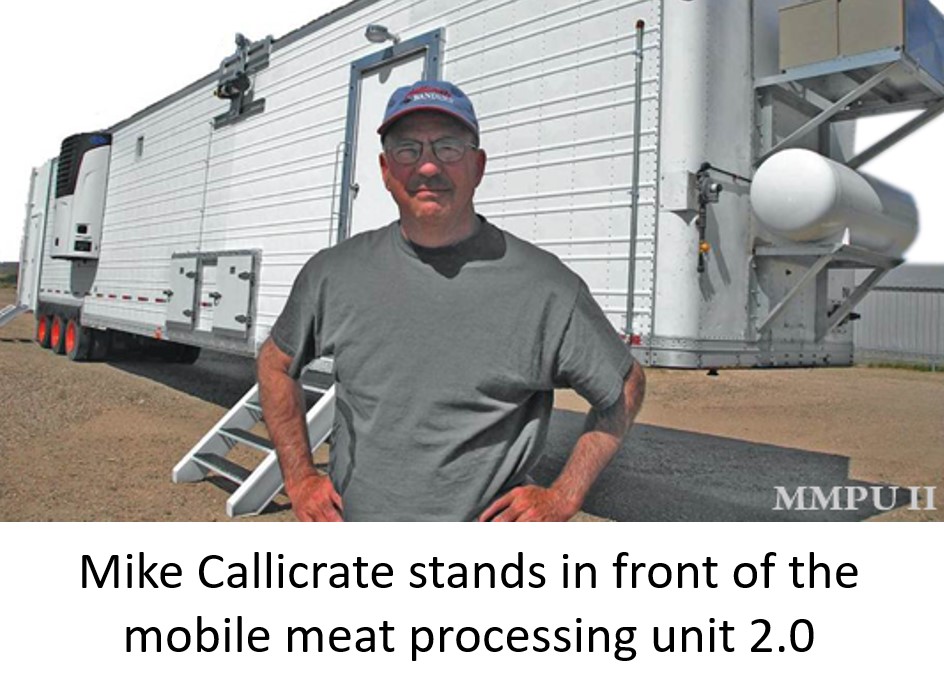
An amendment in the U.S. Senate’s version of the 2002 farm bill that sets limits on meatpacking firms owning slaughter cattle would be a small victory for Mike Callicrate and like-minded cattlemen.
But others on the opposite side of the political pasture want to see that proposed ban eliminated when the House and Senate compete for a final product in a conference committee.

Both sides might be waiting for Rep. Jerry Moran, R-Kan. (an expected conferee), to take a position. Proponents of the ban figure he’s on their side, but the indication from Moran’s staff is that he’s “continuing to gather information” and has yet to commit to either side.

Callicrate and his supporters claim that when meatpackers own slaughter cattle for more than 14 days before they’re slaughtered, it depresses cattle prices. That’s because on a given day, those cattle held by the packers reduce the number of cattle in the daily market that producers can sell for slaughter.
Those who oppose the ban say allowing packers to own cattle gives them a steady supply of animals. To limit ownership, they claim, would drive up costs for some packers, which eventually would reduce cattle prices.

“(Packers) want to buy cattle as cheap as possible, and with the captive supply cattle they own, they don’t need cattle in the competitive market as much as they would otherwise,” said Callicrate, a cattle feedyard owner from St. Francis and an activist who is fighting corporate control of agriculture and concentration of ownership in the beef industry.

“(The ban) is a tiny little step in trying to restore competitive markets.”
He said the proposed 14-day ban is an arbitrary figure that “caught on” during the debate. He would prefer it to be seven days.
Defeating the limit on packer ownership would be good news to the Kansas Livestock Association, which boasts 7,000 members.

“It eliminates the cattle producers’ freedom of choice to market cattle as they see fit,” said Todd Domer, director of communications for the Topeka-based group.
The livestock association also is concerned that language in the amendment to the Senate farm bill might prevent marketing agreements between producers and packers.
Industry undecided

The industry is split on the issue. Manhattan-based Kansas Farm Bureau supports some of the amendment.

“We have been supportive of the ban,” as it relates to packer ownership, said Patty Clark, public policy director. But Farm Bureau wants producer endeavors protected.
“We would like to receive assurances that producer-based initiatives that involve value-based marketing be exempted,” she said.

Those endeavors are protected, said Mike Schultz, a cow-calf producer from Brewster and president of the 770-member Kansas Cattlemen’s Association.
“You can still contract cattle. You can still set prices on cattle. Farmer-owned cooperatives are exempt (from the ban),” he said. “If those alliances are such a good deal, you find producers who are truly capturing the benefit.”

Alliances tend to pit ranchers against their neighbors, Callicrate said, and the profits don’t make it back to the ranch.

“A combination of concentration and consolidation in packing and retail food distribution, along with anti-competitive practices,” he said, “have cost cattlemen more than $400 per head of their share of the consumer beef dollar.

“I’m not against a big feedyard, a big packer or big retailers. I’m against big, bad and abusive.”
Some plants could close

Without some packer involvement in livestock production, some plants might be forced to close, said Gary Mickelson, manager of communications for IBP, a division of Tyson Foods, based in Dakota Dunes, S.D. IBP owns beef processing plants at Holcomb and Emporia in Kansas.
Mickelson said IBP is not interested in being a “big player in the livestock feeding business,” but he said limiting packer ownership is another government regulation “that will produce unintended consequences that will be detrimental to the livestock industry.”

IBP doesn’t court marketing relationships with producers, he said.

“All contracts have been initiated by livestock producers looking for a new, more efficient way of marketing their animals,” Mickelson said. “In some cases, their lenders require it.”

Low cattle prices in some regions
A ban ultimately could result in low cattle prices in some regions, said Jim Mintert, a Kansas State University agricultural economist. It is against the trend of vertical integration, he said.
Vertical integration is owning more links in the value-added chain. In this case, the packers who turn live cattle into beef products also own the animals. They achieve benefits from both markets.
Callicrate is all for value-added agriculture. But by controlling some of the live market, packers are depressing prices and adding to their profits at the expense of cattlemen, he said.

But packers don’t own that many cattle. In a Jan. 18 report, Mintert and other economists wrote that in 1998, the largest 15 packers owned 3.7 percent of the steer and heifer slaughter.
If that’s true, Callicrate said, such a small amount shouldn’t matter to the packers.

Mintert said there is no research that supports Callicrate’s claim that packers owning cattle longer than 14 days has had a negative effect on cattle prices.

Further, Mintert said, the ban would “be detrimental to both producers and consumers.”
Callicrate said the ban sides with his attempt to abolish captive supply — holding livestock out of the cash market — and let the supply and demand dictate price.

“It goes after the new form of captive supply, and that’s packer ownership,” said the owner of Callicrate feeders, a 10,000-head feedlot near St. Francis, and that’s a hit on the big packers such as Tyson, Smithfield, Seaboard, Cargill and ConAgra.

“Never before in history have consumers paid more for beef. Never before have cattle producers seen less of that consumer dollar,” he said.
Lobbyists expected to converge

The beef industry has been battling poultry for market share. Alliances that have formed among cattlemen and packers, and the associated “branded products,” has helped to recapture some of the market beef lost to chicken in the 1980s and 1990s, said Jim Meetz, owner of Lane County Feeders, Dighton, and a former Kansas Livestock Association president.

Those efforts would be challenged by limiting packer ownership of animals, he said.
“You’re taking about a 30-year step back,” he said.

“We’ve got to get into the mode that we’re producing food. We’ve got to do everything we can to get back to the center of the plate, and you can’t do it with a bunch of individuals.”
Callicrate expects lobbyists to converge on the House-Senate conference committee when it convenes as early as next week, and he figures those who oppose the ban have “already turned their troops loose to try and kill it.”

But he remains hopeful and realistic.

“A ban on packer ownership would never go on its own,” he said. “Tied to the farm bill, it’s got a chance.”

The cattleman is pinning some of his hopes on Moran, who some expect to be appointed to the conference committee.

Moran spent Tuesday and Wednesday meeting with voters in northwest Kansas during his annual 66-county listening tour.

Moran could not be reached for comment for this story. Travis Murphy, his press secretary in Washington, said the packer ownership ban “came up several times on both sides” during his seven stops in northwest Kansas.

*  Reporter Tim Unruh can be reached at 823-6464, Ext. 137,
Posted in Cattlemen's Legal Fund | Leave a comment

Dominated by few men

“It has been brought to such a high degree of concentration that it is dominated by few men. The big packers, so called, stand  between hundreds of thousands of producers on one hand and millions of consumers on the other. They have their fingers on  the pulse of both the producing and consuming markets and are in such a position of strategic advantage they have  unrestrained power to manipulate both markets to their own advantage and to the disadvantage of over 99 percent of the  people of the country.  Such power is too great, Mr. President to repose in the hands of any men.”
-These words were spoken on the floor of the U.S. Senate by Wyoming Senator John Kendrick in 1921

Posted in Cattlemen's Legal Fund | Leave a comment

Lincoln’s letter on corporations

Lincoln’s letter on corporations

“We may congratulate ourselves that this cruel war is nearing its end.  It has cost a vast amount of treasure and blood….It has indeed been a trying hour for the Republic; but I see in the near future a crisis approaching that unnerves me and causes me to tremble for the safety of my country.  As a result of the war, corporations have been enthroned and an era of corruption in high places will follow, and the money power of the country will endeavor to prolong its reign by working upon the prejudices of the people until all wealth is aggregated in a few hands and the Republic is destroyed.  I feel at this moment more anxiety for the safety of my country than ever before, even in the midst of war.”

Abraham Lincoln, letter to William F. Elkins, Nov. 21, 1864.  Archer H.
Shaw, ed., The Lincoln Encyclopedia 40 (1950)

Posted in Cattlemen's Legal Fund | Leave a comment

Ag Groups Unify in Denver: Press Conference Held Eve of USDA Hearings on WORC Petition.

Ag Groups Unify in Denver
Press Conference Held Eve of USDA Hearings on WORC Petition.

By Leesa Kiewel

Kathleen Kelly, Vice-President of R-Calf, summed it up best.  “It’s obvious USDA is playing one of the oldest, filthiest political games in the book.  By holding the WORC petition in limbo, the administration continues to keep us from more aggressive political action.  USDA keeps open the door for the packing industry to trade largely without restraint and oversight by handling this petition like dirty laundry.  The Glickman Administration sent a message to our public employees at P & S and those at the Justice Department  don’t broaden any enforcement of the law.  USDA is mocking the democratic process and cheating producers who are diligently trying to use and believe in our system of government.eventually making them bitter enemies of our government,” she said.  “We now ask this of USDA: help us now or get out of the way.”

And so it was, on the evening before USDA hearings on the Western Organization of Resource Council’s (WORC) petition on captive supplies in the meatpacking industry, a panel of producer organizations met before members of the press in an impressive show of strength and support for the WORC petition.

The petition, which was filed with USDA in October of 1996, calls for a firm fixed-base price on forward contracts on cattle and asks that cattle ownership by packers be prohibited unless offered for bid in an open, public manner.

The panel was an unprecedented gathering of producer organizations, who are vowing to form a joint counsel or ‘hub’, to provide more coordination between independent groups in the future.  Each organization agreed to provide one representative to the joint counsel, which will begin meeting as quickly as possible to develop joint strategy on issues like captive supplies.  Additionally, the groups discussed joint litigation as a possible alternative if USDA fails to act on the WORC petition.

At the conclusion of the press conference, held at the Holiday Inn Airport in Denver, representatives representing hundreds of thousands of ag producers nation wide signed an unprecedented unity statement.  The statement supports the WORC petition, pledging a common effort to stop the illegal price-fixing and discriminatory practices of the packing industry while demanding that USDA enforce existing anti-trust laws.  Participants at the press conference, which was hosted by the Organization for
Competitive Markets included, R-Calf, Cattlemen’s Legal Fund, Rocky Mountain Farmer’s Union, Livestock Marketing Association, Colorado Cattleman’s Association, and the Western Organization of Resource Councils. During the press conference, additional written statements of support from Oregon Cattleman’s Association (OCA) and Colorado Cattleman’s Association (CCA) were read into the record.  Immediately prior to the press conference, messages of support were also received from Wyoming Stockgrowers Association, America’s Rural Crisis Organization and Perkins County (SD) Livestock Improvement Association, and were made available to the media.  The organizations join a host of others already on the record supporting the WORC petition.

John Hays, President of OCA wrote, “Contrary to others who claim to represent the livestock producer, we contend that the key to an efficient economy, with equitable profit distribution, is competition.  Further, we argue that the necessary competitors in the beef processing industry do not exist, and that consequently the market is being controlled by large corporate entities using illegal methods of price fixing, including the use of captive supplies.  As a result, the beef industry as a whole suffers, while a powerful few maintain exorbitant profit margins.”

Hays’ comments, and those of other state livestock associations, are part of an effort by state cattlemen’s groups to ‘neutralize’ the testimony of the National Cattlemen’s Beef Association (NCBA) against the WORC petition.  NCBA President George Hall testified during the USDA hearings the following day, bringing forth NCBA policy on the WORC petition, stating NCBA is ‘the national organization representing America’s beef producers.’  Not so, say many cattlemen throughout the U.S. As a result, individual state organizations are recognizing the need to make their position of support for the WORC petition clear and independent of current NCBA policy, and are taking action to do so.

Clarence Newcombe, Chairman of the CCA Cattle Feeder Committee questioned the lack of action by USDA on the WORC petition saying, “I would ask the Glickman Administration why something hasn’t been done?  I want an answer.”  Newcombe continued, “Market access is the new buzzword.  I don’t have market access when nearly 95% of this week’s cattle slaughter movement is captive supplies.  There are hundreds of cattle feeders who want tospeak out on this issue, but they won’t.  Why?  Because they’re afraid.  They’re afraid to get crosswise with the packer buyer who calls on their feedlot.  Why is this so in America?  Why aren’t they free to come and support this issue?  It’s manipulation and it’s dirty,” he said. Nancy Robinson, representing the Livestock Marketing Association (LMA) said, “It’s readily apparent to LMA that producers are going to have to take the bull by the horns and make something happen within USDA.  LMA represents over 800 livestock auction markets, commission firms, dealers and allied business throughout the U.S.  At LMA we receive numerous accounts of packer intimidation, market manipulation and anti-competitive trade practices.  Because these complaints are not easily proven however, they seldom reach the courts.  Nonetheless, these exhibitions of market power are very real to producers and livestock markets struggling to survive in a market controlled by a shrinking number of agribusiness conglomerates.  The Packers and Stockyards Act of 1921 was intended to protect producers and consumers from what we’re witnessing in the meat industry today.  Neither USDA nor the Justice Department seems capable of effectively enforcing the Act in order to bring balance to the marketplace.  That being the case, there is little choice but for we the people to take this issue in-hand and initiate action,” she said.

Robinson illustrated her point referencing USDA’s recent announcement to seek contracts with CPA firms to validate producer signatures on the beef checkoff referendum petitions.  “After ten months during which USDA supposedly was validating producer signatures, we are now being told that USDA is seeking to contract with CPA firms to analyze and validate the data submitted by LMA.  Contract specifications call for a mail-in survey, which includes a provision requiring producers to send in private financial data.  The contract also calls for a maximum error rate of zero percent by contractors.  This is nothing but a recipe for failure, and it’s proof that we must unify and force the Glickman Administration to take affirmative action,” she said.

When asked by the press whether LMA was considering litigation to compel USDA to move forward with a referendum vote, Robinson said, “Litigation is an alternative that LMA is seriously considering at this point.”

Don Nelson, Chairman of the Dakota Resource Council from Keene, ND said he was pleased with the increasing support by producer organizations shown during the press conference.  “The most positive thing to occur during the Denver meetings was the number of allies WORC gained on the issue.  Each and every time another producer organization signs on to the effort we gain more credibility.  During this session we gained the public support of groups like OCA, CCA and Kansas Cattleman’s Association (KCA).  USDA cannot ignore the increasing demand for action exhibited here.”

Fred Stokes, President of the Organization For Competitive Markets agreed saying, “”There’s a change in the wind.  Finally, agricultural groups are banding together on the issues, bringing forth a collective power that cannot be denied.  We’re going to move forward from here with a new
strength.  We’re determined to win the fight on this issue.” he stated.

Posted in Cattlemen's Legal Fund | Leave a comment

KSU, KLA Callicrate Debate

KSU, KLA Callicrate Debate
December 14, 2000

View this Real Media Video.
Choose your connection speed from the choices below:

56K Modem
Dual Channel ISDN
256K ADSL
Posted in Cattlemen's Legal Fund | Leave a comment