The Latest Data on Rural Poverty

The Latest Data on Rural Poverty

The newest data on income levels in each of the nation’s 3,110 counties show the pervasiveness of rural poverty in America. Only one among the poorest 50 counties is a metropolitan county; most are very rural, agriculturally dependent counties.

For the fourth year in a row (1996 to 1999 data), the rural Midwest can lay claim to being the poorest region in the nation and Nebraska the state with the poorest counties. The U.S. Department of Commerce, Bureau of Economic Analysis data shows that Nebraska has six of the poorest 20 counties, including the two poorest.

South Dakota and North Dakota are home to another five of the poorest 20 counties. In all, over half of the poorest 20 counties are located in Nebraska, North Dakota and South Dakota.

County Rank Per Capita Income ($)
Loup, NE 1 4,896
McPherson, NE 2 6,940
Keya Paha, NE 5 9,993
Ziebach, SD 6 10,390
Arthur, NE 7 10,655
Todd, SD 10 10,920
Sioux, ND 11 11,023
Sioux, NE 12 11,147
Shannon, SD 13 11,351
Blaine, NE 16 11,576
Slope, ND 19 12,097
* Rank is among the 3,110 counties in the nation, with 1 being the county with the lowest per capita income. Data is from the U.S. Department of Commerce, Bureau of Economic Analysis.

The 2002 Farm Bill – the nation’s primary statement as to rural and agricultural policy – provides a potential vehicle to lift these areas out of poverty. In a time of general national prosperity, we must discuss the ramifications of a society where income and wealth are so unevenly distributed and rural labor is so undervalued. The fact that some of those who provide our daily bread earn over 1,500 percent less than those in the richest areas of the nation should be of concern.

Our 2002 Farm Bill proposals address the low-income levels for rural residents. We urge you to read about these proposals in the series of feature articles in this newsletter and on our website, and then discuss them with your representatives and us. The Farm Bill should seek to begin a public policy that revitalizes rural communities across the nation and provides opportunities for all in those communities.
Contact: Jon Bailey at the Center, by email jonb@cfra.org, for information. He is one of the authors of the Center’s report, Trampled Dreams: The Neglected Economy of the Rural Great Plains, examining poverty in the region and policy alternatives for addressing it.
 
This Goodbye Will Be Hard

In mid August we’ll say farewell to a mainstay of the Center, Don Ralston. Along with Marty Strange, Don co-founded the Center in 1973.

Don is “definitely not retiring,” but he is heading back to his hometown of Cincinnati, Ohio to be closer to his 92 year old mother. He has served as Administrative Director for the Center since a reorganization in 1989.

The staff, board, and other well wishers gathered in Walthill on June 30 to celebrate his contributions to the Center. Look for coverage in next month’s newsletter. REAP Honored Again
The Center’s Rural Enterprise Assistance Project (REAP) was honored for its continuous support and collaboration with the Northeast Nebraska Economic Development District at their annual meeting on June 23 in Norfolk.

“We truly value your rural development work in the region,” said Renay Robinson-Scheer, the District’s Executive Director. REAP collaborates on loan projects and initiatives, and business specialist Eugene Rahn serves on the loan board.

Farm Transition Meeting

The National Farm Transition Network Annual Meeting will be held July 14 to 17 in Richmond, Virginia. “Organizing and Strengthening Farm Transition Programs” is this year’s theme, sponsored by the VA Department of Agriculture and Consumer Services. Joy Johnson, coordinator of the Center’s Land Link program, will be attending. Contact Joy for more information.
 
 The 2002 Farm Bill – the nation’s primary statement as to rural and agricultural policy – provides a potential vehicle to lift these areas out of poverty. In a time of general national prosperity, we must discuss the ramifications of a society where income and wealth are so unevenly distributed and rural labor is so undervalued. The fact that some of those who provide our daily bread earn over 1,500 percent less than those in the richest areas of the nation should be of concern.

Our 2002 Farm Bill proposals address the low-income levels for rural residents. We urge you to read about these proposals in the series of feature articles in this newsletter and on our website, and then discuss them with your representatives and us. The Farm Bill should seek to begin a public policy that revitalizes rural communities across the nation and provides opportunities for all in those communities.
Contact: Jon Bailey at the Center, by email jonb@cfra.org, for information. He is one of the authors of the Center’s report, Trampled Dreams: The Neglected Economy of the Rural Great Plains, examining poverty in the region and policy alternatives for addressing it.

 
Posted in Cattlemen's Legal Fund | Leave a comment

A Food System Gone Wrong

A Food System Gone Wrong
By Mike Callicrate

Why don’t you sue Wal-Mart?
When I introduced myself as a plaintiff in the IBP antitrust lawsuit to John Tyson, Tyson Foods, at this years NCBA convention, he countered to me, “Why don’t you sue Wal-Mart.”  He said, “The retailer is the problem.” I told him, “I agree, your right, but because of the Illinois Brick ruling, preventing suit by an indirect seller, like myself, I have to sue you and you have to sue Wal-Mart.”For the first time in our history big retailers have become large enough to dictate terms to giant processors…Probably the main motivation behind the Tyson-IBP deal: to match power with and leverage Wal-Mart, now one of the top two U.S. food retailers.

Price Reporting – Keeping the unfairness and corruption a secret
Cattlemen, you’re being cheated – big meat packers and big retailers are stealing your money and your livelihoods. Wal-Mart, Kroger, Safeway, and Albertson’s tell the processor what they will pay. You, the farmer and rancher, get the leftovers. Do you really want to know how much and how fast this theft is occurring? If better price reporting tells you how much the packer is stealing, is there anything that you can do about it? Probably not. Not as long as our designated livestock market policeman, Ann Veneman, is Secretary of Agriculture, and not as long as meat packers control her and the USDA.

Last week, in the final hours of Friday’s business, cattle owners finally gave in and dumped their cattle for an outrageously low $70.00 per hundredweight. Record high retail beef prices justify $90 live cattle. To add insult to injury, the packers called for delivery of many of those cattle early Monday morning, proof of how short bought and needy they were. Of course, the blindfolded cash cattle sellers couldn’t have know it

Today, thanks to the power of the big meat packer big/retailer cartel, only the wealthy, well-organized packers and retailers have money and information. Uninformed, weak, and desperate sellers of live cattle only have feed bills, hot weather, and cattle that have to be sold.

Why are rural communities dying? It’s called stealing!
Never before has there been so much money in the food system, and never before has so little of that money gone to the producer of the food – the farmer and rancher. Retailers are selling beef at record high prices with record high margins and profits. Packer-processors are also posting record margins and profits.

Contrary to the packer-retailer, and their supporting propaganda machine, the percentage loss of the consumer beef dollar to the producer at the ranch gate is due to market power, not value-added or extra services provided. USDA uses non value-added, raw choice beef for their comparisons. The farm and ranch gate has lost 20% of the consumer beef dollar at the same time as four-firm packer concentration has increased from 36% to over 80%. After subtracting the costs to convert boxed beef to retail ready product, it is clear that the big retailers are making over $500 per head profit while independent cattle feeders and ranchers go broke. Meat cutters are paid less per hour today than they were 20 years ago. Go to: meatpricespreads (http://www.ers.usda.gov/briefing/foodpricespreads).

Producers follow their livestock to slaughter
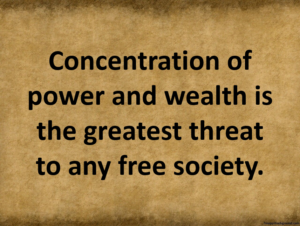
USDA is fully armed with this shocking and incriminating evidence, plus actual evidence of many antitrust violations including, collusion, price fixing, price discrimination, and retaliation. Yet USDA continues to follow its long history of endorsing a destructive centrally planned, industrialized agriculture in abdicating its duty of policing and protecting the market place. USDA, through their failure to act, instead promotes more concentration and control into fewer hands, enriching their agribusiness friends and destroying the rural landscape. History repeatedly reminds us that the single greatest threat to a free society is concentration of power and wealth into the hands of a few.

USDA Secretary Ann Veneman told an interviewer on the Kansas KSN television network this week, when asked about concentration, “There are many opportunities for producers to become part of the supply chain of the big companies.”  In other words, opportunities to become indentured slaves for her agribusiness bosses. By abdicating her duty to enforce the P&S Act, and continuing to keeping livestock prices and terms of contracts secret through the 3-60 rule, Secretary Veneman and others in government are facilitating the packer- processor-retailer cartel in dealing producers in both the pork and beef industries the same crushing death-blow already dealt enslaved poultry growers.

Beef packers continue to illegally give undue preferences to their captive supply providers, some in excess of $100 per head, explaining why the advantaged feeders continue to profit and expand at the same time as smaller independent feeders go out of business…Precisely the tactic used in the early integration of poultry.

Break up the concentration and consolidation – A food system gone wrong!
The meat packer-USDA cartel has snookered us at every turn, including stealing mandatory price reporting legislation, killing legislation to suspend big agribusiness mergers, defeating contract grower bill of rights laws, settling iron clad meat packer antitrust lawsuits with impunity (USDA vs. Farmland National), and misreporting boxed beef prices.

When we lose our free, open, and competitive markets, we lose our freedom. Rural communities, the source of a safe and sustainable food supply, die along with independent farmers and ranchers. All of America is losing with our food supply in the control of a few predatory, profit driven companies. It is time to break up the big multinational agribusiness companies beginning with the meat packers – Tyson/IBP, Cargill, and ConAgra. It is also time to apply the same criminal penalties to corporations and their executives that apply to individuals.

Whether you are a farmer, rancher, or consumer, you may want to ask yourself the question: Is your freedom worth fighting for, or would you and your children rather be serfs?

Posted in Cattlemen's Legal Fund | Leave a comment

Did A Packer Discriminate Against a Kansas Cattle Feeder?

NOTE: USDA has scheduled a hearing for today, May 22, into possibilities that the Farmland National Beef Packing Co. singled out a maverick Kansas cattle feeder and refused to buy finished cattle from his feedyard. A determination will be sought to see if such action constitutes a violation of the Packers and Stockyard Act.

AgWeb.com first reported details behind the USDA investigation in a May 21 story entitled: USDA Says Farmland Violated Packers and Stockyard Act.

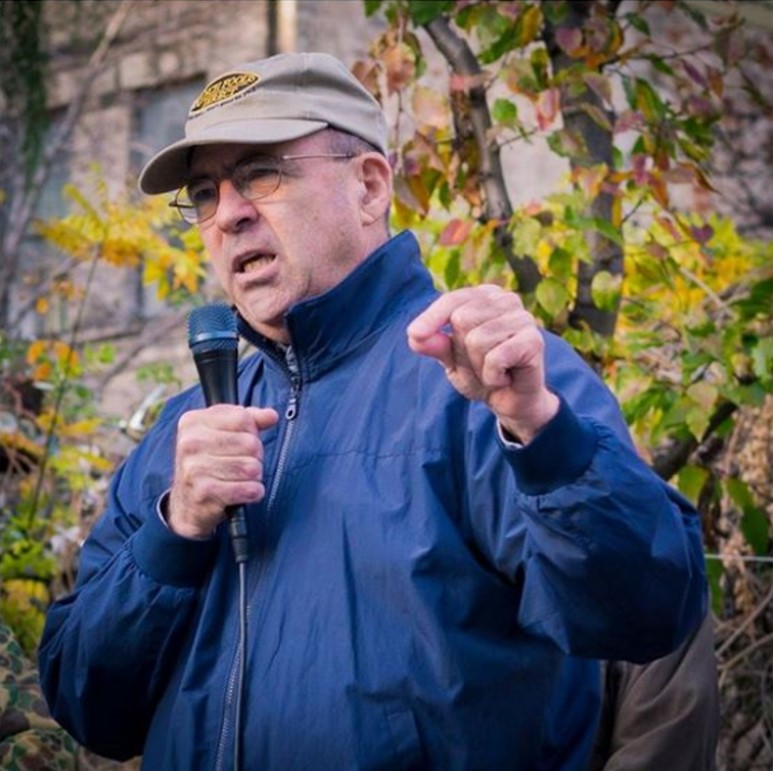
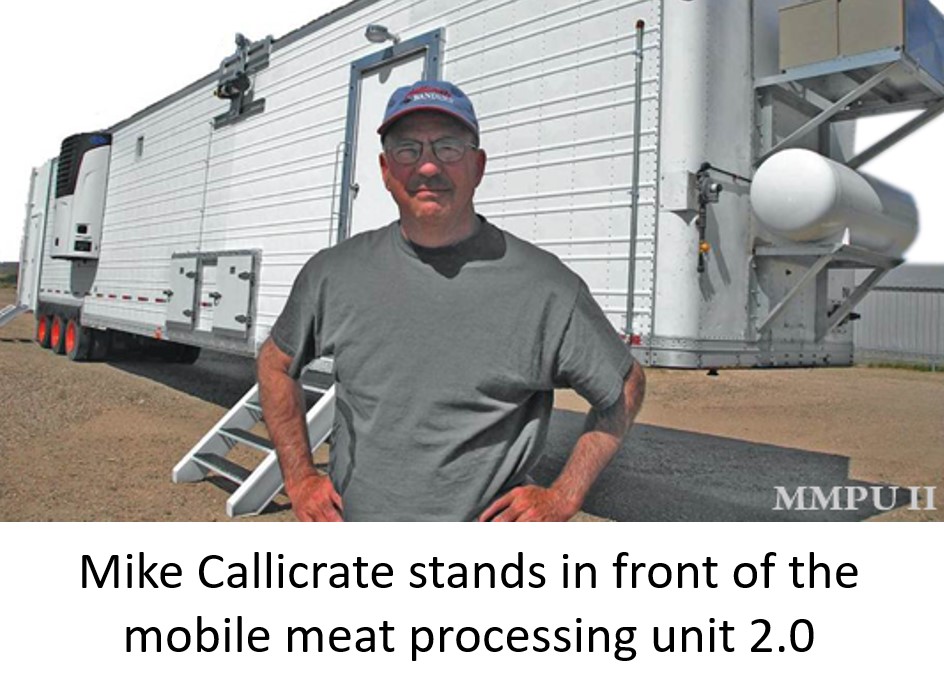
At the center of the controversy is controversial cattleman Mike Callicrate. He has been kicking sacred cows in the beef industry for some time.

You can read the entire interview with Callicrate, written by Candace Krebs and first published in the November/December, 2000 edition of BEEF TODAY magazine. That article follows, in its entirety.

The Feeder Who Won’t Take It Anymore

Zealous and determined, Mike Callicrate fights a controversial crusade against the beef establishment.

by Candace Krebs

The man who would bring down the world’s largest meatpacker is describing his son Tyler, who died in a car wreck as a teenager. He remembers an earlier accident, one that occurred while the 9-year-old was racing motorcycles in Denver.

“These guys all start out in a big wide starting line, but they’ve got to go through a space the width of this room,” he says, gesturing across the office at his St. Francis, Kan., feedyard. “It’s just whoever is toughest and bravest.

“So Tyler, he gives it hell and causes the damnedest pileup at that point. And I just remember pulling all of the bikes off and everybody’s kicking their starters and getting going again, and Tyler’s on the bottom of the pile. I’m telling you, this little kid gets up and he’s just beaten up and bruised and hurt. He gets on his motorcycle, and he wins the race.”

The relentlessly passionate voice breaks here, grows softer, ragged. “And that’s the kind of determination this kid had. That was typical of him. We have a room full of trophies of this kid, he was just so competitive.”

For a moment, you might think this 49-year-old firebrand is somehow talking about himself. And it’s not that he worried about the cause of the pileup; It’s that the boy persevered.

Mike Callicrate is a native of Evergreen, Colo., the product of a large family, showing livestock in 4-H, working at the local grocery store, riding bulls and hand making bull-ropes while financing an animal science degree from Colorado State University.

After rodeoing for 10 years, he switched to farming, ranching and feeding cattle. He and 10 financial partners built a feedyard together in St. Francis in 1978. He managed the yard for eight years, then spent some time as a consultant before building his own 12,000-head yard at his current location in 1988.

Today, Callicrate’s company, No-Bull Enterprises LLC, includes farming and ranching, retail beef, publishing, and product manufacturing. His coup was rigging a scrotum bander, used by most feedyards and patented in 81 countries, for delayed castration.

“The yards that are aligned with meatpackers, who are providing a captive supply to packers, are getting preferential treatment.”

Designing, manufacturing and distributing the Callicrate Smart-Bander employs 20. Meanwhile, he says that feeding cattle has become more punishing than riding bulls ever was. “The yards that are aligned with meatpackers, who are providing a captive supply to packers, are getting preferential treatment,” he says. The packers “want a constant supply, period.”

He, like many feeders, feels that packers use their captive inventory to drive down cash prices for the remaining cattle they need to buy on the open market each week.

Driving prices down? He, like many feeders, feels that packers use their captive inventory to drive down cash prices for the remaining cattle they need to buy on the open market each week.

Cattle producers and cattle feeders, he says, “are losing billions of dollars, at the same time consumers are paying record-high prices for beef, and at the same time, we are importing nearly 20% of our total U.S. consumption.

“The U.S. is the largest and highest priced beef-consuming market in the world. It’s wrong that our producers are going bankrupt. That’s what I focus on every day.”
It’s that focus–obsession, some say–that separates Callicrate from other feeders who worry about the balance of power between packers and producers.

Indeed, Callicrate’s real mission, his true work, his passion, seems to be that of provocateur, political activist, hell-raiser. Early nearly every morning, he sorts through as many as 400 e-mail messages and fires off articles, reports and news items to the 740 “subscribers” to his free Internet opinion service.

His recent offerings included stories on such things as World Trade Organization demonstrations, successful political activists, the struggles of small farms and rural churches, boycotts of genetically modified organisms. And any bad publicity on his public enemy No. 1–IBP Inc., and the packing industry.

“Callicrate and his supporters blame the economic stresses facing the cattle industry on the lack of competition in the market and a failure of USDA’s antitrust law enforcement.”

Callicrate and his supporters blame the economic stresses facing the cattle industry on the lack of competition in the market and a failure of USDA’s antitrust law enforcement.

“The last three years have been the most stress I’ve dealt with in my lifetime,” says Callicrate’s feedyard manager, Elroy Heim.

Their customers include 40 or 50 different ranchers, and some 80% of those are retained-ownership operators, says Heim. He says that Callicrate’s studied visibility has attracted some of the customers–even though it has also caused the yard some problems.

After Heim editorialized in an industry publication, charging that current value-based marketing grids were discount-based and disadvantaged producers, one of the major packers quit bidding the yard for three months, he says.

They think the packers “blackballed” them about a year ago. “Certainly there were high concerns over it by our customers,” says Heim. “We filed a formal complaint with the Packers and Stockyards Administration against Farmland, and are still anxiously awaiting the hearing, now set for March 2001. One packer, whose buyer lives 25 miles away, didn’t buy from us for more than four years.”

Callicrate is familiar with court proceedings. He seems almost fond of the process, in fact. He is the lead plaintiff on Picket vs. IBP, a class action lawsuit originally filed by 10 cattle producers back in 1996 seeking damages from use of captive ownership and long-term supplier agreements. He contends that “monopoly pricing” has cost him and other independent cattle producers at least $100 a head, and that it’s part of a plan to eliminate competition.

Foot-high piles of legal documents, along with assorted books, magazines and papers, await his daily consumption. More time is spent writing testimony for news conferences or congressional panels or media editorials. He also travels to an exhaustive string of meetings, often making several appearances within a week.

His lifestyle–sprinting around the country in a four-seat Piper Comanche airplane, pouring time and resources into political or social causes–arouses curiosity, suspicion, even envy. Fighting what he and his disciples consider “the good fight” for those who can’t–either for lack of time or funds or sheer courage–is costly (easily in excess of $100,000 yearly, he says) and often frustrating, but it hasn’t been completely thankless.

He receives a thin but regular stream of encouragement, just the way his favorite farm organizations (he lists the Organization for Competitive Markets, Western Organization of Resource Councils, Center for Rural Affairs, Ranchers-Cattlemen’s Action Legal Fund and the newly formed Kansas Cattlemen’s Association) get just enough financial support and volunteer elbow grease to survive.

He and his far-flung band of supporters spend much of their time together as a support group, back-slapping each other, backbiting their enemies and celebrating their marginal victories. “It’s all a matter of truth in the end. It’s all a matter of truth. And we’ve got a lot of people out there spinning the truth, particularly the packers and their spokesmen and representatives,” Callicrate says.

He condemns the existing power structure within the beef industry. He seems to see his role as agitator and one-man clarion for “reform.”

His lifelong membership in National Cattlemen’s Beef Association is punctuated with constant attacks on organizational structure, policy and leadership. He also criticizes USDA, university Extension, mainstream farm media (including, sometimes, BEEF TODAY) and big farm organizations–anything establishment–for what he sees as catering to corporate interests.

“He abhors meat irradiation, saying it treats the symptom rather than the problem, which he sees as fast chain speeds in packing plants, leading to unsafe slaughter practices and worker abuse.”

And Mike Callicrate has an opinion on just about everything. He abhors meat irradiation, saying it treats the symptom rather than the problem, which he sees as fast chain speeds in packing plants, leading to unsafe slaughter practices and worker abuse.

He flogs even at U.S. Premium Beef (USPB), the most successful of the new generation of producer-owned beef cooperatives, charging that it failed to go far enough.

“USPB is a source of captive supply for National Beef, that’s all it is …”

“USPB started out with a good idea, but when they got in bed with Farmland, they sold out the mission,” he says. “USPB is a source of captive supply for National Beef, that’s all it is, giving them leverage in the marketplace to drive prices lower just like IBP, ConAgra and Cargill do with their captive supply.”

Not everybody agrees with such firm, publicly expressed opinions. In fact, many of the people who work with more traditional groups feel he is more than just an inflammatory blister under their saddles–they think he is misleading his audiences about the root causes of market change, the impact of those changes and, certainly, they would argue–his seeming distrust of their intentions.

“Callicrate’s opinions are shared by others, they say, but they say also that they are minority opinions.”

A lot of them are careful not to talk about the man personally. But many involved in organizational work feel their groups are driven by the grassroots. It is not, they will tell you, easy to get a bunch of cattle producers to reach consensus. Callicrate’s opinions are shared by others, they say, but they say also that they are minority opinions.

A lot of folks think that the industry needs to be working more closely together. They note that the poultry and pork industries are much more united, and they say beef has to compete in that arena, like it or not.

And a lot of them don’t like the bedfellows or the tactics Callicrate chooses. They say he zealously supports boycotts, demonstrations and especially lawsuits, which have increased liability and regulatory burdens, at least partially driving concentration. They think his positions foster confrontation and polarization rather than reconciliation and cooperation.

“The inability to maintain and support consensus in a minority industry plays into the hands of the enemies of cattlemen and beef products,” says Dee Likes, executive director of the Kansas Livestock Association. “This is an industry under siege in many, many ways from a populace that doesn’t understand it. Continuing to argue and agitate is a detraction that makes this industry less focused and effective than it might be otherwise.”

Jim Schwertner, a past chairman of the Texas Cattle Feeders Association, observes that “sometimes it is good to have someone out there to polarize the issues so it changes the focus of the masses. At least it gets people to look at an issue. Still, developing a win-win relationship is a better approach. Instead of throwing rocks at the packers, we are extending our hand and saying, ‘Why don’t you join us?’ ”

(Schwertner is referring to Consolidated Beef, a 2.14-million-head marketing cooperative he helped organize to collectively bargain with packers.)

Callicrate doesn’t buy it. “I think the thing that polarizes today is that we’ve all been told that the industrial model of agriculture is more efficient and has the economies of scale, that it’s inevitable,” he says.

“I’m saying the efficiency and economies of scale arguments are a lie, and that the corporate-controlled industrial model is not mutually beneficial. It’s not sustainable and is not inevitable.”

“I’m saying the efficiency and economies of scale arguments are a lie, and that the corporate-controlled industrial model is not mutually beneficial. It’s not sustainable and is not inevitable. I’m convinced. I’m going to find my way around it. I’m going to do my own thing.” A pause. “And I’m going to let steelworkers help me do that.”

A onetime Republican who says he turned registered Democrat (and supported Ralph Nader in the recent election), Callicrate makes it a point to mingle with union members, including seasoned labor bosses.

Farmers and blue-collar workers share a vital but powerless role in the economy, he believes. He envisions a series of “small, smart, safe processing plants” inspired by slower-speed, quality-driven, New Zealand-type technology, owned cooperatively rather than corporately. Cash-rich consumer groups, labor unions, and other groups have the incentive to invest in building an entirely new food system, he suggests. The unions, of course, have yet to be convinced. Call him radical, a pie-in-the-sky dreamer. But anti-progress? He pleads not guilty.

“No one is further out front than I am in new technology, or new and better ways of doing business,” Callicrate says. He points to his current value-added meat project, Ranch Foods Direct, which coordinates management from the cow-calf producer through processing and marketing. Among the elements of the program are individual identification from birth, a vaccination program, early weaning with the assistance of creep feeding and slaughter at roughly one year of age.

He says what makes his beef so good, in addition to the youthfulness of the animal, a new management system, and proper aging of the beef, is a “rinse-and-chill” processing procedure, which flushes the blood from the vascular system with a cold glucose solution, chilling the carcass from the inside out while reducing cholesterol 23%, and improving tenderness [Rinse-and-chill is no longer being used with on-site slaughter and the reduction of stress.].

Kansas State University meat scientist Jim Marsden draws two big circles, one representing Callicrate’s views; the other, those of the general beef industry. The “progressive place” where the two spheres overlap is “figuring out ways to optimize the value of the beef carcass,” Marsden says.

By retailing beef bundles (available at Ranch Foods Direct) and selling filet mignons to restaurants, Callicrate and his business partners hope to eventually capture $400 per head or more for the cattle producer by increasing their share of the beef dollar as well as cost savings and added value.

So far, until more of the process and system can be worked out, they have been paying cattlemen a $5/cwt. premium for finished cattle, about $60/head. Since June, 250 head have been processed through the program.

Callicrate spends an all-day interview enthusing about the meat project, his other businesses, the industry, the plight of family farmers, the bedrock importance of moral principles. But he stumbles when asked whether his life is balanced and what he does for fun. “My son Teegan is 14,” he says. “We are very close, and I spend a lot of time with him. I give him whatever time he needs. To that extent, it’s balanced.” He laughs. “I played golf once in the last year,” he reflects.

“I don’t know what I do for fun. I read a lot. I enjoy reading. I read more of the self-improvement type of stuff and the educational material. I don’t like recreational reading. I want something that I can get something out of, that will help me.”

In his view, he has plenty of reading and plenty of work to do. The IBP suit continues to run into snags, despite his typically exuberant insistence that his evidence is a “smoking gun.” In October, a District Court in Alabama denied his lawyers’ request to certify the class as feedlot owners who had sold cash cattle to IBP.

But Callicrate pushes on. If, so far, it’s not the happy ending he would have pictured, he insists that he prays for knowledge, wisdom and energy, not financial success.

He says he still remembers sitting alone in his hotel room the night before he testified against packer concentration at a congressional hearing in 1996. He knew the testimony he was preparing would enrage the same beef packers he depends on for his livelihood.

“I stepped over the line big time. I basically just chose a fight with the packers,” he says. “And here I am a little cattle feeder. I just decided it’s worth the risk to go broke if you have to.”

Copyrighted content, as first published in the November/December 2000 edition of BEEF TODAY magazine.

Posted in Cattlemen's Legal Fund | 2 Comments

AP National: USDA in Case Against Packing Co.

AP National
USDA in Case Against Packing Co.

by ROXANA HEGEMAN
Associated Press Writer

WICHITA, Kan. (AP) — A battle is taking shape over whether a meatpacking company broke the law when it quit buying cattle from a feedlot after one of its managers criticized the packer in a livestock journal.

The U.S. Department of Agriculture contends Farmland National Beef Packing Co. engaged in unjust practices when it cut back its purchases of cattle from the Callicrate Cattle Company Feedyard in St. Francis, Kan. An administrativ hearing begins Tuesday in the case.

The complaint alleges Farmland routinely bought cattle at the feedlot, owned by Mike Callicrate, from 1986 to 1998. But a farmland buyer told Callicrate that the meatpacker had reservations about doing business with the feedlot, because a Callicrate manager had criticized Farmland in a livestock journal
article, the USDA said.

After that discussion, Farmland stopped routinely buying cattle from Callicrate, the USDA said. In the first six months of 1999, it bought cattle at the feedlot only during three weeks, the agency said. If the allegations are true, the USDA contends that Farmland violated the Packers and Stockyards Act of 1921.

Farmland denied the allegations, saying it expected to prevail at the hearing. ”Farmland National Beef has not discriminated against or boycotted Callicrate Feedlot and the facts do not support a claim of discrimination or retaliation by Farmland National Beef,” said Farmland spokeswoman Sarah Schmidt.

The USDA has been under increasing pressure to curb anti-competitive practices in the livestock, meatpacking and poultry industries since a General Accounting Office report last year said the agency has not fully exercised its authority in that area.

Farmland, one of the nation’s biggest meatpackers, is a partnership of Farmland Industries Inc., based in Kansas City, Mo., and U.S. Premium Beef Ltd.

Callicrate is confident about his success at the hearing.

‘We’ll win this case,” he said.

In July 1996, Callicrate joined a handful of cattlemen in suing the nation’s largest meatpacker, alleging that IBP Inc. illegally cornered the beef market and conspired to fix prices. That suit has languished in the Alabama courts.

Posted in Cattlemen's Legal Fund | Leave a comment

Washington is investigating the IBP meatpacking plant after a secretly shot video shows cows kicking while being butchered

Wednesday, January 24, 2001

Washington is investigating the IBP meatpacking plant after a secretly shot video shows cows kicking while being butchered
By Jim Lynch of The Oregonian staff

WALLULA, Wash. — A clandestine video shot inside the Northwest’s biggest meatpacking plant has alarmed people from as far away as Switzerland and triggered a seven-month investigation by Washington state authorities. 

The video shows upside-down cows kicking and seemingly struggling to release their hooves from an overhead chain winding through a slaughterhouse near the Tri-Cities. It also shows an electric prod being jammed down a cow’s mouth. Armed with the video and supporting affidavits from 23 workers at the IBP Inc. plant, the San Francisco-based Humane Farming Association asserts that many of the cows that enter the plant are being butchered while they are still conscious. 

The federal humane slaughter law requires that all the cows be rendered “insensible to pain” before they are butchered. Some reflexive kicking may occur, but cows shouldn’t be mooing, nodding and blinking while they’re getting cut. 

The Washington State Patrol, with the help of two other state agencies, hopes to conclude its investigation this month into whether slaughter or animal cruelty laws were violated. A Walla Walla County prosecutor then will decide whether to press charges. 

Gary Mickelson, spokesman for IBP, the world’s largest beef and pork producer, suggests the allegations are “residue” from a June 1999 strike at the plant in which workers walked off the job, alleging that an unreasonably fast production line caused worker and food-safety hazards. Mickelson said that while the company is “extremely concerned” about the animal treatment depicted in the video, it is not representative of the way cattle are treated at the plant, where 1,400 workers butcher about 300 cows an hour. “IBP takes the issue of proper livestock handling very seriously,” he said. 

Interviews with three former and two current plant workers last week indicate cattle-handling procedures may have improved slightly since the video aired regionally in June, but that problems persist. 

They say “the chain” — production line — still moves too fast to give “the knocker” enough time to adequately stun cows senseless with a hand-held device that thrusts a steel bolt into their skulls. 

One slaughterhouse worker, who asked to remain anonymous for fear of losing a job he’s held for almost a decade, said he saw 14 “live cows” wiggle through the butchering stations last Wednesday. He mimicked their antics, rolling his head and torso and blinking. He estimated one cow struggled for 10 minutes. “This cow had no back feet and 70 percent of its skin gone, and it had to be stunned again,” he said, through a Spanish-speaking interpreter. “This allegation is simply not true,” Mickelson said, adding that “we have not received any employee complaint about any such incident.”

The inspector
To demonstrate its diligence on the humane slaughter issue, IBP paid Temple Grandin, a Colorado State University professor and national expert on animal treatment at slaughterhouses, to inspect the Wallula plant last summer. Grandin, who has designed stockyards for 25 years and inspected 50 plants during the past five years, said she saw no live cows on the chain when she visited the IBP plant, which sits alone atop a cattle-freckled knoll between Pasco and Walla Walla. 

Grandin said workers exercised good cow-stunning protocol during the three hours she was there, but she didn’t like the way the cattle were led to slaughter. Noisy chute doors, poor lighting and bad traction needlessly alarmed cows, she said. As a result, the animals backed up, requiring the use 
of electrical prods, which made them jumpy and more difficult to stun. “When a good plant is working right, (cows) just walk up the chute and bang, they’re done,” she said. “It’s no more stressful than vaccinations in the feed yard.” But with bad management or bad equipment, she said, “it can be a  nightmare.” 

Grandin says IBP’s plants vary in quality. “Some of their plants are excellent,” she said. How would she rank the Wallula plant? “Bad,” she said, noting, however, that the controversial video unfairly tarnished the entire industry. 

“This is a plant that just really messed up,” Grandin said. “But to imply the whole industry is hanging live cattle is just wrong.” 

Grandin said she knew the chain was running slower than normal when she inspected the Wallula plant, something workers also confirmed. 

Whenever inspectors arrive, the chain is slowed by 10 percent to 20 percent to give workers time to do their jobs well, workers claim. Electrical prods are used less often, too, said Adelaido Ramirez, whose jobs at the Wallula plant included coaxing the cattle into the slaughterhouse before an injury forced him to leave the plant earlier this year. 

IBP’s Mickelson said the company heeded Grandin’s suggestions and made some modifications. Workers confirmed that noisy doors were replaced and that tread was altered to improve traction.

The petition
Gail Eisnitz, an investigator for the Humane Farming Association, an animal rights advocacy group, began examining the Wallula plant after she heard striking workers had complained that the chain was moving so fast that they were forced to work on live cows. 

Eisnitz argues in her 1997 book, “Slaughterhouse: The shocking story of greed, neglect and inhumane treatment inside the U.S. meat industry,” that unreasonable production speeds are not only hard on animals and workers, but also responsible for the rise of food-safety concerns such as deadly E. coli bacteria. (IBP has had several E. coli-related beef recalls since 1998, including three in one two-month stretch last summer, but none involved beef from the Wallula plant.) 

After interviewing workers about the plant’s problems, Eisnitz asked one to sneak a camera into the plant. She also collected workers’ affidavits, excerpts of which she included in a May 31 petition to Washington Attorney General Christine Gregoire. 

“The chain goes too fast, more than 300 cows an hour,” according to one worker’s signed affidavit. “If I can’t get the animal knocked right, it keeps going. The chain doesn’t stop. . . . The cows are getting hung alive or not alive. They keep coming in.” 

Another worker signed a statement for Eisnitz that included this observation: “Sometimes the supervisor comes and works on the live cows. They don’t want workers to stop the chain, so when the live cows are really active, workers are supposed to honk the horn and the supervisor will come to help them skin the live cow. I would estimate that one out of ten cows is still alive when it’s bled and skinned.” 

IBP’s Mickelson pointed out that even the video doesn’t show cows being skinned alive. He also says the line speed hasn’t increased since the early 1990s. 

The U.S. Department of Agriculture, charged with inspecting meat and enforcing humane slaughter laws, interviewed Wallula workers in June 1999. Copies of workers’ responses, obtained by The Oregonian, indicate the USDA was repeatedly told about live cows and unsanitary conditions. 

But Helmut Blume, the USDA’s Northwest district manager, pointed out that his 10 slaughterhouse inspectors at Wallula have found only minor problems at the plant over the years. He calls the plant’s performance record average. “I don’t want to say that never anything goes wrong in the place,” Blume 
said. But he questioned the legitimacy of the controversial video, parts of which were later aired on KING-TV in Seattle and in San Francisco. “If any one of our inspectors had seen that, the plant would not be operating.” However, the union that represents 6,000 USDA food inspectors nationwide, supported the Humane Farming Association’s petition to the state, asserting that reduced access to slaughterhouses and increased production speeds make plants harder to police. 

Interviews with Washington state investigators indicate the inquiry has been awkward and difficult. When investigators performed their “surprise” inspection in June, they had to wait for more than a half-hour before they were allowed into the slaughterhouse. 

Bill Brookreson, deputy director of the state Agriculture Department, one of three agencies participating in the investigation, said he didn’t consider the wait unreasonable. 

IBP, which denied a request by The Oregonian for a tour of the plant, has installed its own cameras in its Wallula slaughterhouse. “They confirm that livestock continue to be properly stunned and slaughtered,” Mickelson said. Meanwhile, animal-rights groups continue to rally their members to pressure Washington state officials to take action against the company, with more than 20,000 cards and a thousand letters and e-mails from as far away as Argentina and Switzerland.

You can reach Jim Lynch at The Oregonian’s Puget Sound bureau at 360-867-9503,

Posted in Cattlemen's Legal Fund | Leave a comment