Reining In The Big Meat Packers – Restoring Freedom and Fairness – At what cost?

February 22, 2002

Reining In The Big Meat Packers Restoring Freedom and Fairness – At what cost? 
�
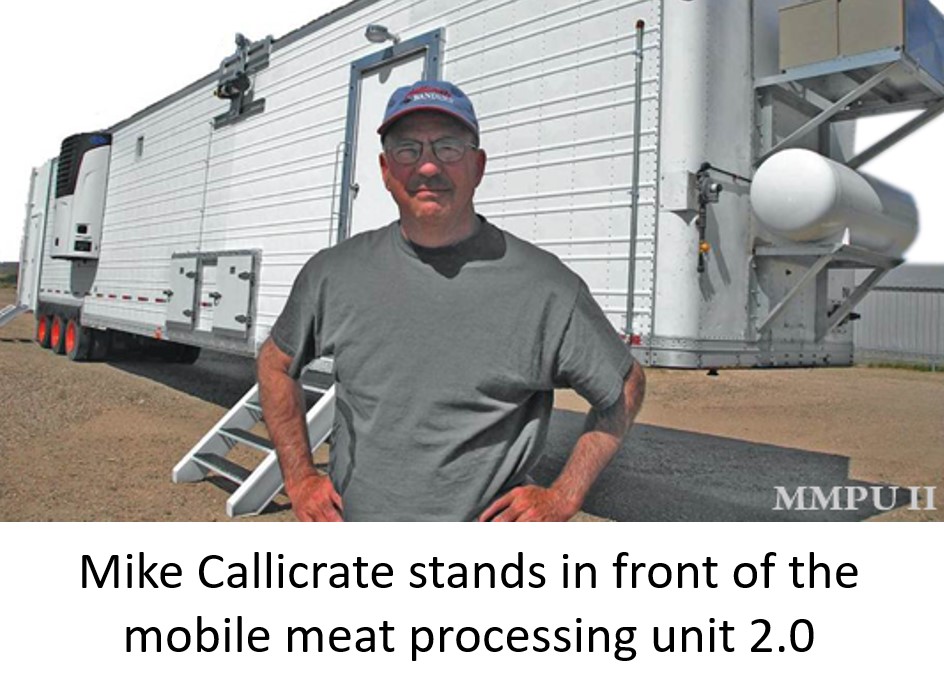
By Mike Callicrate
�
The effects of banning big packer ownership of livestock should be insignificant to the market considering the number of livestock the packers claim they own. But I believe the costs to our livestock producers and consumers will be whatever the packers want them to be. Operating outside of the law and with impunity, the big packers have gained control over our markets. Price is arbitrarily set at a level at which packers can convince cattlemen, through the mental conditioning efforts of packer-influenced trade associations, university economists, market analysts, etc., to accept the price without starting a revolution. Through their unprecedented market power, the big packers are stealing record dollars from livestock producers, keeping much of the profit and passing even more on to their allied retail partners: Wal-Mart, Kroger, Safeway, and Albertsons.

Following the events of September 11th, packers and retailers looted producers and consumers by lowering prices to cattlemen 12%, while charging consumers 9% more. What will the packers do in response to a ban on their ownership of livestock, a very necessary first step legislative action to help stop their exploitation of producers and consumers? �
�
“It has been brought to such a high degree of concentration that it is dominated by few men. The big packers, so called, stand between hundreds of thousands of producers on one hand and millions of consumers on the other. They have their fingers on the pulse of both the producing and consuming markets and are in such a position of strategic advantage they have unrestrained power to manipulate both markets to their own advantage and to the disadvantage of over 99 percent of the  people of the country.  Such power is too great, Mr. President, to repose in the hands of any men.”
-These words were spoken on the floor of the U.S. Senate by Wyoming Senator John Kendrick in 1921
�
With the loss of competition, cattlemen have now lost over $400 per head of their share of the consumer beef dollar (non-value added, fresh retail beef – see attached chart) compared to 1975 when four-firm concentration was 36%. Today, the top four firms control over 80% of our nation’s steer and heifer slaughter. Tyson/IBP, the world’s largest packer, with their partner Wal-mart, the world’s largest food retailer, is positioned to control both the supply and demand of beef, pork, and poultry (Doug Ross, U.S Justice Department, sees no problem).

Banning big packer ownership of livestock, constraining the power of this monopoly, is absolutely necessary, but only one small step in restoring competition, innovation, and fairness to our livestock and meat industries. Much more needs to be done. Get ready for the most brutal fight of this century. It has already started with Tyson’s threats and Smithfield’s blackmailing and intimidation in South Dakota. Without citizen involvement, government oversight and regulation, the packers will get the final say, as they did with their reversal of the intent of mandatory price reporting. They will punish us with eight-cent hogs again, and fifty-cent cattle…however low our government allows the packers to take the markets. Packers, with the captive supply of their own livestock, profit with the lower livestock prices they dictate, because they don’t sell livestock, they buy livestock and sell meat.

There is no other alternative than legislation, an all out fight, when the market predator becomes more powerful than our Federal Government, as has this meat packer/retailer cartel!  Without hardly a mention, these modern day robber barons have already cost our country many of our precious farmers, ranchers, cattle feeders, and communities.

Make no mistake, this is a choice of corporations vs. people, a fight for our basic freedom, for social justice, equal opportunity, and economic fairness.  Fair competition is fundamental to our economic system and our democracy. Without fair markets we lose our freedom. What is our freedom and a diverse, dependable, high quality, and safe domestic food system worth?

Posted in Cattlemen's Legal Fund | Leave a comment

The Abusive Market Power of Big Packers and Retailers Have Cost Cattlemen Over $400 Per Head

2001

– Producers 40% —–Packers and retailers 60%

Four firm beef packer concentration increased from 36% in 1975 to over 80% in 2001.
Price leader, Tyson/IBP along with their new partner Wal-Mart, can now manage both supply and demand of beef, poultry, and pork.

Economists Russell Parker and John Connor in their study, “Monopoly Effects on Producers and Consumers,” related the following:
 
“In about 1950, economists and econometricians started doing statistical studies relating the level of concentration to the level of profits.  Some of the studies related concentration to the level of prices, and others to price-cost margins computed by the Bureau of the Census.  All of these variables roughly measure the same thing: the costs of high concentration.  Nearly all of the studies showed a positive relationship: as concentration increases, profits, consumer prices, and price-cost margins increased.
 
“The studies were also interested in looking for critical levels of concentration.  If they could be identified they would be very useful to public policy considerations. Is there some range of concentration where industries are workably competitive?  Is there a concentration value below which antitrust authorities and other public policy organizations shouldn’t be concerned?  Beyond this critical point does concentration rapidly become a problem?
 
“Models which were specified to determine if there was a critical level have shown that up to about the 40-percent level of four-firm concentration, there is no evidence that concentration is related to the levels of prices, profits or price-cost margins.  In other words, industries with that level of concentration or lower are effectively competitive.
 
“Starting at about the 40-percent level of concentration, prices and profits start increasing and go up rapidly to about the 60-percent level of concentration where they level off.  There is no significant further increase in prices or profits beyond about the 60-percent level of four-firm concentration.  The conclusion is (pointing at the figure) that the effect of monopoly starts appearing when concentration goes above 40 percent and by the time concentration reaches 60 percent an industry is quite monopolistic.”
 
This information backs up my contention that the market is simply an illusion. The market is totally disconnected from supply and demand and is simply what the packer wants it to be.
 
I believe price is maintained at the level at which the producer can be mentally conditioned to accept the price. Major beef publications, so-called producer associations, universities and market analysts constantly tell the producer that low prices are their fault despite the fact that consumers are buying record volumes of beef at record high prices. The big retailer is profiting also. It is easier for the packer to buy cattle cheaper than to sell meat higher to the also highly concentrated retailers with the leverage of anti-competitive captive supplies.

Posted in Cattlemen's Legal Fund | Leave a comment

Big corporates are making big pigs of themselves: Now they plan to hog the government trough

I was in Milan, Missouri, yesterday, the home of Premium Standard Farms (PSF), recently fined and ordered to spend $50 million to clean up their environmental messes. If you want to experience the devastating economic and social destruction caused by massive industrial-factory pork production and processing, go to Northern Missouri. Community after community is either dead or dying.Independent pork producers, who once were able to contribute to and support their communities have been bankrupted and replaced by parasites like PSF, Seaboard, and Smithfield.  Along with IBP, and with the virtual consent of the U.S. government, these insatiable market predators orchestrated a sly and calculated takeover of the cash markets, which resulted in the industry-wrecking eight-cent hog debacle of 1998.  These thieves of money and freedom now own and control the pork industry.

Financially and spiritually broken family pork producers have given up hope in any justice from an obviously corrupted USDA, the agency charged with life saving antitrust law enforcement.  For the most part, they have either left the business or been driven into literal serfdom by PSF, Smithfield, and other hog factory companies who now own the hogs.  These once independent farmers are now offered employment as little more than hog house janitors.

Hulking hog PSF looms heavy over the weakened, demoralized communities surrounding Milan, crushing them like a feudal warlord of the medieval Dark Ages with his foot on the necks of the peasant serf farmers. Land of opportunity? Here in America, today’s economic refugees, from various parts of the globe, are working for less than living wages in the hog houses and high-speed slaughter plants, so corporate CEOs and managers can live like kings.  How could this happen in America?

We should know from history that capitalism without antitrust law enforcement becomes a ruthless dictator and a destroyer of economies and freedom.

My trip to Milan, Missouri again reminded me that the greatest threat to a free society is the concentration of power and wealth into the hands of a few … Something an effective government should guard against!

PS: In addition to other restrictions, maybe no home should be allowed closer to the waste containment lagoon of the big corporate hog factory than that of the corporate CEO.  In fact, let’s take it a step further. Perhaps every farmer should be required to actually live on the land he owns and profits from, intimate with its blessings, needs and limitations, so that he might daily be reminded that he is to care for it, and invest his heart and soul in it, not just mine it.
Posted in Cattlemen's Legal Fund | Leave a comment

Captive Supplies

Captive Supplies

Trade as of Wednesday, November 1, 2000 showed no cash trade with packers bidding $68, feeders asking $71 to $72. Captive Supplies for the week, as of Wednesday November 1, 2000 are:
�
Texas – 100%
Kansas- 100%

FARM-PACKER-RETAIL SHARE OF THE
 CONSUMER BEEF DOLLAR

Year Farm Share Packer-Retail Share
1950 68% 32%
1975 65% 35%
1996 45% 55%
1998 44% 55%

Data Source: USDA and ERS:

Posted in Cattlemen's Legal Fund | Leave a comment

Why Cattlemen are Becoming Extinct!

Why Cattlemen are Becoming Extinct!

In violation of the Packers and Stockyards Act… Meat packers continue to profiteer in their exploitation of cattlemen, and especially at this time of turmoil in our country. Law enforcement within the UDSA and the Justice Department look the other way.

September 26, 2001

Attention cattle owners: Before the terrorist attack on September 10, boxed beef price was $118.26/cwt. Yesterday boxed beef was $119.22. An increase of $.96/cwt ($.60/cwt. for live cattle). On September 10, October Live Cattle futures closed at $72.30. Yesterday’s close was $66.82. A decrease of $5.48/cwt. This loss to cattlemen equals $6.08/cwt., or approximately $70.00 per head in addition to the already depressed price. With daily slaughter at 120,000 cattle per day times $70.00/head, cattle owners losses equal $8.4 million per day. Consumers continue to pay record high beef prices.

Luke Schwieterman Garden City, Kansas(800) 272-9131

Posted in Cattlemen's Legal Fund | Leave a comment