Tyranny of the Middlemen

Should Walmart, Tyson, Cargill, JBS, Marfrig and other monopolists be scourged and shorn?

Straying as far as possible from the intent of the Packers and Stockyards Act, Walmart is now a meatpacker – Should cattle producers be concerned? Should consumers?

Former Assistant Attorney General for the Antitrust Division, Jonathan Kanter, delivered powerful testimony at the recent Monopoly Busters field hearing in Seattle. Kanter said we’re living under the “Tyranny of the middlemen” (1:02 min), the courts have been eroded (1:31), and are refusing to enforce the law.”

Middlemen have been a concern for  sometime:
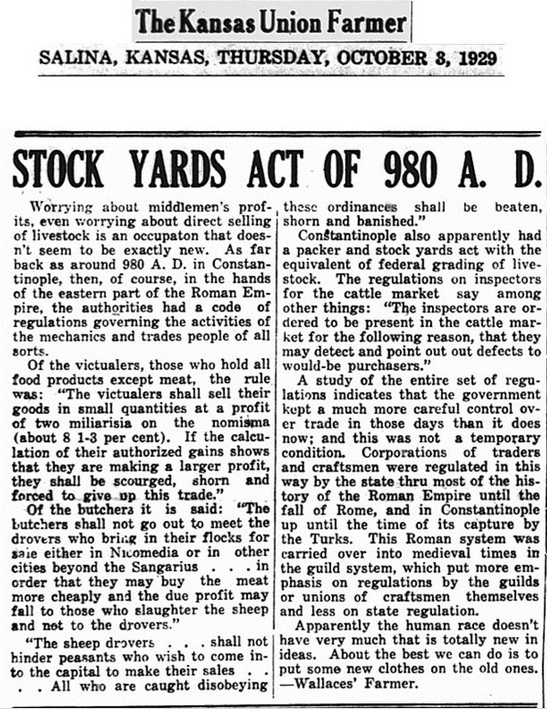
NATIONAL FARMERS UNION— OPPOSES PACKERS MERGER

December 14, 1922

WASHINGTON, D.C.—Stating that the National Farmers Union is emphatically opposed to the proposed merger of the large meat packing companies, the Washington office of the National Farmers Unfon, 1781 Eye St., N.Y., on Saturday made public a copy of a letter addressed to Attorney General Daugherty. The copy of the letter in part follows:

“The National Farmers Union, meeting in annual convention at Lychburg, Virginia, November 21-23, considered the question of the proposed packer merger and thereupon adopted the following resolution:

‘Whereas there is an effort being made to merge two of the great packing companies, therefore, be it resolved, that we express our disapproval of this attempted consolidation as a menace to agriculture.’

‘The National Farmers Union believes that this proposed merger If carried out would be contrary to the interests of the agricultural people: and we respectfully request that you do not permit It to be carried out.”

Senator George Norris, Chairman of the Committee on Agriculture and Forestry of the Senate and Representative Gilbert N. Baugen, Chairman of the Committee of Agriculture in the House are among the prominent members in Congress who have been asked to lend their influence, if this can be done in an appropriate manner, against the proposed packer merger.

“Bona fide farmers in Kansas oppose the merger,” said John Tromble, President af the Kansas Farmers Union, speaking for sixty thousand members of his organization, whose aggregate sales of livestock amount approximately to sixty million annually. Mr. Tromble further said “We most vigorously oppose any proposition which will give these meat packers further power over stock producers. For years we aided in the fight for adequate packer control legislation, believing that when industries had assumed such huge proportions and exercised their power in a way to adversely affect prices, it becomes the function of the government to exercise strong corrective control.

“I am very doubtful as to whether the law which was finally passed is exercising or will exercise the effective control which the meat producers believe is necessary for their protection. The fact is, I believe that the law should have teeth put in it, but even then, I am confident that our farmers would still be greatly opposed to any further consolidation of the packing industry.”

“This idea, that economies can be affected in the packing industry by a merger has been thoroughly exploded by the investigations which have been made by the Federal Trade Commission. I am sure that those whose only ground for favoring the proposed combination is that it will result in economical packing and distribution, will, if they have open minds, change their viewpoint when they have carefully evaluated reports made by the Federal Trade Commission.

The two preceding articles are from the archives of historian Tom Giessel, Larned, Kansas

More recently:

“Justice Roberts and his big business friendly court decided to hear the Anna Nicole Smith family feud case instead.”

Looking forward to the return of Jonathan Kanter and Lina Khan, as well as a new crop of better educated law students filling the judiciary.

Posted in General Advocacy | Leave a comment

Monopoly Busters Caucus Seattle Field Hearing

See full video of the hearing: From Farm to Kitchen Table: How Consolidation Spikes Food Prices | seattlechannel.org

“What we’re seeing is the tyranny of the middlemen.”
– Jonathan Kanter, former Assistant Attorney General for the Antitrust Division.


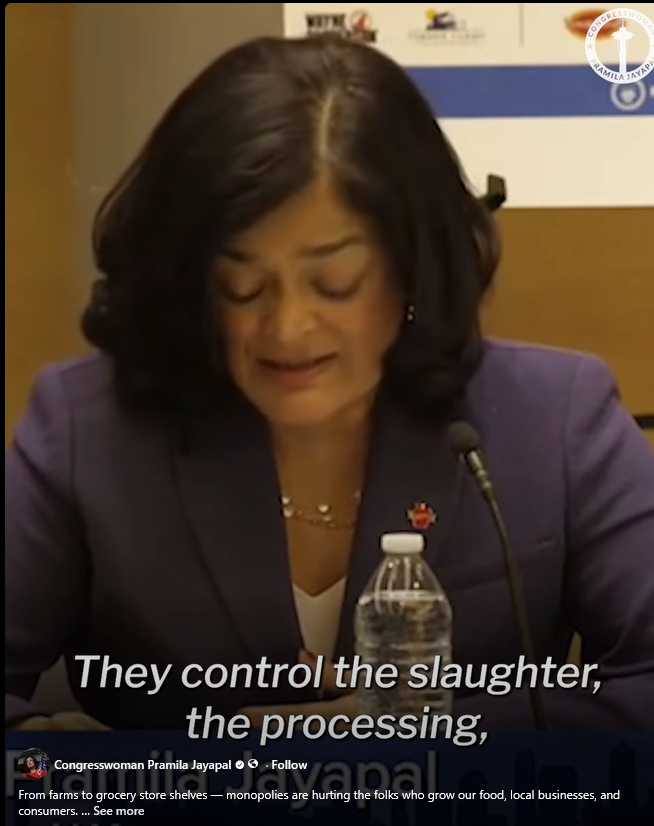
Congresswoman Jayapal opening statement

The video version of my testimony is edited for time. The full unedited statement follows:

Monopoly Busters Caucus Field Hearing

“From Farm to Kitchen Table: How Consolidation Spikes Food Prices”

Wednesday January 28, Seattle Washington

Good evening, Congresswoman Jayapal and members of Congress.

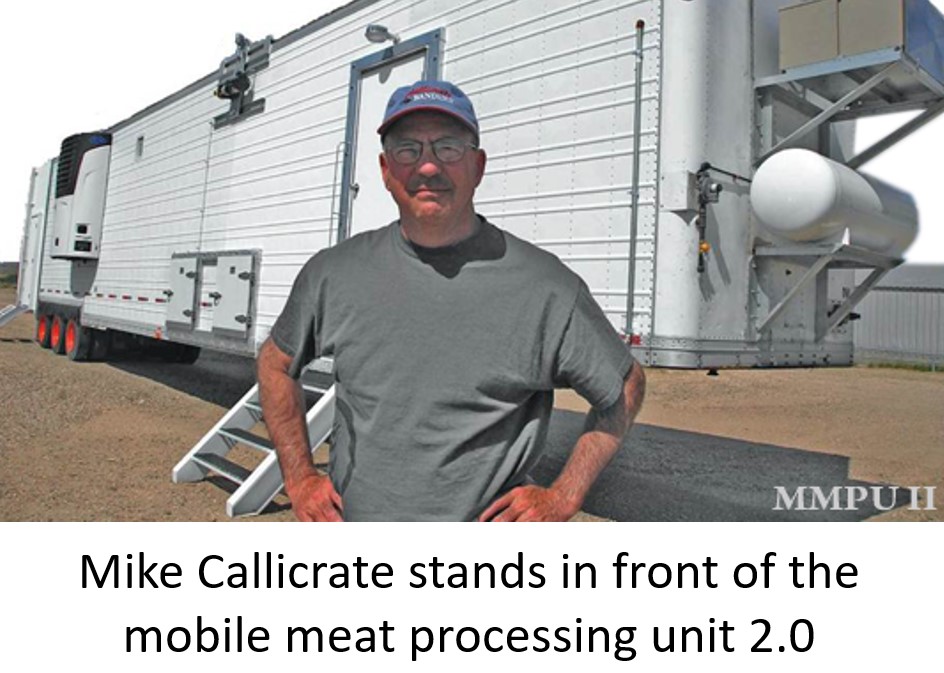
My name is Mike Callicrate. I’m a cattle and meat producer with operations in Kansas and Colorado. Thank you for the opportunity to discuss this important issue.

I’m here today because I believe due to decades of abusive market practices, lax antitrust enforcement, and growing monopoly control we’re entering the final stages of food system collapse.

A handful of multinational corporations control our food supply. Their hyper-extractive supply chains have gutted rural America, leaving our farm and ranch families bankrupt, and soil and water resources depleted and polluted.

In 1972, a local banker loaned me the money to buy my first cows. After weaning the calves, they were grown to feeder size and sold at auction to one of the many small feedlots in the region. The calf, feeder cattle, and finished live cattle markets were competitive and open to all producers. Farms were diversified, employing family members raising crops and livestock.

In 1978 I joined other local investors in building the first commercial feedyard in Cheyenne County, Kansas.  As manager, I arrived early to work, oftentimes meeting a cattle buyer sleeping in his car hoping to get the first look at our market ready cattle. There were as many as twenty regional meatpackers from Colorado, Nebraska, Kansas, Oklahoma, New Mexico, and Texas, willing to buy our cattle. There was dependable profitability in all sectors from farm and ranch to meatpacker, and retailer. Rural communities were thriving. The American Meat Institute reported the 1970 producer share of the consumer beef dollar at 82%.

IBP (now owned by Tyson) built the world’s largest beef plant in Finney County Kansas in 1980. Feedyards were thrilled to have one more buyer, but the smaller independent owner-operated regional plants, especially the Denver meatpackers, protested loudly, including in their 1979 Congressional testimony. Attorneys for Averch, Litvak, and Pepper Packing in Denver asked the Secretary of Agriculture to enforce the Packers and Stockyards Act, which was passed in 1921 to prevent loss of competition in cattle markets. They testified they were competitors in a highly competitive meatpacking business in a geographic area covering the eastern Front Range of Colorado and spreading into western Kansas, western Oklahoma and western Texas.

They testified, unless the secretary enforced the Act, irreparable damage would be done to them and others by virtue of IBP’s unlawful acts, including predatory pricing, market consolidation, and supplier control.

They asked for a cease-and-desist order against IBP preventing its use of those unlawful practices. Like today, requests for enforcement were ignored. In a few short years the Denver plants closed, and IBP continued what the Wall Street Journal referred to as the “Death March,” wiping out smaller competitors across the country.

As meat plants went out of business, feedyards struggled to sell their livestock to fewer and fewer buyers. Marketing windows narrowed and take-it-or-leave-it low bids became the norm. Arizona governor Bruce Babbit, in his 1988 run for President, branded IBP a “corporate outlaw.”

In 1988, I built my second new and improved feedyard. Loss of competition for finished cattle was becoming a bigger worry. Feedyards were fearful to speak out. Like in the game of musical chairs, they scrambled to align with IBP and the other big meatpackers through Alternative Marketing Agreements (AMAs) seeking relief from the misery of selling in a controlled market that only saw cattle as a cost to be reduced. AMA’s, including IBP’s Formula pricing model, gave the biggest feeders preferential treatment for providing market-depressing captive supplies – inventories of cattle used to leverage the cash market lower.

With the AMA captive supplier market access advantage, the big feedyards got bigger, while the more efficient, resilient, and low-cost farmer feeders went out of business. The cow-calf producer saw fewer buyers and lesser share of the consumer dollar in the increasingly concentrated marketplace.

After years of futile complaining and speaking out, feeling like nothing more than a wealth transfer agent in my role of feeding cattle for others, I joined in a 1996 federal lawsuit against IBP claiming anti-competitive practices we believed were illegal under the Packers and Stockyards Act. (A 2004 jury agreed.)

By 1998, I was down to one packer buyer – National Beef. I hadn’t seen the Cargill buyer, who lived thirty miles away in Goodland Kansas, for eleven years. The IBP buyer would stop occasionally for a cup of coffee and to offer what was referred to as a “bid not to buy,” a low-ball price so low he knew I would almost certainly reject it. The practice was used to condition desperate sellers to eventually accept a lower price from their designated buyer. It was clear the highly profitable big four packers, were cooperating, delegating territories, and pushing prices lower for cow-calf producers, while handing higher and higher margins to the big retailers who continued to charge higher prices unrelated to the price of cattle.

I had 14,000 cattle in my 12,000 head feedyard when I was informed by my only buyer, National Beef, that they were done buying from me.

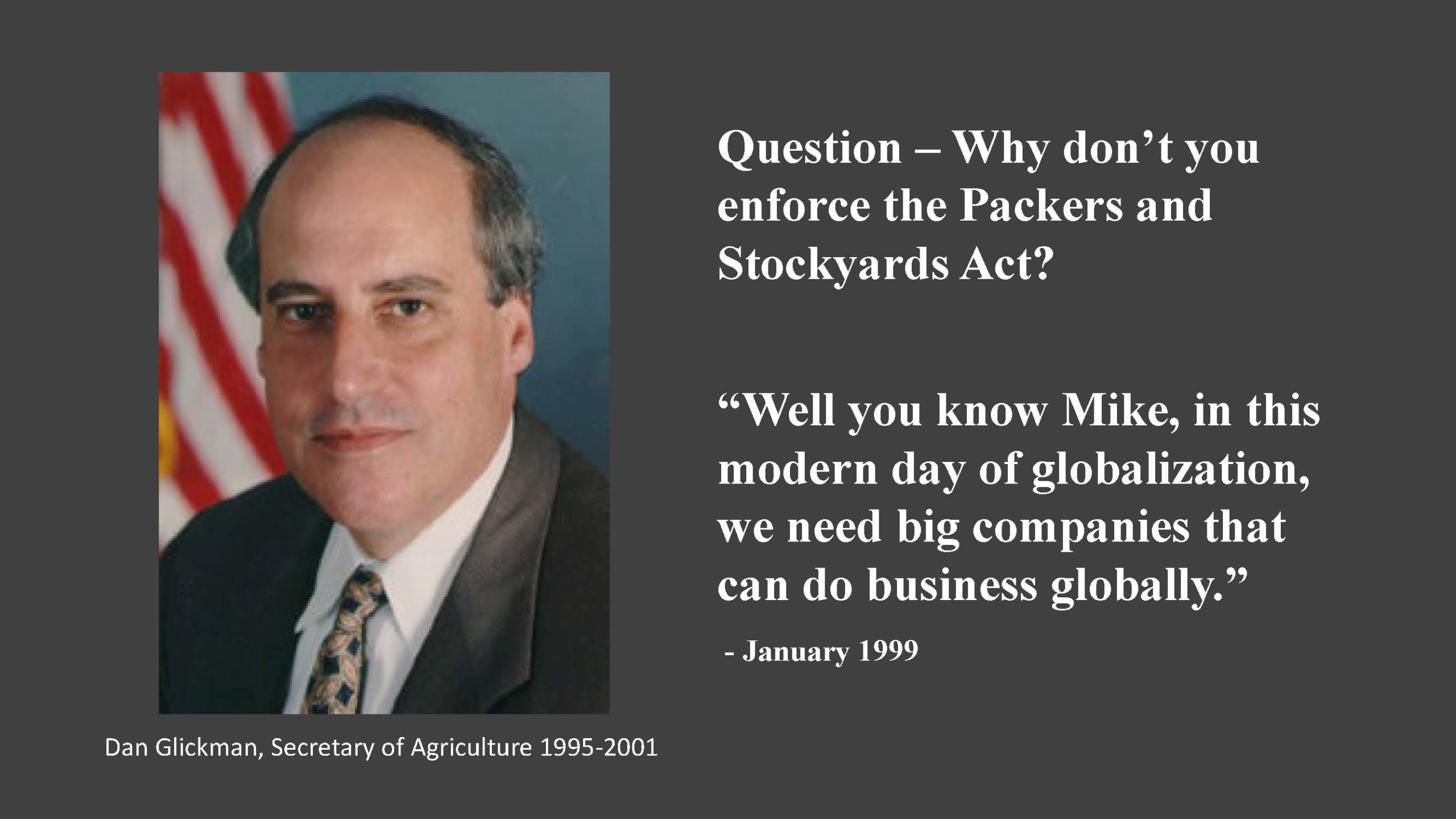
I asked USDA Secretary of Agriculture, Dan Glickman, why he didn’t enforce the Packers and Stockyards Act? He responded, “In today’s global marketplace we need big companies that can do business globally.” He leaned on ConAgra to buy my existing cattle, but I would have no future market. The closing of my feedyard meant the loss of fifteen jobs, while eliminating a major buyer of local feedstuffs.

In 2000, considering my options, which didn’t include aligning with a big meatpacker, I decided to scale back and sell meat instead of live cattle.

Despite the Packers and Stockyards Act of 1921, a powerful antitrust law designed specifically to protect the producers of livestock, as well as other anti-monopoly laws, meatpackers continue to operate above the law. Overall beef demand is at record highs, the big four meatpackers control 80% of the steer and heifer market, while selling beef to an equally concentrated, and even more powerful, retail sector. Today, the producer share of the consumer dollar is fifty percent, down over 37% from 1970. Over half our cattle producers, stewards of our land and livestock, are out of business. Now 86,000 of our independent feedyards are gone, and, tragically, we’ve liquidated 9.3 million head of our wealth-creating mother cows. Tyson is shuttering plants in communities like Lexington, Nebraska and slowing down plants in Texas, as cattle and beef imports continue to rise.

In closing, it’s past time to “Break ‘Em Up,” including big meatpacking, big retail, and big food service, as we aggressively rebuild, protect, and support existing and new local regional food infrastructure.

Thank you for your leadership on this issue. I look forward to your questions.

Posted in General Advocacy | Leave a comment

What Happens When Cattle Producers Are Gone?

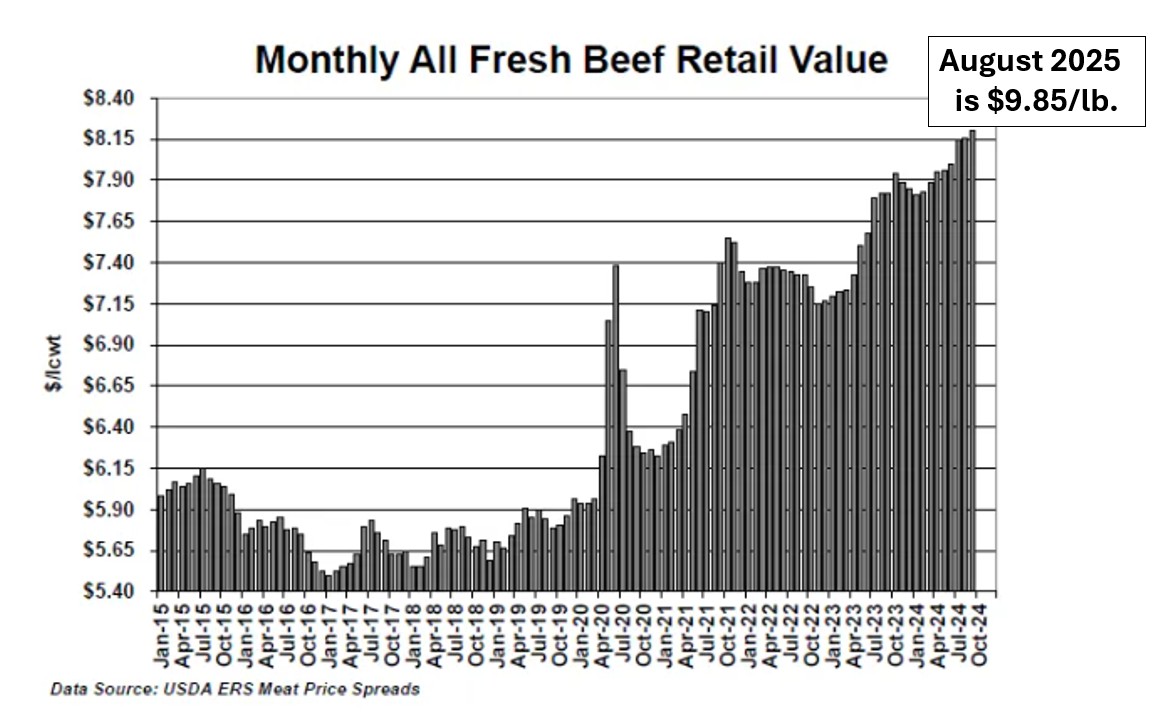
The average November retail price for beef was $10.08 per pound. A 1,400 pound finished animal will produce around 42% retail cuts, or around 588 pounds of retail beef, not including offal. 588 pounds at $10.08 equals $5,927 per head. The big box retailer is making 43.8% or $2,596 per head, while the cattle producer who invests by far the most, along with taking nearly all the risk, gets 50%, down from 80% in 1970. It’s clear why we’ve lost half our ranchers and liquidated 10 million cows.

John, Coy, and Bill tell the story of today’s producer share of the monopolized meat industry. Only Congress can fix this threat to our food and national security.

Posted in General Advocacy | 1 Comment

Mike Callicrate on Monopoly Power, Maker-Owned Markets, and the Fight for Rural America

Posted in General Advocacy | 1 Comment

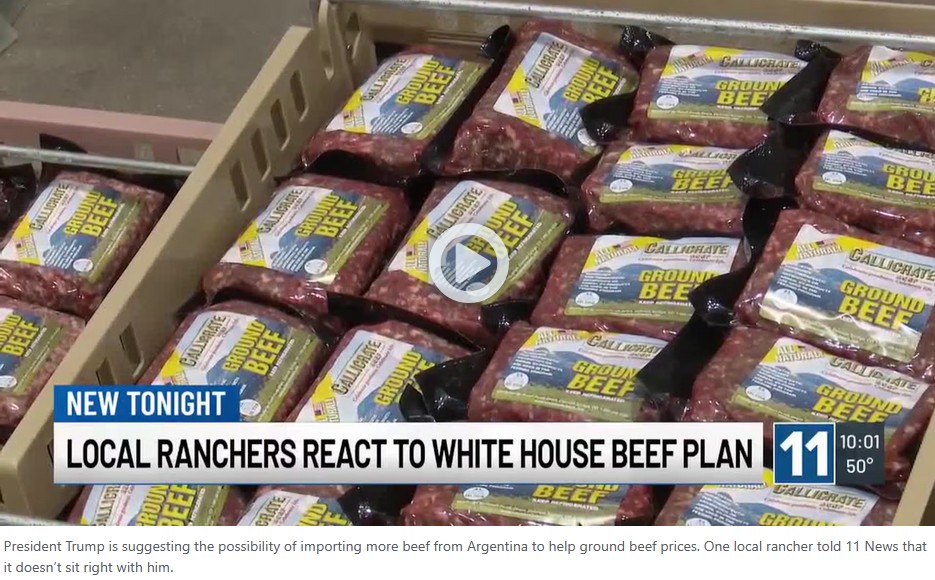
Colorado Springs rancher says importing Argentinean beef could hurt US ranchers

See Full Video

The U.S. is the highest and best consuming market in the world for beef, so why have half of America’s ranchers gone out of business? Why have 10 million cows been liquidated, leaving Americans with such a short supply of beef? Why has America become an overall net food importer, dependent on foreign food to eat?

The failure to enforce antitrust laws has put control of our food system into the hands of a few multinational corporations. These same multinational corporations control politics and the policy, keeping the wealth from agriculture flowing into their pockets. Two of our big four beef packers, JBS and Marfrig, are from Brazil. The other two, Cargill and Tyson, do business globally, all searching the world for the cheapest of everything to sell into the highest consuming market – the United States.

All the fuss about opening up Argentina for more imported beef ignores the power of the big food/beef cartel to profit even more, with no relief for struggling ranchers or consumers, both in the U.S. and in Argentina. History proves, increasing the beef supply in the current highly concentrated market will not translate to lower consumer prices, but will lower cattle producer income, when for the first time in decades, cattle producers are nearing break evens.


Why are ranchers going broke with the highest retail prices in history?

Argentina raises some of the very best cattle in the world. From cattle genetics to healthy soils, and ideal growing conditions, Argentina has fed their citizens well from over 60 domestic meatpackers, compared to producers in the U.S. being crushed by four corrupt and cooperating meatpackers controlling 85% of the market. Additionally, Argentina’s ban on performance enhancing drugs elevates their beef quality above the industrially produced beef elsewhere in the world. They love their beef, and have not supported exporting at the expense of their own citizens.

The fingerprints of Tyson/Cactus, the largest Argentine exporter, are all over the idea of exporting more beef to the U.S. Additionally, think about the new opportunities to transship (previously through Uruguay and Mexico) via the newly favored country to the profitable U.S. market?

So, asking the question, why are cattle producers going broke while consumers pay record high prices for beef? It’s the abusive market power of powerful middlemen – the big meatpacker, big retailers, and big food service cartel. Until the government breaks up this concentrated power, we will continue to lose more and more food producers and will become less and less able to feed ourselves.


Posted in General Advocacy | 1 Comment